

Brand protection companies sell two things: finding the fakes and getting them removed. Most vendors find fakes well. They differ on removal: who files the takedown request, with what evidence, and how fast the page goes down. While a fake stays up, it keeps taking your customers and hurting your brand reputation.
We compared 10 brand protection services on removal. The list covers software platforms, managed services and one brand protection agency. ICODA wrote this list and ranks itself first for one job: removing clones and impersonators from Google and Bing results for iGaming and crypto brands. Every entry, including ours, says what the company does not cover.
Pick by problem:
- Clones and fake login pages on your brand searches (iGaming, crypto): ICODA
- Phishing sites, fake social accounts and rogue apps, fully handled for you: BrandShield, Allure Security, Fortra
- Counterfeit products on online marketplaces: Red Points, Corsearch
- Social media and executive impersonation at enterprise scale: ZeroFox
- Fastest phishing takedowns: Netcraft, Bolster
- Lookalike domains and a large domain portfolio: MarkMonitor
Brand Protection Companies Compared

ICODA
Agency
Main channels
- Google & Bing results
Who files takedowns
Best for

BrandShield
Platform + managed
Main channels
- Domains
- Social
- Marketplaces
- Apps
Who files takedowns
Best for

Allure Security
Managed service
Main channels
- Websites
- Social
- App stores
Who files takedowns
Best for

Fortra
Managed service
Main channels
- Domains
- Social
- Dark web
Who files takedowns
Best for

Corsearch
Platform + analysts
Main channels
- Marketplaces
- Social
- Trademark watch
Who files takedowns
Best for

ZeroFox
Platform + analysts
Main channels
- Social
- Marketplaces
- Dark web
Who files takedowns
Best for

Red Points
Platform
Main channels
- Marketplaces
- Social
- Websites
Who files takedowns
Best for

Netcraft
Done-for-you platform
Main channels
- Phishing sites
- Domains
- Apps
Who files takedowns
Best for

Bolster
Automated platform
Main channels
- Domains
- Social
- Apps
- Marketplaces
Who files takedowns
Best for

MarkMonitor
Registrar + managed enforcement
Main channels
- Registered & lookalike domains
Who files takedowns
Best for
Prices are left out of this comparison because almost every vendor quotes by scope. The public price signals we found are in the cost section below.
Agency, Software or Both
Brand protection software finds abuse, usually with machine learning and image matching. An agency or managed service also removes it. Most brand protection vendors now sell both, so ask one question before a demo: when the platform flags a fake site, who files the removal, and in whose name?
- Software: suits in-house security teams that already triage alerts and connect tools to SIEM or SOAR through an API. You pay for detection and automated takedowns; edge cases land on your team.
- Managed service: the vendor’s analysts validate each finding, file the takedown requests and chase registrars and hosting providers. Suits legal and marketing teams without an analyst to spare.
- Specialist agency: covers one channel in more depth. ICODA covers only search results, but it clicks through every ranking page to prove where the player lands.
In-house teams usually own half the job: lawyers file complaints but don’t monitor, and SEO and security teams detect but rarely file with evidence. For the do-it-yourself version, see our online brand protection guide.
How We Evaluated
We checked each company on six features to look for in brand protection solutions. Sources: vendor product pages, published takedown figures, pricing signals (AWS Marketplace, Vendr buyer data, a Forrester study), and Gartner Peer Insights and G2 reviews, all checked on 28 September 2026.
- Channel coverage: continuous monitoring of websites and lookalike domains, social media, app stores, online marketplaces, paid search and the dark web.
- Who files: automated enforcement, the vendor’s analysts, or your team.
- Published results: takedown success rate and takedown time, with the page each figure comes from. Every figure below is the vendor’s own claim.
- False positives: how findings are verified before anything is filed.
- Pricing transparency.
- Reporting: dashboards, case management, evidence you can reuse.
The 10 Best Brand Protection Companies in 2026
1. ICODA: Best for iGaming and Crypto Brand Searches
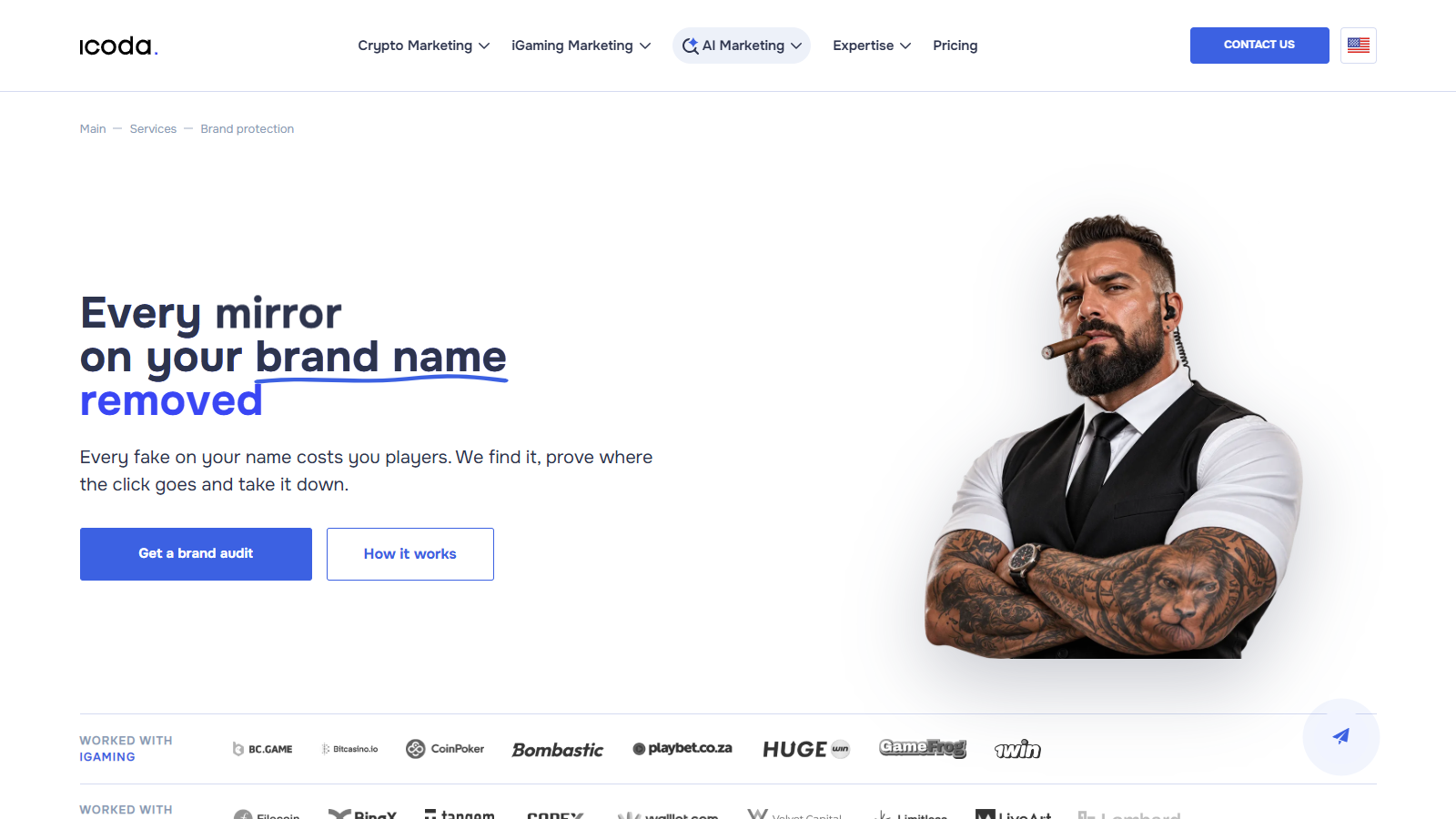
ICODA is a search marketing agency that finds clones, fake login pages and hijacked review sites on your brand searches and gets them removed from Google and Bing.
In iGaming and crypto, most brand impersonation happens in search results. In August 2026 we checked 16,445 results pages for 30 gambling and crypto brands. Of 3,646 third-party domains we opened in a real browser, 1,285 sent the player to a competitor or a clone, and 57% of that abuse sat below position 20, where brand teams rarely look.
The service runs that check daily. ICODA captures the brand name and variants (login, bonus, app, mirror, reviews) in every country with demand, 100 positions deep, then a browser with a local IP clicks through each page and follows the redirects. ICODA catches cloaking by comparing what Googlebot and a browser see. A finding without enough evidence stays “unverified” instead of being labeled a clone, which keeps false positives out of the filings.
- Covers: Google and Bing organic results; typosquats, fake websites, login clones on hacked sites, affiliates redirecting to rivals, parasite pages.
- Who files: ICODA files removal requests with Google and Bing, with an evidence pack per URL. Registrar and hosting provider suspension and UDRP run only on targets you approve. You own the affiliate whitelist.
- Published results (self-reported): 98% of filed pages removed; 24 hours from detection to a filed request. In one crypto casino case, the copycat was out of Google’s results in 32 days after 530 assets were filed across three markets, and it had not returned 12 months later.
- Pricing: free Brand Snapshot (delivered within two weeks), then a Core Retainer per brand. Legal Track is priced per domain.
- Limitations: paid ads, social networks, Telegram and app stores are logged, not monitored. No coverage of Russia. No marketplace or counterfeit enforcement.
- Reviews: 4.9/5 on Clutch.
Best for: online casinos, sportsbooks, exchanges and crypto platforms whose branded traffic leaks to clones. Pair it with a platform below if you also sell physical goods.
2. BrandShield: Best Managed Platform for Mid-Size Brands
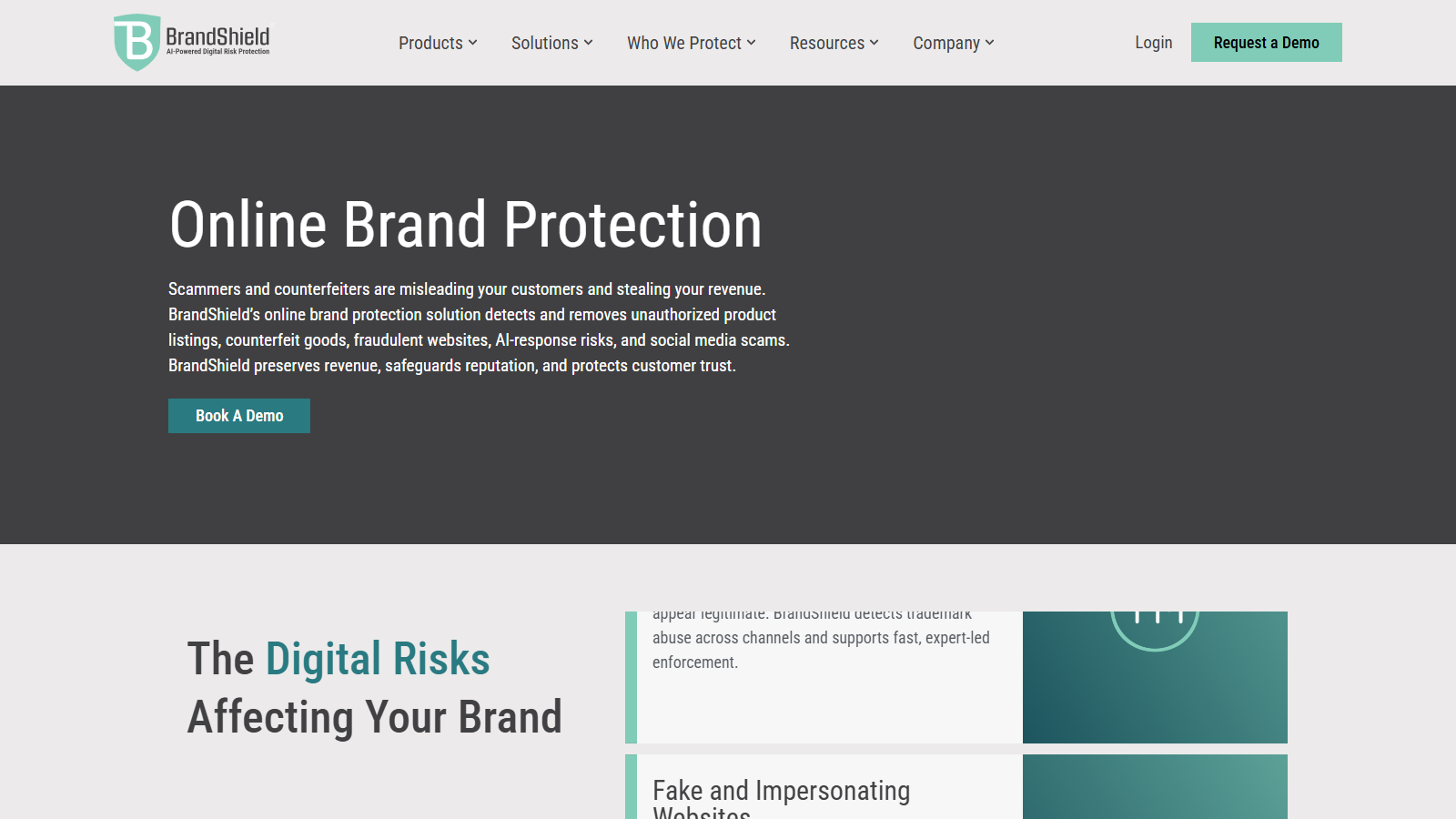
BrandShield is an Israeli brand protection platform that combines AI detection with an in-house enforcement team.
It left London’s AIM market in October 2023. Its client list spans pharma, fashion, crypto and online gaming.
- Covers: marketplaces, domains, social media, paid ads, mobile apps, dark web sources, phishing and executive impersonation.
- Who files: enforcement managers and threat hunters on BrandShield’s side; premium managed takedowns are capped by plan.
- Published results: “98% takedown success rate” (BrandShield blog). No takedown time SLA published.
- Pricing: the managed anti-phishing package is listed at $22,000 per 12 months on AWS Marketplace.
- Limitations: G2 reviewers mention hands-on onboarding, occasional false positives and manual report generation.
- Reviews: G2 4.7 (120 reviews), Gartner Peer Insights 4.7 (23 ratings).
3. Allure Security: Best Fully Managed Service for Financial Brands
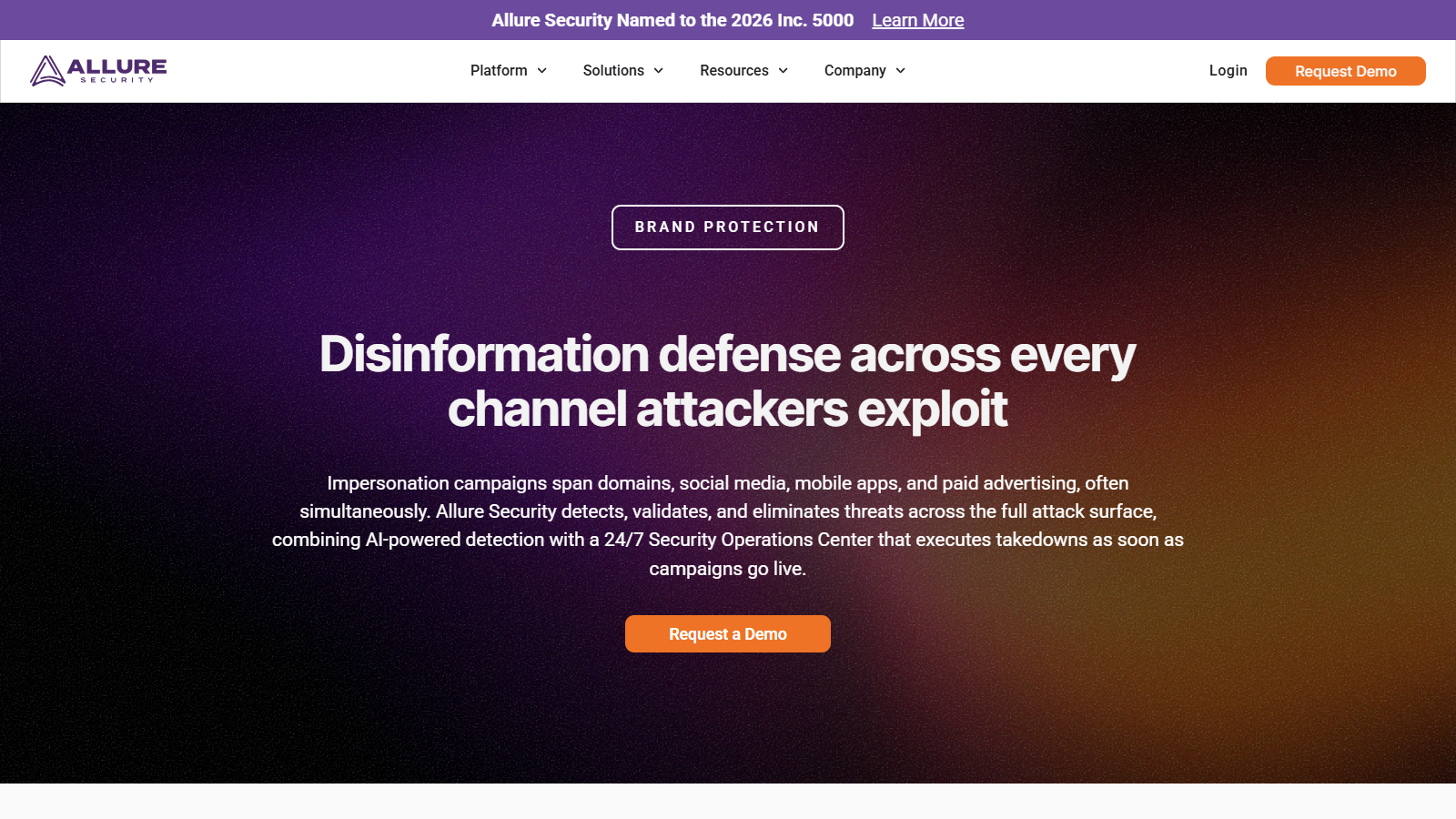
Allure Security is a US managed service that handles detection, validation and takedown end to end, with a 24/7 security operations center.
It started in 2009 as a Columbia University spin-off and raised a $17M Series B in March 2026. It says it protects more than 700 financial institution brands a year.
- Covers: fake websites and lookalike domains, social media, more than 50 app stores, paid ads, dark web, phishing and executive impersonation.
- Who files: Allure’s team. The product page calls it “a managed service, not another platform to run”.
- Published results: a ~15-minute median from detection to browser blocking, with full takedowns “typically completed in hours”. Blocking a page in browsers is not the same as removing it, so compare it only with other blocking figures.
- Pricing: flat rate with unlimited takedowns, by quote.
- Limitations: no marketplace or counterfeit coverage found. G2 reviewers ask for better reporting and executive summaries.
- Reviews: Gartner Peer Insights 4.8 (34 ratings), G2 4.9 (12 reviews).
4. Fortra Brand Protection (PhishLabs): Best for Regulated Enterprises
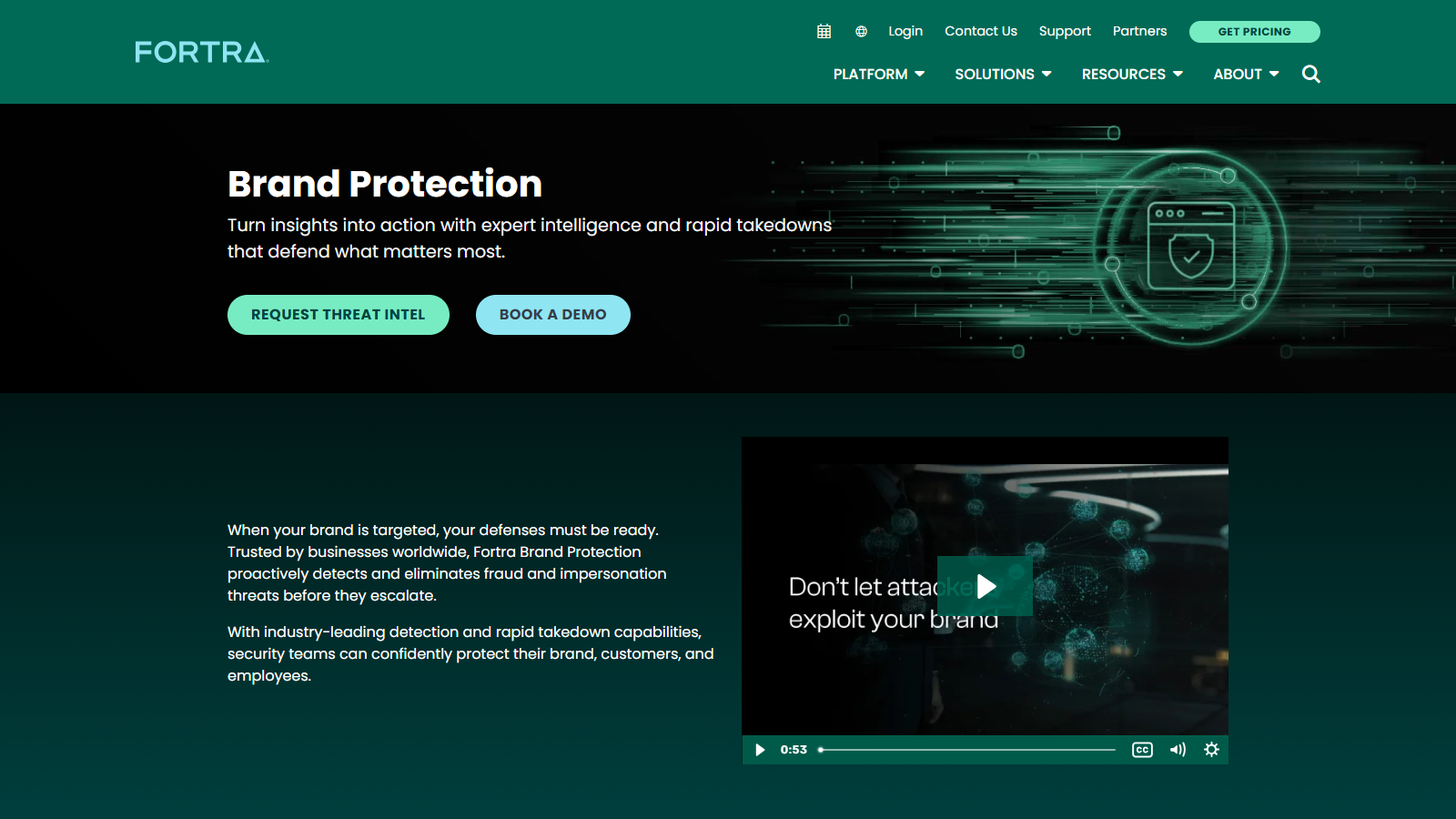
Fortra Brand Protection, formerly PhishLabs, is a managed digital risk protection (DRP) service from the US security company Fortra.
Fortra acquired PhishLabs in 2021. Its customer logos include Citigroup, Scotiabank and Delta.
- Covers: lookalike domains, social media, app stores, dark web, phishing, executive impersonation, counterfeits, pay-per-click ads, and leaked credentials and source code.
- Who files: Fortra’s brand experts, with automated kill switches and API connections to hosts and platforms.
- Published results: claims “the industry’s fastest and most successful takedown capability”, but publishes no figure.
- Pricing: by quote. G2 reviewers call it expensive for smaller organizations.
- Limitations: reviewers mention limited reporting, a learning curve and, in one August 2026 review, slow takedowns.
- Reviews: Gartner Peer Insights 4.3 (56 ratings), G2 4.4 (40 reviews).
5. Corsearch: Best for Trademark and Counterfeit Enforcement Together
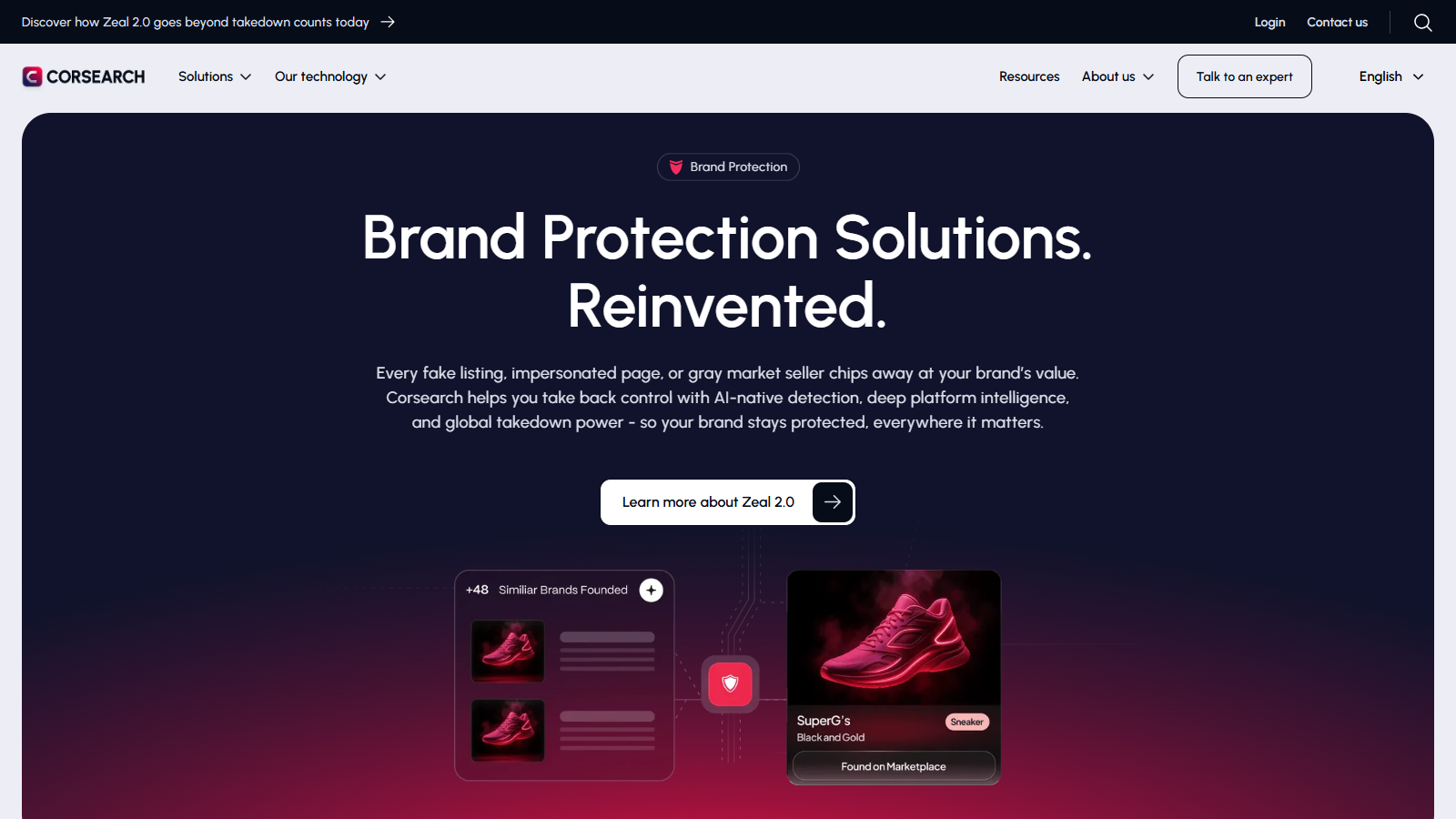
Corsearch combines trademark watch, domain management and online brand protection, with AI detection backed by enforcement analysts.
It says it works with 73+ of the Fortune 100. In late 2024 it acquired Navee, an image recognition company, to spot counterfeit listings by product photo.
- Covers: online marketplaces, social media, search engines, e-commerce sites, app stores, rogue domains and impersonation.
- Who files: a dedicated analyst team, plus rule-based automated enforcement through marketplace APIs.
- Published results: “95%” takedown success rate and “10M” listings removed a year (Corsearch).
- Pricing: by quote; one G2 reviewer notes that cases outside the package are billed case by case.
- Limitations: G2 reviewers want more detail on success rates and turnaround, and report slow removals on social media.
- Reviews: G2 4.6 (24 reviews).
6. ZeroFox: Best for Social and Executive Impersonation at Scale
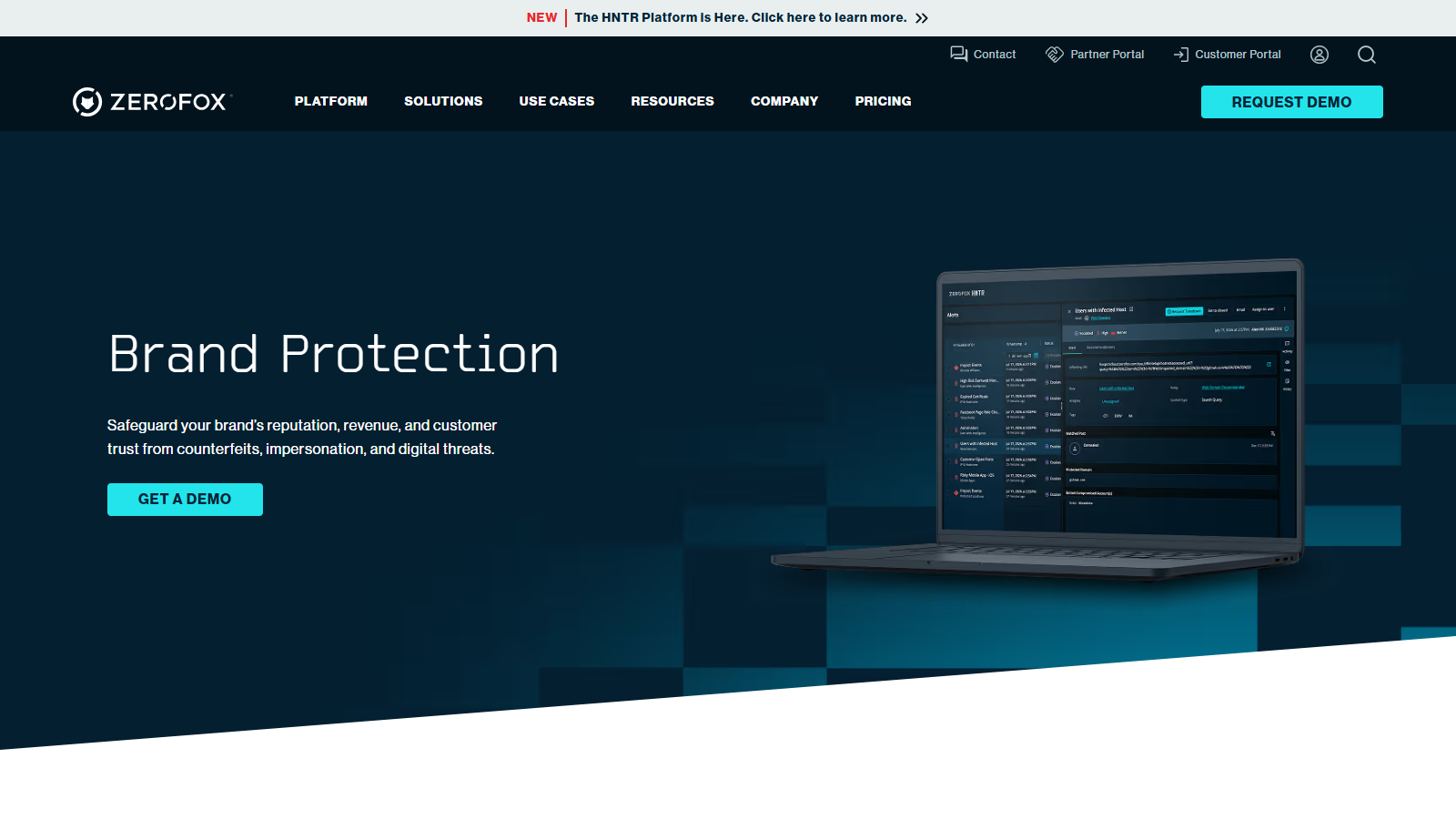
ZeroFox is a US external cybersecurity company that monitors more than 180 platforms and runs takedowns through its own disruption network.
Haveli Investments took it private in May 2024 for about $350M. It bought LookingGlass in 2023, which added threat intelligence and attack surface data to its brand intelligence.
- Covers: social media, app stores, job boards, forums, marketplaces, phishing domains, the deep and dark web, deepfakes and executive impersonation.
- Who files: automated routing plus more than 100 analysts who validate and pursue takedowns.
- Published results: “1M+ successful takedowns executed annually” and a “95% takedown acceptance rate” (ZeroFox).
- Pricing: Vendr buyer data shows an average of $45,604 a year, from $19,790 to $76,889.
- Limitations: G2’s review summary flags slow or incomplete takedowns and false alarms that need manual review.
- Reviews: G2 4.4 (170 reviews), Gartner Peer Insights 4.0 (46 ratings).
7. Red Points: Best for Marketplace Counterfeits
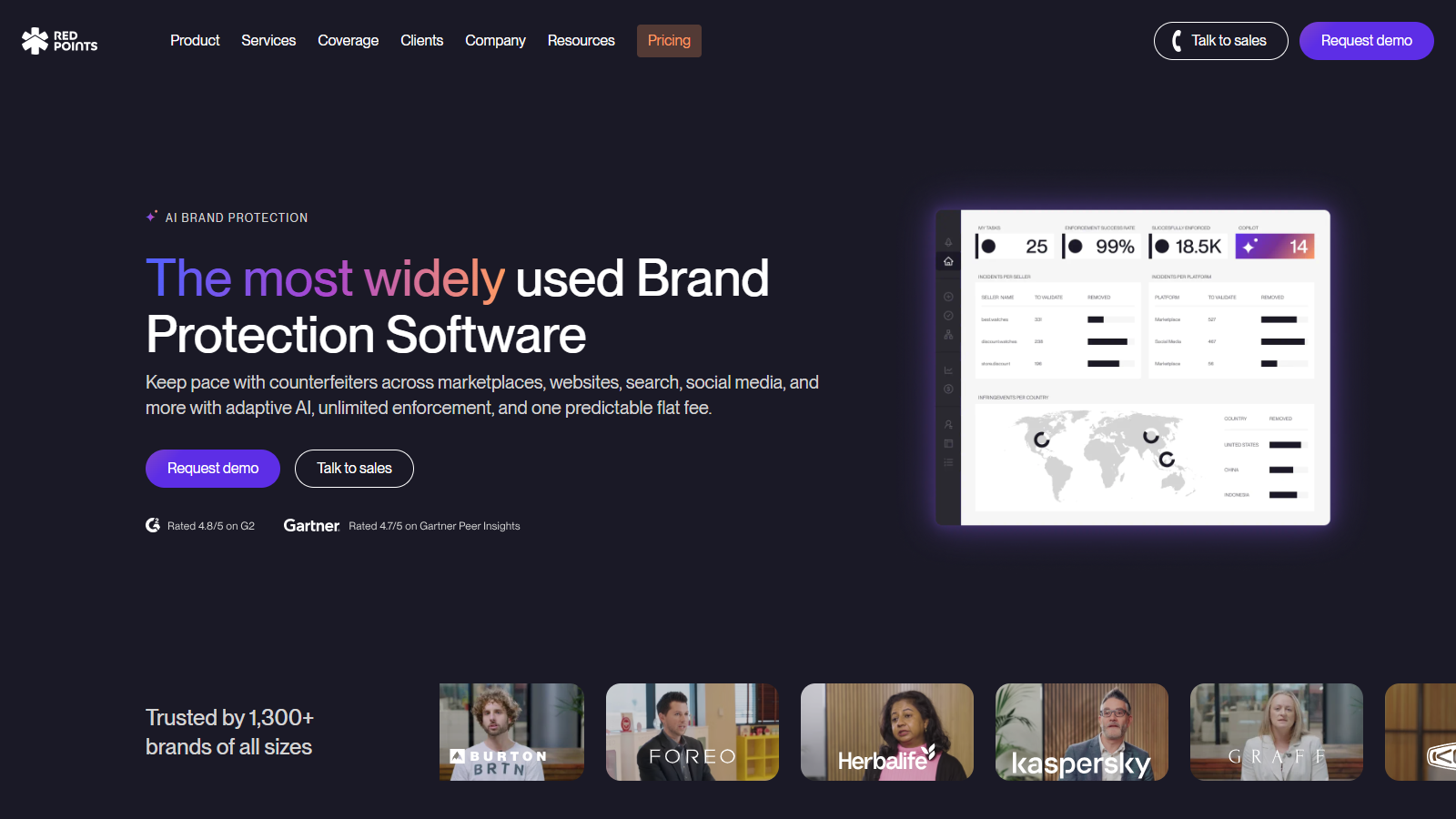
Red Points is a Barcelona-born, New York-based brand protection platform built around automated detection and takedown of counterfeit listings.
It works with more than 1,300 brands, including FOREO and Burton, and suits intellectual property teams chasing counterfeits and unauthorized sellers across many marketplaces.
- Covers: online marketplaces (mainland China on the Enterprise plan), social media, fake websites and domains, ads, mobile apps and video platforms.
- Who files: mostly automated 24/7 enforcement, with unlimited detections and takedowns within the agreed scope.
- Published results: “99%” enforcement success rate on the product page, “95%” for fake website removal on another page. The two pages don’t match.
- Pricing: Starter, Professional and Enterprise plans, all by request.
- Limitations: Capterra reviewers report flagged genuine listings and removed listings coming back online. Its 1.3/5 Trustpilot score comes mostly from marketplace sellers whose listings were taken down. Aggressive automated enforcement produces complaints like these.
- Reviews: Gartner Peer Insights 4.7 (53 ratings), Capterra 4.3 (20 reviews).
8. Netcraft: Best for Fast Phishing Takedowns
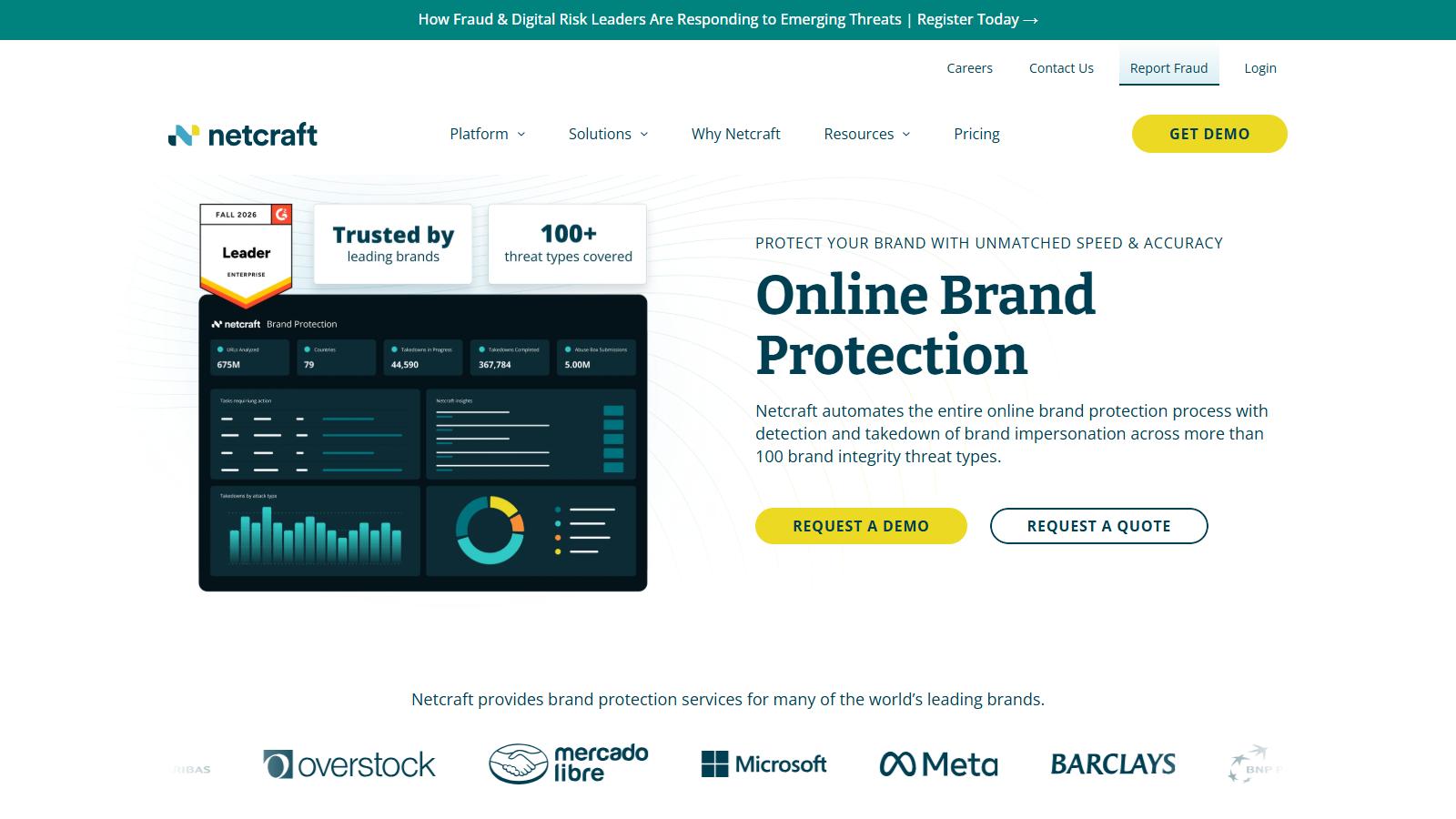
Netcraft is a UK company, founded in the mid-1990s, that detects and takes down phishing sites, fake shops and impersonation for the brands it protects.
Spectrum Equity invested more than $100M in 2023. Customers named on its site include Barclays, Microsoft and Mercado Libre.
- Covers: phishing sites and domains, social media, app stores, ads, deep and dark web, fake online stores and phone scams.
- Who files: Netcraft; 75% of its takedowns go through direct APIs or dedicated contacts at hosts and registrars.
- Published results: a “33 minutes” median takedown time for phishing sites and “25M+ phishing domains taken down” (Netcraft). Its product page quotes a 1.9-hour median, so check which threat type a figure refers to.
- Pricing: a Forrester study commissioned by Netcraft models a large bank paying $235,000 a year in license fees.
- Limitations: built and priced for large enterprises. Some Gartner reviewers found overlap with other security tools they already had.
- Reviews: Gartner Peer Insights 4.0 (11 ratings).
9. Bolster: Best for Automated Takedowns
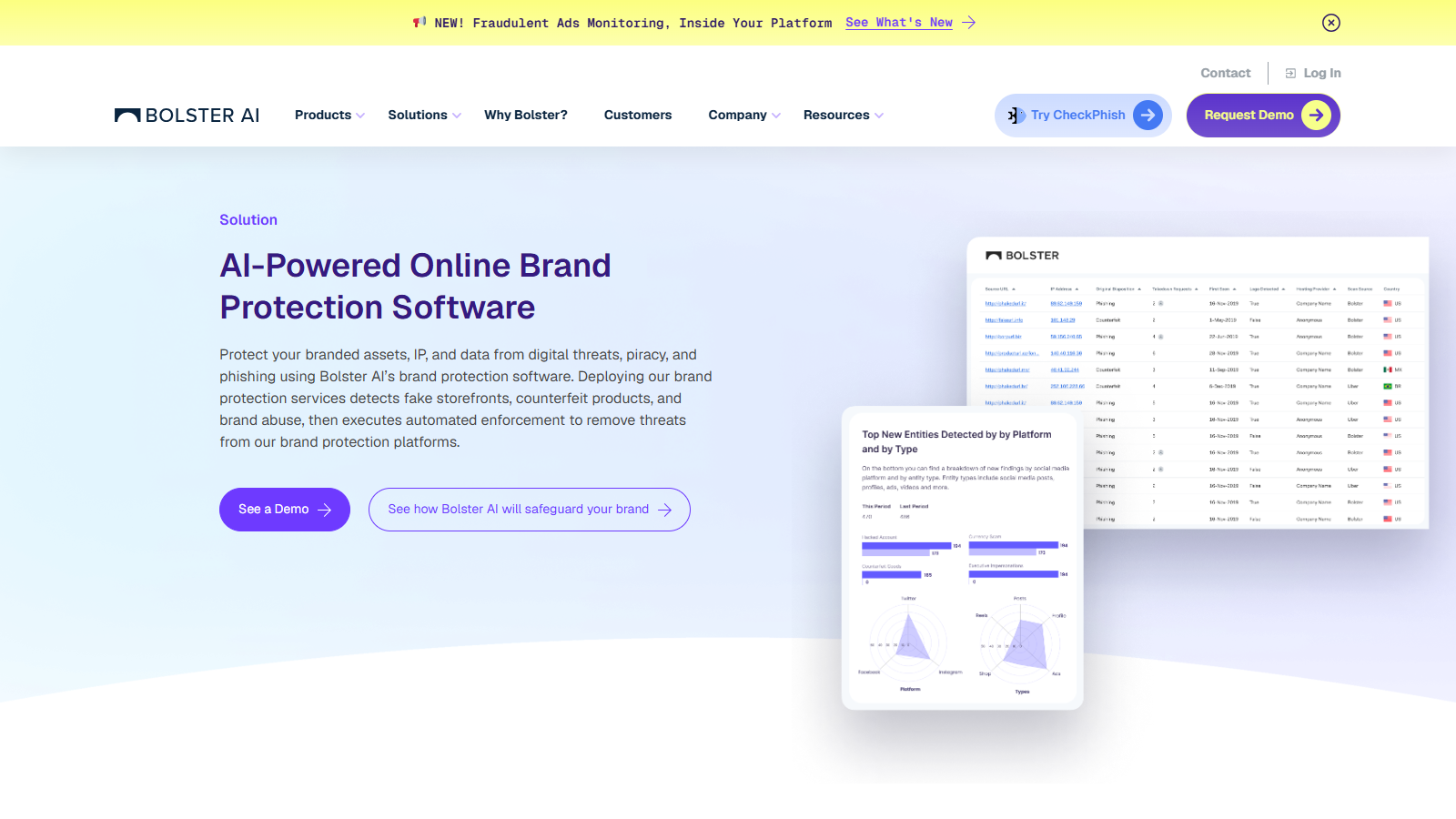
Bolster is a Santa Clara company (founded 2017) whose AI detects and removes brand abuse with little manual work from the client.
Microsoft’s venture fund M12 led its $14M Series B in 2024. Its free CheckPhish scanner covers one domain.
- Covers: domains, social media, app stores, marketplaces, fraudulent ads, dark web, phishing, executive impersonation, counterfeit listings and deepfakes.
- Who files: automated first; analysts handle the edge cases.
- Published results: “60 sec” mean time to response and “95% removal without manual intervention” (Bolster). Its homepage gives a different figure: 75% of threats in under 60 seconds.
- Pricing: Vendr buyer data shows a median of $37,500 a year, from $13,000 to $93,600.
- Limitations: Gartner reviewers describe a rigid detections dashboard. Some social media takedowns reportedly take months.
- Reviews: Gartner Peer Insights 4.6 (19 ratings).
10. MarkMonitor: Best for Domain Portfolios and Lookalike Domains
MarkMonitor is a corporate domain registrar with managed enforcement against lookalike and infringing domains.
Clarivate sold it in 2022, and Com Laude bought it in January 2026, forming Markmonitor Group. Its older anti-counterfeiting business was sold to OpSec in 2020 and now runs as OpSec Online.
- Covers: hundreds of millions of registered domains scanned daily through DomainWatch, plus some website and social content.
- Who files: MarkMonitor’s experts review each case, then run UDRP and ccTLD disputes, takedowns, cease-and-desist letters and anonymous domain buys.
- Published results: MarkMonitor publishes no takedown figures.
- Pricing: by quote.
- Limitations: it focuses on domains and does not cover marketplaces, counterfeits or app stores.
- Reviews: no Gartner Peer Insights or G2 listing found.
What Brand Protection Services Cost
Only one vendor on this list publishes a price, and only for one package. These are the public price signals:
| Vendor | Price signal | Source |
|---|---|---|
| BrandShield | $22,000 per 12 months, managed anti-phishing | AWS Marketplace |
| Bolster | $37,500/yr median, $13,000 to $93,600 range | Vendr buyer data |
| ZeroFox | $45,604/yr average, $19,790 to $76,889 range | Vendr buyer data |
| Netcraft | $235,000/yr license for a large bank | Forrester TEI, commissioned by Netcraft |
| ICODA | Free audit, then a retainer per brand | icoda.io |
Three things move the price: the number of brands, the number of countries and channels you need monitored, and whether takedowns are unlimited or counted. Flat-rate plans with unlimited takedowns (Allure, Red Points within scope, ICODA’s Core Retainer) are easier to budget. With per-takedown pricing, the bill jumps in the month a clone network appears.
Five Questions to Ask Before You Sign
- Who files, and in whose name? Filings can go out from your account, the vendor’s, or a law firm’s.
- How do you verify a finding? Ask whether they click through to the final landing page or only list domains that match your brand name.
- What is your takedown time, and for which threat? A phishing site blocked in a browser in 15 minutes is not the same as a marketplace listing removed.
- Do you show rejected requests and the reasons? A success rate means little if the rejected cases disappear from the report.
- What happens when the fake comes back on a new domain? Clones move to new domains, so the retainer should include re-checks.
Frequently Asked Questions (FAQ)
The companies most often ranked in 2026 are ZeroFox, Red Points, BrandShield, Fortra (PhishLabs), Bolster, Netcraft, Corsearch and Allure Security. For iGaming and crypto brand searches, ICODA covers the search channel in more depth.
The right choice depends on where your brand is abused. Red Points and Corsearch fit counterfeit listings, Netcraft and Bolster fit phishing, ZeroFox fits social media, and ICODA fits clones in Google and Bing results.
Public signals range from about $13,000 to $94,000 a year for platforms like Bolster and ZeroFox, and past $200,000 for large banks. Most vendors quote by brands, countries and channels.
Yes. Takedown requests under platform policies, copyright law and UDRP are legal routes. Filing against a legitimate seller or site is not, which is why verification before filing matters.
Send us your brand name and priority countries. The free Brand Snapshot shows every site ranking on your name and where each one sends the player.
Share with


Rate the article