

Gambling is one of the few verticals where most publishers won’t link to you at all. Ad policies, YMYL scrutiny, and regulatory risk take the average blogger, news site, and directory off the table before you’ve sent a single outreach email.
That scarcity shapes everything else in this guide. Fewer sites say yes, so the ones that do carry more weight. And the ones that shouldn’t say yes (PBNs, casino-only link farms, paid guest-post networks) can do real damage the moment Google or a regulator notices.
This guide covers what actually works for casino and sportsbook operators, affiliates, and the agencies serving them in 2026: what makes a backlink safe, which tactics still move rankings, how to build an anchor profile that doesn’t read as manipulation, how to measure whether it paid off, and when to hand the problem to a specialist agency. Link building is one piece of a broader iGaming SEO strategy, covered in more depth in our iGaming SEO guide.
Why Links Still Matter in a Restricted Niche
Backlinks matter more in iGaming than in most niches, because so few sites link to gambling content that each one you earn is scarcer and more valuable.
Google treats gambling as Your Money or Your Life (YMYL) content, so these pages face a higher trust-and-safety bar than a typical blog post. At the same time, most mainstream ad networks, affiliate platforms, and editorial sites either ban gambling content outright or route it through separate, restricted approval processes. The result is a small, known pool of publishers who will accept a gambling-adjacent link: iGaming trade press (iGaming Business, SBC News, Gambling Insider), sports and finance media with a betting vertical, and a handful of general-interest sites with an explicit gambling policy.
That’s why “buy 50 backlinks” offers fail fastest in this niche: the safe inventory is finite, so there’s no volume play. Relevance and editorial trust do more work than raw link count. A single placement on a site that covers gambling can outperform a dozen generic ones.
This guide focuses on link building specifically. For the regulatory side, including which markets restrict gambling content outright, see our guide to iGaming SEO in restricted markets.
What Makes an iGaming Backlink Safe (Not Just High-DR)
A safe iGaming backlink comes from a real, editorially independent site relevant to gambling, sports, or finance. Domain Rating alone doesn’t make a link safe.
Before you accept or pursue a placement, check it against these criteria:
- Topical relevance: the site covers gambling, sports betting, finance, or the marketing/tech trade press that serves this industry. A general lifestyle blog with no connection to the niche is a weak signal even at high DR.
- Editorial independence: the site would plausibly cover or link to you without payment. Pure pay-for-placement networks read as manufactured link building, not editorial mentions.
- Real traffic and indexing: the linking page is indexed and gets organic visits, not just crawled to pass link equity. A page with zero traffic history is a red flag.
- Clean link neighborhood: check what else the domain links to. A site surrounded by casino-adjacent spam clusters or unrelated PBN-style outbound links drags your placement down with it.
- Jurisdiction match: some publishers and ad networks restrict gambling content by country, so make sure the placement’s audience matches the markets you’re licensed to operate in.
- Honest attribution: use
rel="sponsored"for paid or affiliate-driven placements andrel="nofollow"where trust is uncertain. Reserve clean followed links for mentions you earned, not ones you paid for.
iGaming Link Building Tactics That Actually Work in 2026
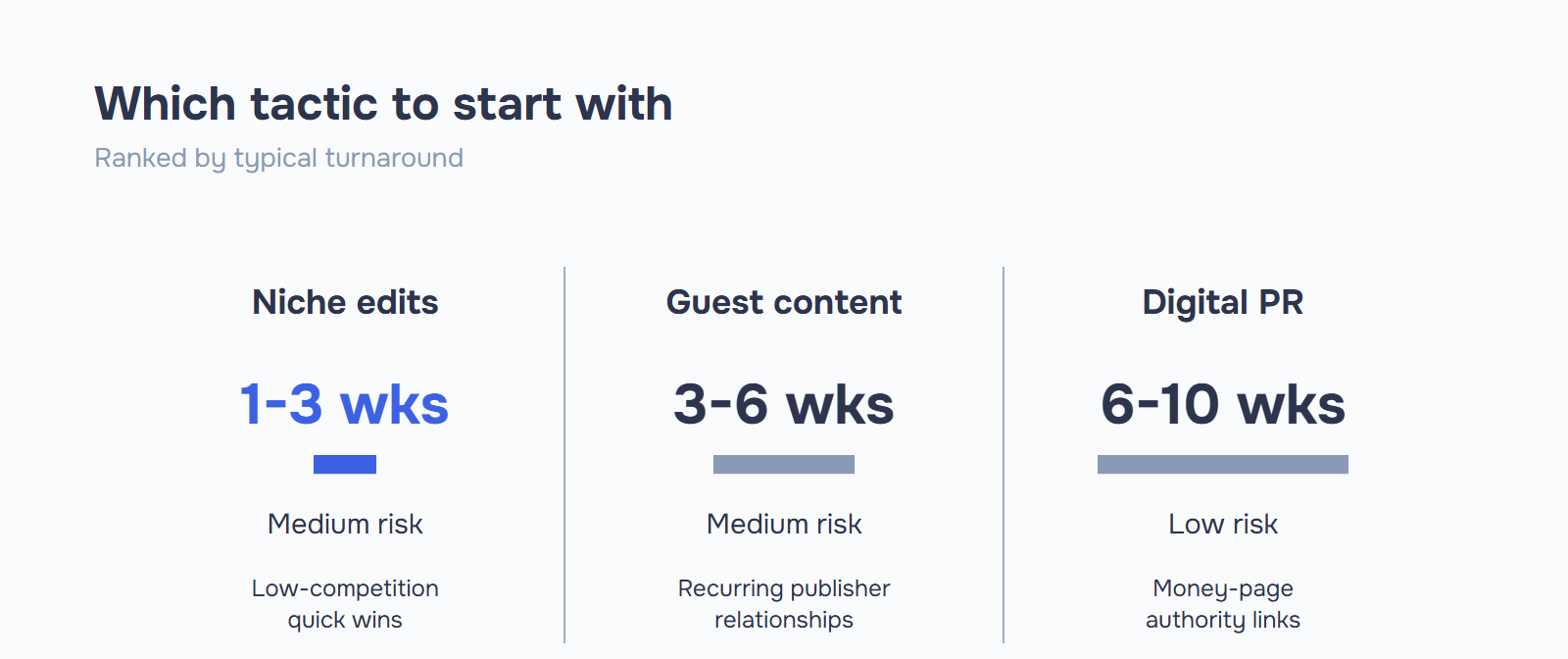
Three tactics do most of the real work in iGaming link building: digital PR, niche edits, and guest content, each suited to a different budget and risk level.
| Tactic | What it is | Typical turnaround | Risk if done wrong | Best for |
|---|---|---|---|---|
| Digital PR | Original data or a newsworthy angle pitched to journalists | 6-10 weeks | Low: hardest to spam, but slow and requires real research | High-authority links on money pages and pillar content |
| Niche edits | A contextual link added into an already-ranking page | 1-3 weeks | Medium: quality varies wildly across sellers | Fast wins on low-competition terms |
| Guest content | A full bylined article written for the host site’s audience | 3-6 weeks | Medium: anchor-stuffed pitches get rejected or de-indexed | Building relationships with recurring publishers |
Digital PR
Digital PR earns the highest-authority iGaming backlinks by giving journalists a newsworthy data story to cover, not a product pitch.
The mechanics: build something with real numbers behind it (a regional betting-trend analysis, a responsible-gambling study, a market-size breakdown) and pitch it to the people who cover this beat, not the people you want to sell to. Trade press (iGaming Business, SBC News, Gambling Insider) picks up data stories faster than product news; mainstream sports and finance outlets will run a surprising number even without a gambling angle. This is slower and more expensive than the other two tactics, but it’s also the hardest to fake and the least likely to draw scrutiny, because the resulting link is a byproduct of real coverage, not a placement you paid for.
Niche Edits (Link Insertions)
Niche edits add a relevant link into an already-published, already-ranking page instead of creating new content, which is why they move faster than any other tactic.
You find an existing article that already ranks for a topic adjacent to yours and negotiate a contextual insertion: a sentence or a citation, not a rewritten section. The upside is speed: because the host page already has indexing history and topical authority, a well-placed edit can register in rank tracking within weeks rather than months. The risk sits entirely in vendor quality: networks selling insertions on unrelated or spun content do more harm than good. Vet every placement against the safety checklist above before you buy it, not after.
Guest Content
Guest content works when it’s written for the host site’s actual audience, not stuffed with anchor text aimed at your money page.
Pitch a useful, bylined piece (an operator’s take on a regulatory change, an affiliate’s data on player behavior, a marketer’s breakdown of what’s working in paid acquisition) and let one contextual link to a resource carry the SEO value, rather than linking straight to a casino landing page. This tactic is cheaper than digital PR and faster to start, but it depends on actual subject-matter writing, and its real payoff comes from building a standing relationship with an editor, not from a one-off submission.
Anchor Text Strategy for Casino & Sportsbook Money Pages
A safe anchor profile for a casino or sportsbook money page keeps branded and natural anchors above 70% and exact-match anchors under 10%.
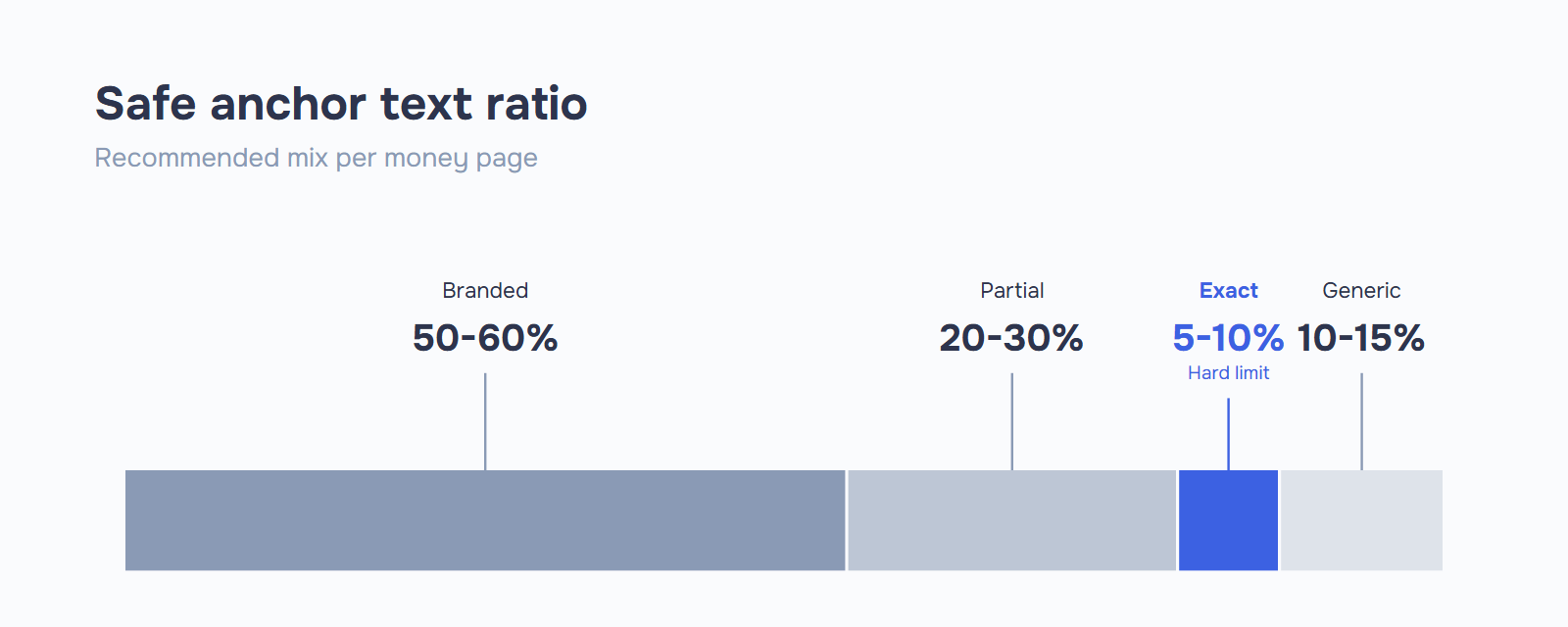
Because Google scrutinizes gambling sites more closely, a manufactured-looking anchor profile is one of the fastest ways to draw a manual action here. A defensible mix looks roughly like:
- Branded anchors (your brand name, brand + keyword): 50-60%
- Partial-match / topical anchors (“this online casino guide,” “their sportsbook review”): 20-30%
- Exact-match anchors (“igaming seo link building,” “best online casino”): 5-10%, never more
- Generic / naked URL anchors (“click here,” “read more,” the bare URL): 10-15%
Track this ratio per money page, not just site-wide. A single page with 40% exact-match anchors can flag the whole domain even if the aggregate looks clean.
How to Measure iGaming Link Building ROI
Measure iGaming link building ROI by tracking ranking movement, organic traffic, and conversions on the specific money pages you built links to, not domain-wide metrics.
Domain Rating going up is not a result. It’s a side effect. Track, per campaign:
- Referring domains and link quality on the pages you actually targeted, via Ahrefs or Search Console, not the whole site
- Ranking position for the target keywords, checked at least bi-weekly. SERPs in this niche move faster than most, so monthly snapshots miss the real signal.
- Organic sessions and assisted conversions on the linked-to page: for operators, this means new depositing customers; for affiliates, it means clicks or leads passed to partners
- Cost per link against traffic value: a rough but useful gut check on what the same ranking position would have cost through paid search, compared with what the link campaign cost to run
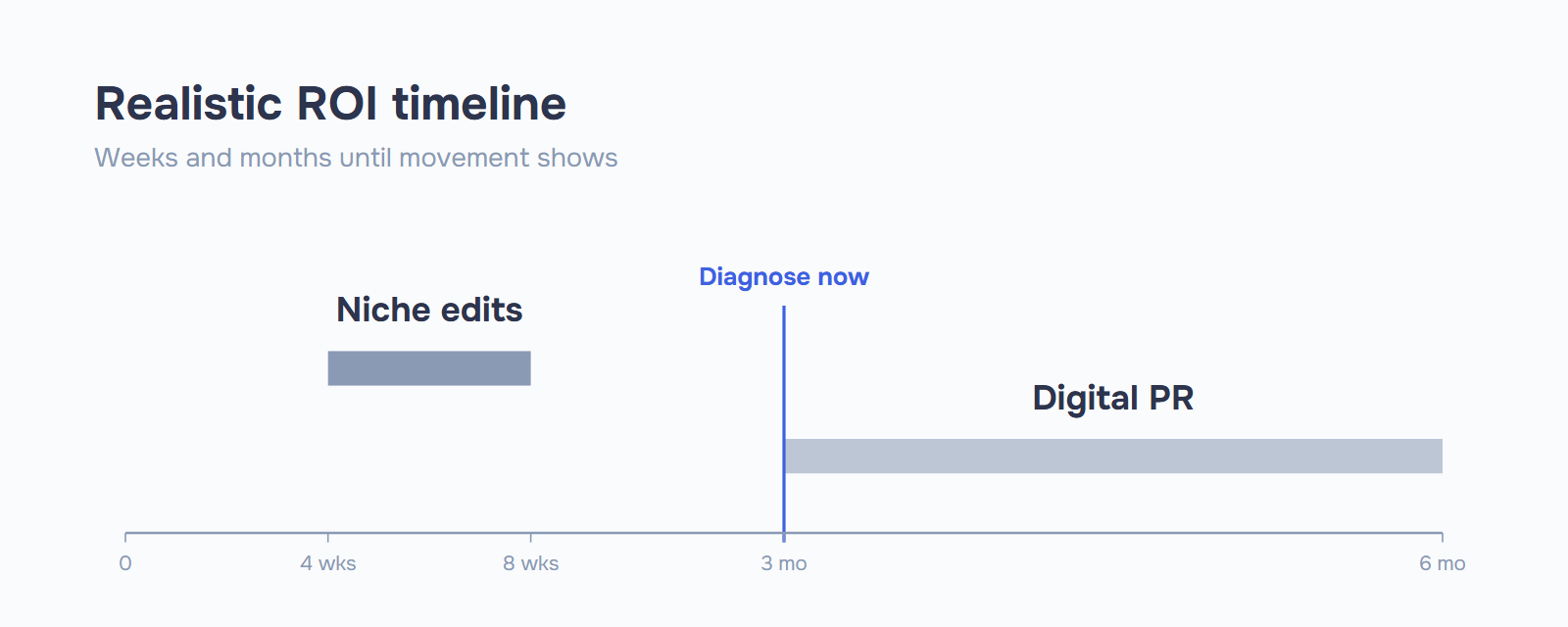
Realistic timelines: niche edits on low-competition terms (KD under 10) often show ranking movement within 4-8 weeks. Digital PR compounds more slowly. Expect 3-6 months before a data-driven campaign’s link equity fully shows up in head-term rankings. If a campaign hasn’t moved anything measurable by month three, that’s the point to diagnose, not to keep buying more of the same links.
When to Hire an iGaming SEO Link Building Agency
Hire an iGaming SEO link building agency once outreach volume, compliance review, or reporting starts eating more time than your team can spare.
The clearest signals it’s time to bring in a specialist:
- You don’t have existing relationships with gambling-friendly publishers, and cold outreach in this niche converts far lower than in unrestricted verticals
- Nobody on your team can run real digital PR: that takes a data/design/pitching skillset most in-house SEO teams don’t have
- You operate across multiple regulated markets and need placements vetted for jurisdiction-specific compliance, not just topical relevance
- You need consistent ROI reporting tied to rankings and conversions, not a monthly list of links with no context
A specialist agency should already have the safe-publisher relationships this guide describes, know the difference between a link that helps and one that draws regulatory attention, and be able to show you the anchor and referring-domain data behind every placement, not just the placement count. That’s the kind of work our iGaming SEO services team runs for casino and sportsbook clients across regulated markets.
Frequently Asked Questions (FAQ)
Real links still happen in this niche, but the pool of sites willing to accept a gambling backlink editorially is small enough that most people give up and buy their way in instead. Trade press like SBC News or Gambling Insider will cover a genuinely newsworthy data story without payment, and sports/finance outlets will run a surprising stat even without a betting angle. The catch is that earning those takes real research and pitching, which is slower than most people want. If you’re not willing to do that work, you end up in the paid-link pool with everyone else, and that pool is exactly where Google looks first.
Niche edits work, but only if you vet the seller as hard as you’d vet a guest post. The advantage is speed — you’re inserting a link into a page that’s already indexed and already ranking, so it can show up in your tracking in weeks instead of months. The failure mode is buying from a network that inserts your link into unrelated or spun content just to hit a quota; that kind of placement drags your profile down instead of helping it. Check what else the site links to before you pay, not after.
Most publishers ban gambling content outright because of ad policy restrictions and YMYL scrutiny, not because your pitch is bad. Ad networks and affiliate platforms route gambling through separate approval processes or reject it entirely, so the sites left standing are a small, known list — trade press, betting-adjacent sports and finance media, and a handful of general sites with an explicit gambling policy. Writing a better pitch won’t open doors that are closed at the policy level. Target the sites that already say yes to this vertical instead of trying to convince ones that don’t.
Anything over 10% exact-match on a single money page is pushing your luck in gambling, where the scrutiny bar sits higher than most niches. A defensible profile runs 50-60% branded anchors, 20-30% partial-match or topical phrasing, and only 5-10% exact-match, with the rest generic or naked URLs. Track this per page, not site-wide — one page running 40% exact-match can trigger a manual action even if your aggregate numbers look clean. It’s tedious to monitor, but cheaper than a reconsideration request.
You need to identify every unnatural link, get as many removed as you can by contacting the linking site directly, and disavow whatever won’t come down before you file a reconsideration request. This is slow and there’s no shortcut — expect to go through your whole referring domain list in Search Console, not just the obvious spam. Even a successful reconsideration doesn’t guarantee your rankings bounce back to where they were; some sites recover fully, some settle lower than before. The real fix going forward is not repeating whatever pattern got you flagged, since Google treats repeat violations more harshly.
It’s worth it if you can stomach the timeline, and not worth it if you need quick wins. A data-driven pitch takes 6-10 weeks just to land placements, and you’re often waiting 3-6 months before that link equity shows up in head-term rankings. What you get in exchange is the hardest-to-fake, least-scrutinized link type in this niche, because it’s a byproduct of real coverage rather than something you paid for. If you need movement inside a quarter, pair it with niche edits on lower-competition terms instead of relying on PR alone.
Because DR is a proxy metric, not a business outcome, and it’s easy to move without touching anything that matters. You can stack referring domains all day and still see flat depositing customers if the links aren’t landing on the pages actually driving conversions, or if the traffic they bring isn’t the right intent. Track ranking position and organic sessions on the specific money pages you built links to, then follow those sessions through to FTDs, not domain-wide numbers. If a campaign hasn’t moved anything measurable by month three, that’s a sign to diagnose the campaign, not to buy more links of the same type.
Once outreach, compliance review, or reporting is eating more time than your team has to spare, an agency starts paying for itself. The clearest signal is cold outreach conversion — if you don’t already have relationships with gambling-friendly publishers, cold pitching in this niche converts far lower than in unrestricted verticals, and a specialist walks in with those relationships already built. It also matters if you’re running across multiple regulated markets, since placements need jurisdiction-specific vetting on top of topical relevance. If you’re only running in one market and have someone who can do real outreach, in-house is fine.
Share with


Rate the article