




The Six Presales, Side by Side

SeerDEX
Permissionless prediction markets on Solana
Category
- Prediction Markets
- DeFi
Launchpad
- seerdex.com
Funding Goal
- n/d

CAP
Insured stablecoin yield engine
Category
- Stablecoin
- DeFi
Launchpad
- Uniswap CCA
Funding Goal
- $3.37M

KAI
AI-powered unified banking
Category
- Payments
- Fintech
Launchpad
- Gems
Funding Goal
- $25.2M

STRATO
Gold and silver on-chain
Category
- RWA
- Metals
Launchpad
- Uniswap CCA
Funding Goal
- Auction-set

BitFi
Bitcoin yield via CeDeFi
Category
- BTCfi
- Yield
Launchpad
- Echo (Sonar)
Funding Goal
- $500K

ReFi Hub
Tokenized solar cash flow
Category
- RWA
- Solar
Launchpad
- Crafts
Funding Goal
- Auction-set
Six token sales stand out among the best crypto presales June has put on launchpads. Each one ships a working product. CAP underwrites stablecoin yield with institutional capital. KAI merges banking and crypto under AI agents. STRATO puts physical gold on-chain. BitFi turns idle Bitcoin into yield. ReFi Hub finances solar plants that already sell power, and behind every raise here sits the presale marketing strategy that fills wallets.
This review covers the architecture, the backers, and the sale mechanics for each. We focus on what the data shows: funding, token terms, launchpads, and the auction formats now replacing fixed-price drops. The goal is clarity, not hype. Read it as research, not investment advice — crypto token sales carry high risk, and figures move fast.
Our Approach to Ranking the Best Crypto Presales June 2026
We ranked these projects on evidence, not promises.
A presale earns attention here when the product exists and the numbers check out. We weighed five factors:
Live TVL, real users, or audited reserves beat roadmap slides
Named VCs and market makers signal diligence others already did.
Auction formats, unlock terms, and FDV shape entry risk
Shipped code and institutional partnerships outweigh founder fame
A clear use case in a growing sector matters more than narrative
Each project clears at least three of these. Where a gap exists — a missing backer list, a thin float — we flag it plainly. The reader decides.
This composite filter surfaces projects with asymmetric upside and contained downside.
SeerDEX ($SEERX): AI-Validated Prediction Markets Stand Out in the June 2026 Presale Lineup
$SEERX 🔹 Prediction Markets 🔹 Binary Options 🔹 Perpetuals 🔹 Ethereum 🔹 Solana
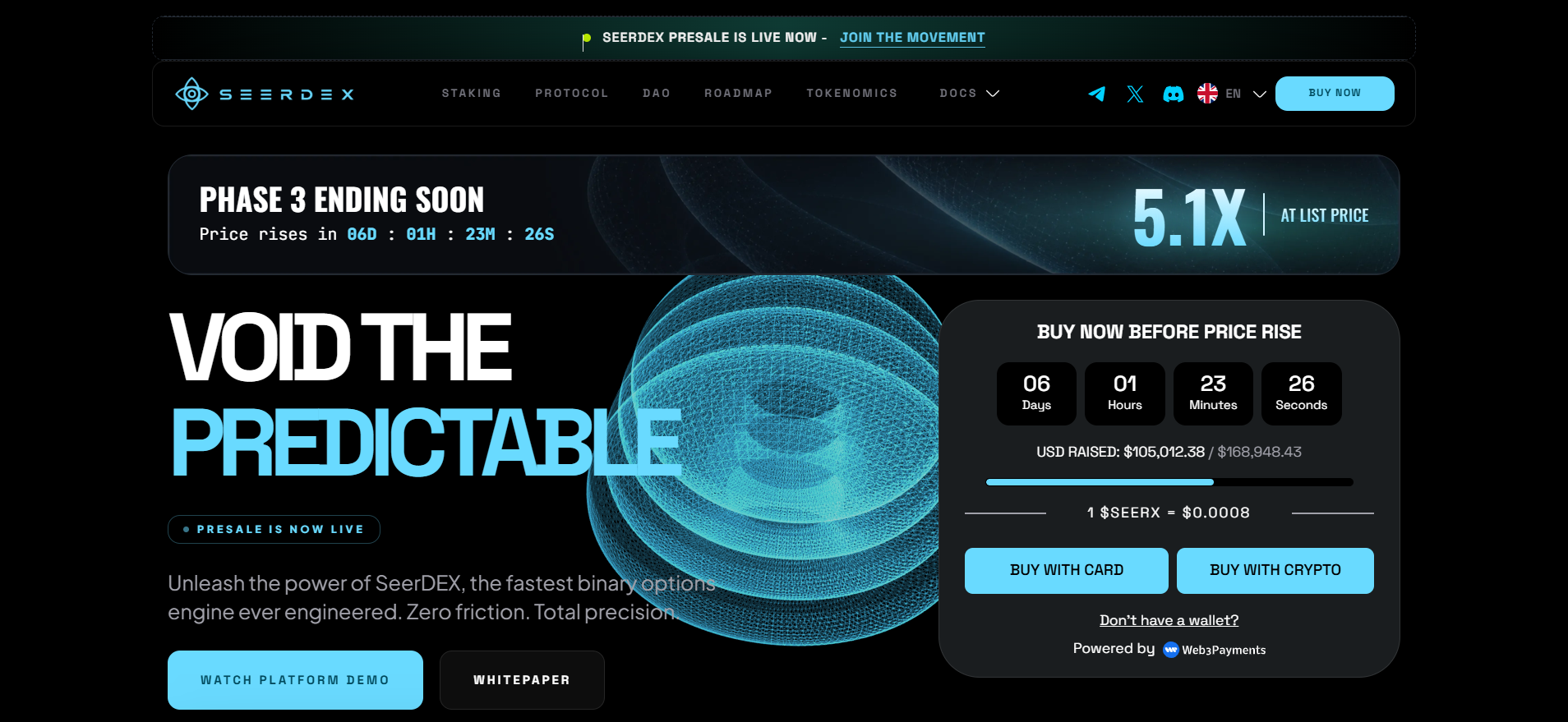
SeerDEX is a permissionless prediction-market protocol with the trading platform built on Solana for speed and low fees, and its token $SEERX issued as an ERC-20 on Ethereum. The platform puts three instruments inside one interface — prediction markets, binary options, and (from Phase 5) perpetuals. Where centralised competitors gate which markets exist, SeerDEX lets any user create a market on any real-world outcome: elections, token price benchmarks, sports results, macro data releases. Market creators stake $SEERX as a quality bond; an AI validation engine screens submissions, and disputed settlements route to a multi-oracle layer — removing the single-point-of-failure risk that cost a competing platform millions in a disputed 2025 resolution.
$SEERX is bridgeable between Ethereum and Solana. Total supply is 20B; 8B tokens (40%) are allocated to the presale. Stakers receive governance rights, fee discounts up to 50%, and buybacks funded by 40% of all protocol trading fees.
The presale is live in Phase 3 of the roadmap, with the token price stepping up at each new presale stage — early buyers lock in the lowest available entry. ETH and BNB purchases require no KYC; card purchases require no KYC up to $1,000. TGE is planned for Phase 4.
CAP ($CAP): Institutional Backing Leads the Best Crypto Presale June Field
$CAP 🔹 Stablecoin 🔹 Ethereum 🔹 Uniswap CCA
CAP has the strongest backer roster of any presale in this group.
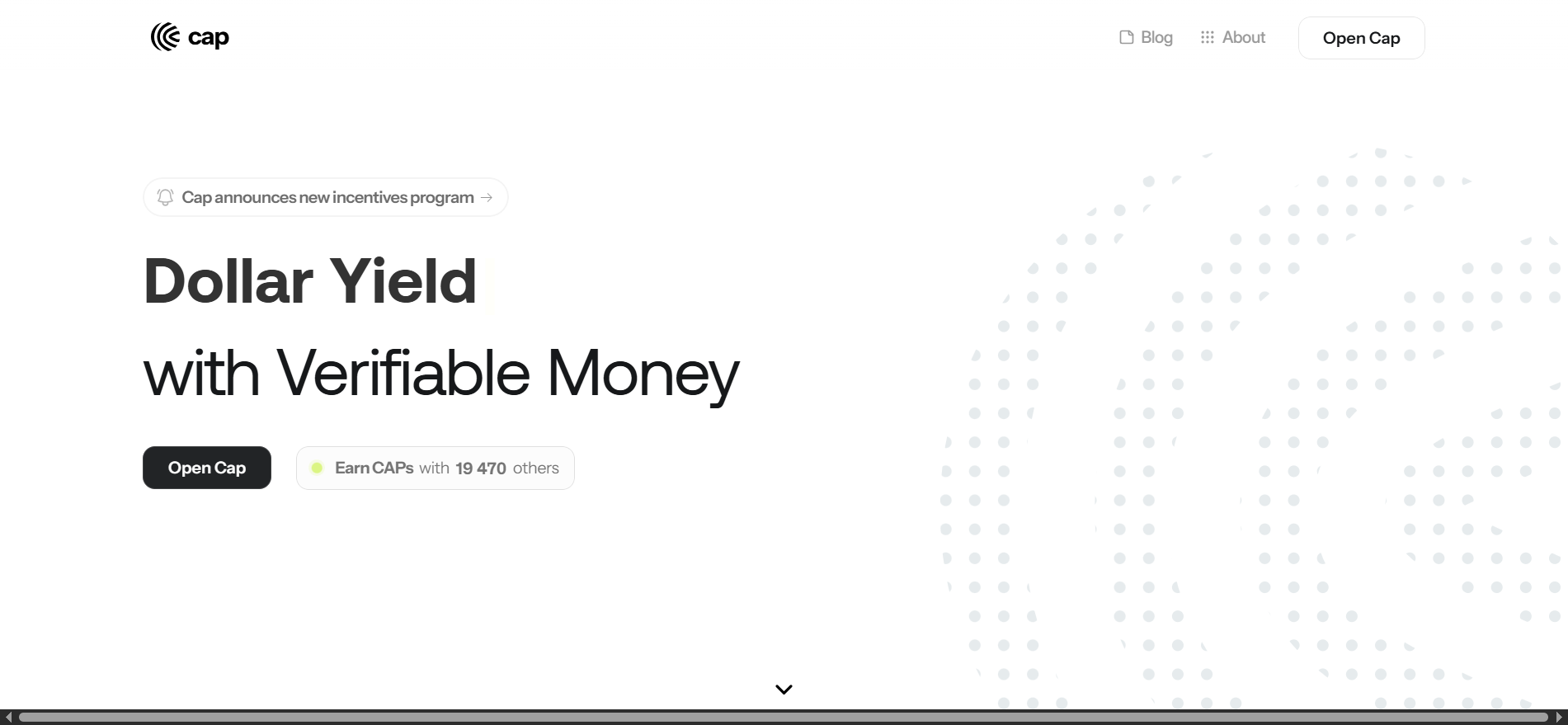
Cap is an Ethereum stablecoin engine. It issues cUSD, backed 1:1 by USDC, USDT, PYUSD, and tokenized money-market funds from WisdomTree and Franklin Templeton. A staked version, stcUSD, pays yield. The mechanism is the differentiator: idle reserves go to vetted institutional operators who run yield strategies, while restakers on EigenLayer and Symbiotic insure depositors against operator default. Cap keeps about 10% of yield. The protocol went live on mainnet in August 2025 and now ranks among Aave’s largest USDC suppliers, with over $360M deposited.
The capital behind it is rare. Franklin Templeton led an $8M seed in April 2025. The cap table reads like a market-maker convention: GSR, Flow Traders, IMC Trading, Laser Digital, RockawayX, Caladan, Presto. Angels include Sandeep Nailwal, Kain Warwick, and Bryan Pellegrino. These are the firms that become liquidity and operators for a stablecoin.
The sale runs on Uniswap’s Continuous Clearing Auction from June 8–17. Price discovery happens on-chain, block by block, at a uniform clearing price. The 100% unlock applies to the sale tranche. Full cap-table vesting was still incompletely disclosed in early 2026 — worth confirming before bidding.
KAI ($KAI): The Largest Raise Among Top Crypto Presales June
$KAI 🔹 Payments 🔹 Fintech 🔹 Gems
KAI carries the biggest ask and the highest valuation in this cohort.
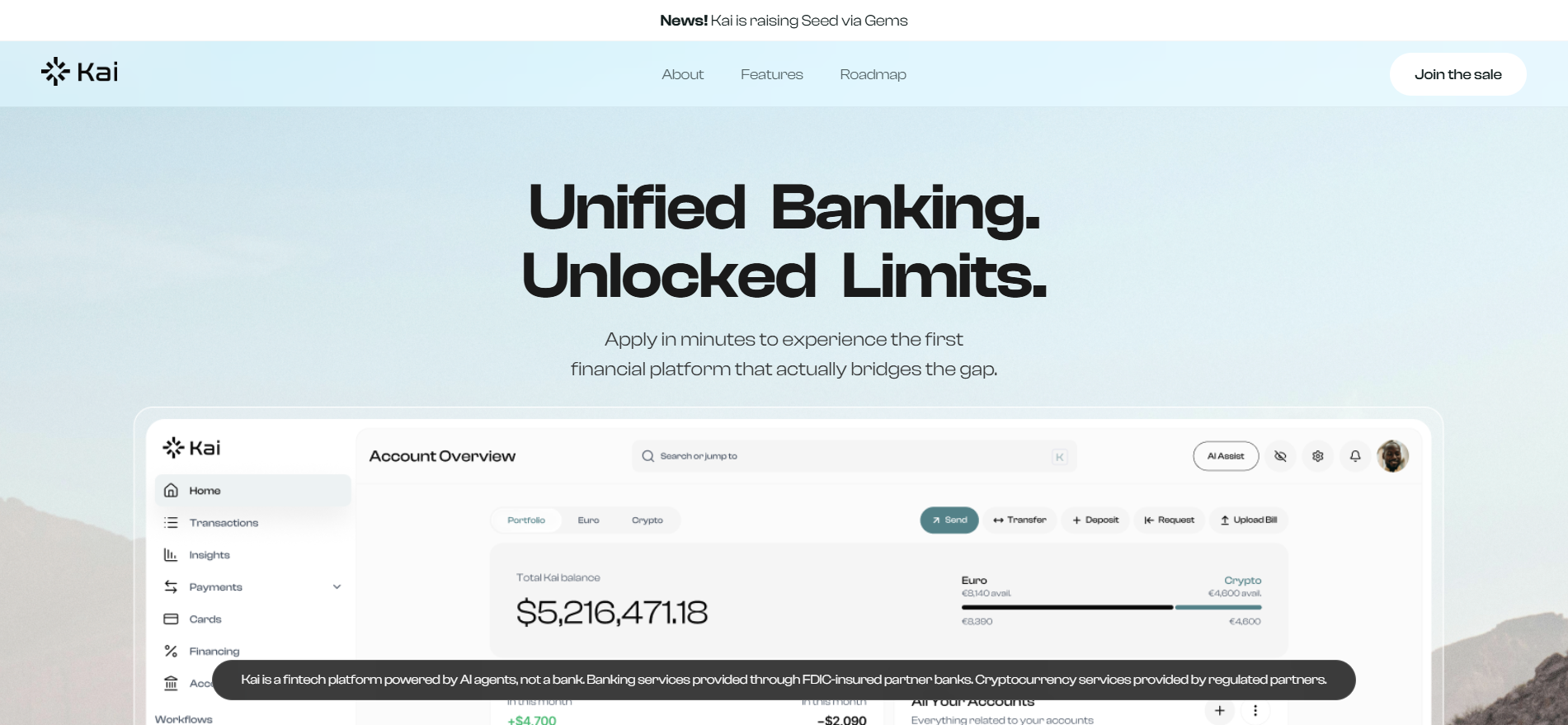
KAI calls itself “unified banking.” It is not a bank. Fiat sits with FDIC-insured partners; crypto runs through regulated partners. The platform merges traditional accounts, digital assets, and a virtual card that spends from USD or USDC. AI agents handle treasury management and just-in-time conversions through natural-language commands. The thesis is sound: agentic payments is a hot narrative, and unified accounts solve real fragmentation.
The team brings credible fintech résumés. Gadi Davidyan, co-CEO, is a former bank CIO. Youval Fabri, co-CEO, has a cross-border regulatory background. Verify the profiles directly, given how much rides on them.
The sale tells a sharper story. KAI offers 4.2B tokens — 20% of supply — at $0.006 on the Gems launchpad, June 8–15. Target: $25.2M. FDV lands near $420M. Vesting suppresses sell pressure: 2% at TGE, 2% more in month one, the rest over 24 months. Two things deserve scrutiny. No backers are disclosed for a raise this size. And “KAI” is a heavily reused ticker, so confirm any diligence targets the kai.xyz entity. The numbers are aggressive; the structure is built to hold price.
STRATO ($STRATO): Ethereum OGs Anchor a Standout June 2026 Token Sale
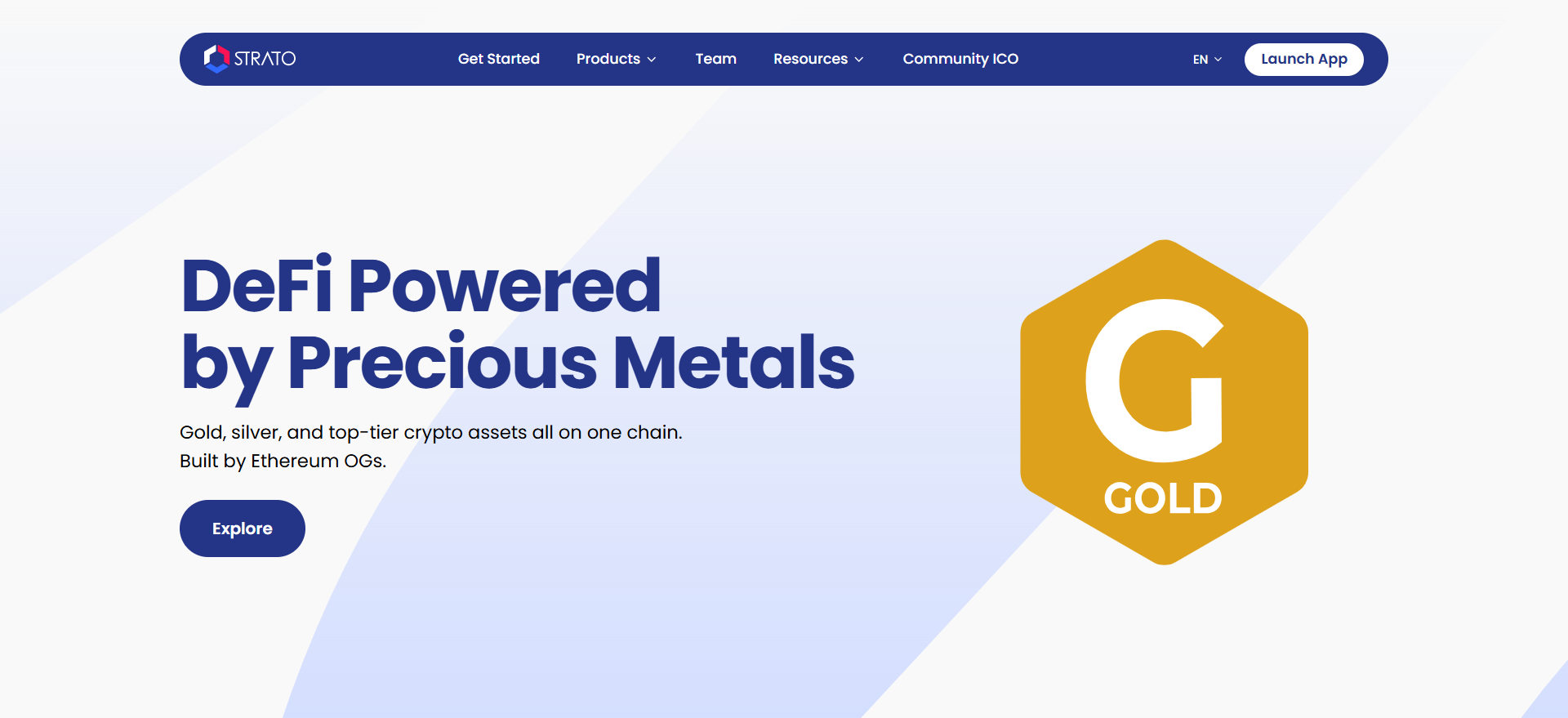
$STRATO 🔹 RWA / Metals 🔹 Layer 1 🔹 Uniswap CCA
STRATO pairs the deepest team pedigree with a clear real-world use case.
STRATO is a full-stack DeFi platform and Layer 1 built around tokenized precious metals. Gold and silver sit 1:1 in New York vaults via partner BA Gold Enterprises, then mint as GOLDST and SILVST on-chain. Users borrow USDST, the platform stablecoin, against metals, BTC, or ETH at up to 80% LTV. Yield comes from an autonomous arbitrage vault, not emissions. Gas runs about $0.01 per transaction. A Q1 2026 audit verified 711 oz of gold and 46,000 oz of silver backing.
The builders are Ethereum originals. Kieren James-Lubin and Victor Wong came from BlockApps, which shipped one of Ethereum’s six original 2014 clients and launched the first blockchain-as-a-service on Microsoft Azure. Joe Lubin, Ethereum co-founder, advises. Backing runs ConsenSys-deep: ConsenSys, Galaxy Ventures, Morgan Creek Digital, Fenbushi. Consensys Diligence audited the contracts.
The sale is a Community ICO of 2.5% of supply on Uniswap CCA. Pre-bid opens June 3; public bidding runs June 4–9. Tokens unlock 100% at TGE, with no lockup. Selling a thin 2.5% on an auction means price discovery on a small float — common for CCA, and worth watching. The core trust question stays the metals: monthly audits and physical redemption.

BitFi ($BFI): The Smallest, Cleanest Raise in the June Presale Lineup
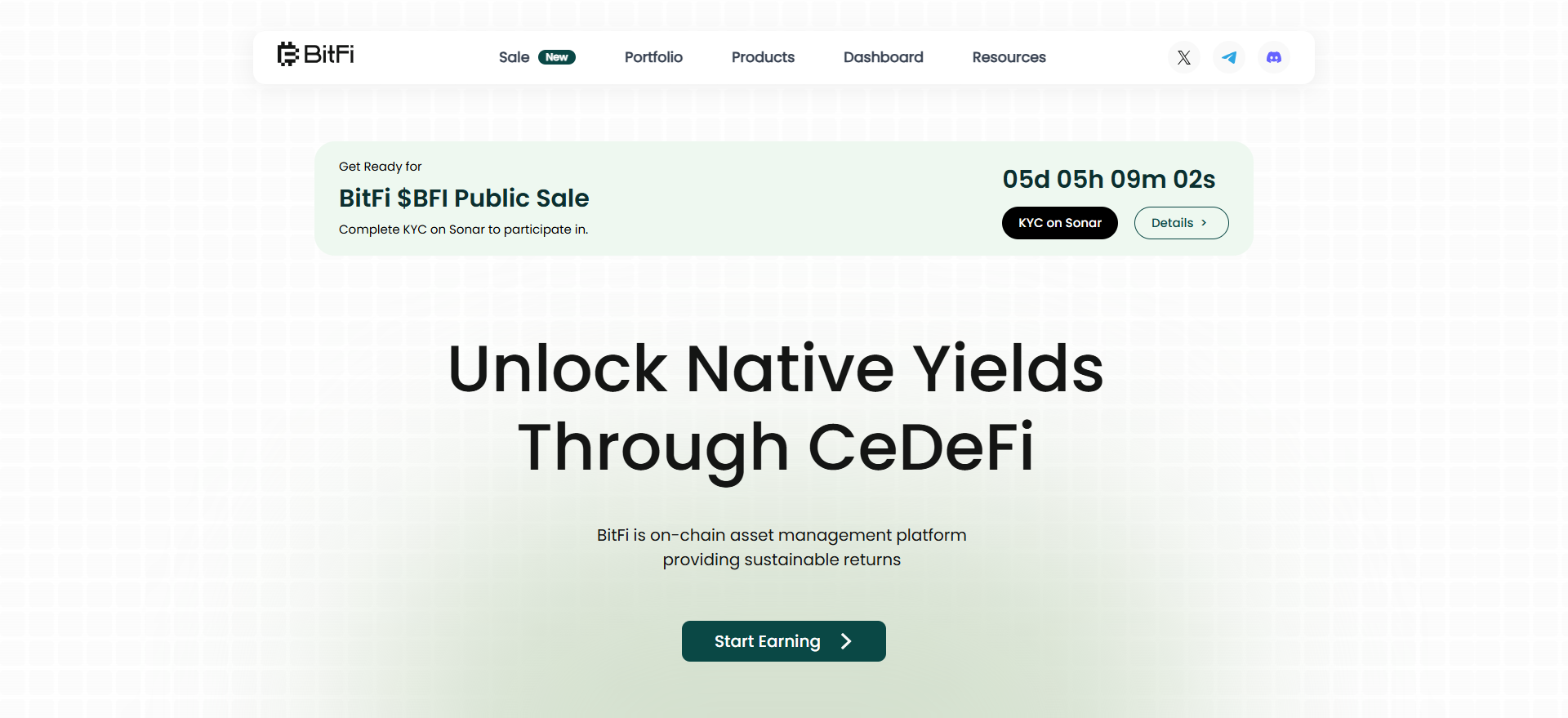
$BFI 🔹 BTCfi 🔹CeDeFi 🔹 Echo / Sonar
BitFi runs the smallest raise here, with a live product already generating yield.
BitFi is a CeDeFi Bitcoin yield platform on Core, the “Bitcoin Everything Chain.” Deposit BTC, mint bfBTC — a yield-bearing token backed 1:1. Yield comes from institutional delta-neutral strategies: funding-rate arbitrage and basis trading, run through Binance’s Ceffu custody and MirrorX settlement. BTC stays in segregated custody while strategies execute. The bfBTC product is live with real TVL, reported above 4,500 BTC. The $BFI token now on sale is the separate governance and utility asset.
The pitch is clean: institutional BTC yield for everyone. BTCfi grew sharply in 2025, though the niche is crowded with Babylon, Lombard, and Solv. Backers sit mid-tier but solid: Fundamental Labs, IBC Ventures, CGV FoF. The custody tie to Ceffu is both a credibility prop and a counterparty consideration.
The sale is the lowest-risk structure in the group. BitFi offers 10M tokens — 1% of supply — at $0.05 on Echo’s Sonar launchpad, June 8–12. Target: $500K. FDV: $50M. Tokens unlock 100% at TGE. Bids settle in USDC on Ethereum, pro-rata. A modest ask and a low FDV lower raise risk. The open question is whether $BFI’s fee-capture utility delivers post-TGE.
ReFi Hub: Equity-Linked Tokens Make This a Novel June 2026 Presale
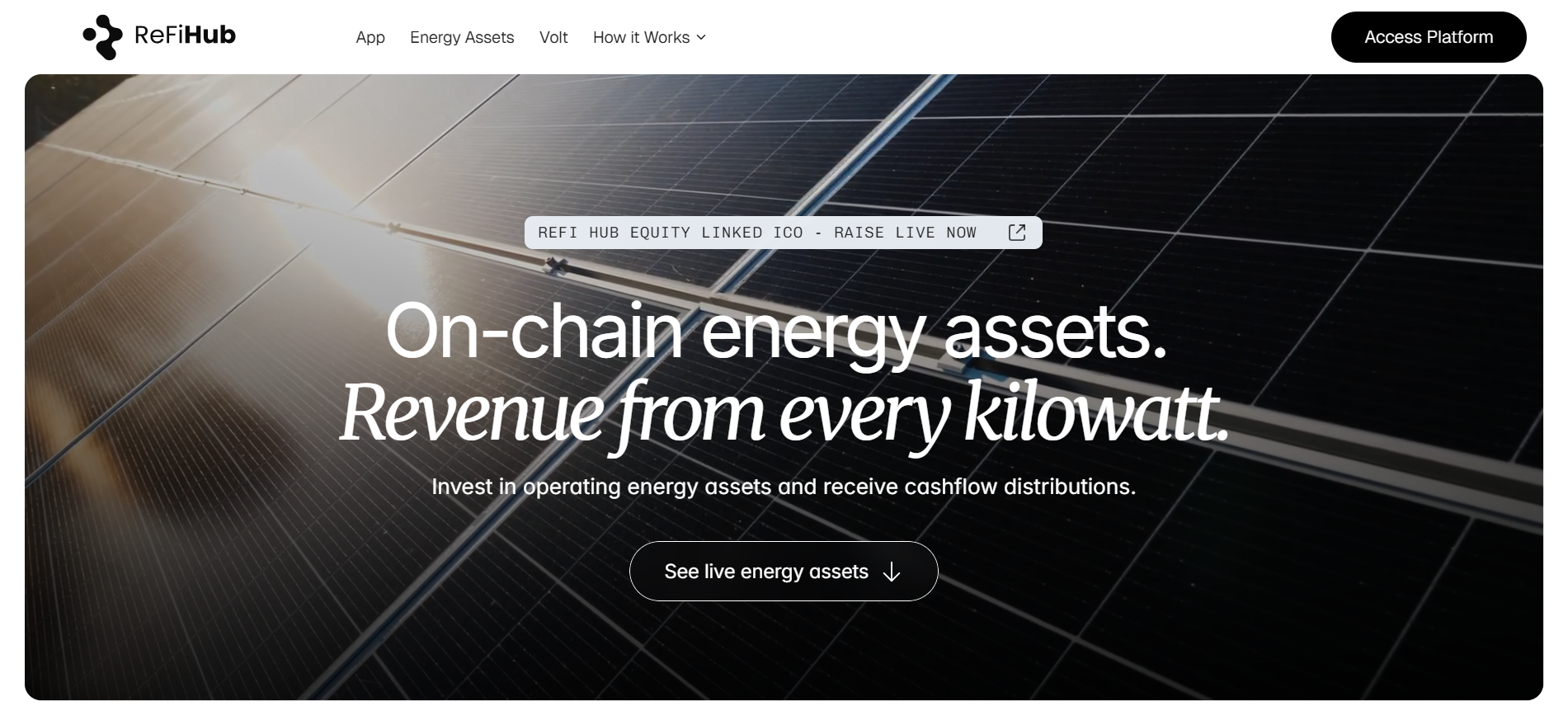
ReFi Hub 🔹 RWA 🔹 SolarSolanaCrafts
ReFi Hub offers something rare: a token legally tied to equity in cash-flowing solar assets.
ReFi Hub is an on-chain financing layer for operating solar infrastructure, built on Solana. It tokenizes real, revenue-generating plants and pays the electricity-sale cash flow to holders in USDC. One live asset, “Pivot Green,” is a Singapore rooftop array on a 25-year PPA with an SGX-listed counterparty, running near 20.6% average annualized IRR. The project pairs real assets with a strict three-stage diligence framework and Singapore-law deal structuring.
Validation comes through partnerships, not a VC list. A signed LOI with TruFin — an institutional protocol with $300M+ deployed — covers $5–10M of deployments into ReFi Hub structures starting Q3 2026. The launchpad partner is Crafts.
The sale is the first sealed-bid auction on Solana for equity-linked tokens. Bids stay encrypted via Arcium MPC until the window closes, then everyone clears at one uniform price. Structure runs near 14% of the company tokenized at a $4–8M valuation band, raising roughly $400K–$1.12M depending on the clearing price. The equity link cuts both ways. It adds downside protection a utility token lacks. But returns hinge on the company landing large institutional tickets and scaling AUM. Confirm live parameters on the Crafts page.
Key Token Sale Details for Each Presale
Side by side, the sales split into two camps: small auction-led raises and one large fixed-price ask.
| Metric | SeerDEX | CAP | KAI | STRATO | BitFi | ReFi Hub |
|---|---|---|---|---|---|---|
| Price | $0.0005 | $0.0075 | $0.006 | Auction | $0.05 | Auction |
| For sale | 8B (40%) | 450M (4.5%) | 4.2B (20%) | 2.5% supply | 10M (1%) | ~14% equity |
| Goal | n/d | $3.37M | $25.2M | Auction-set | $500K | ~$0.4–1.1M |
| FDV | ~$10M | ~$75M | ~$420M | n/d | $50M | $4–8M cap |
| Unlock | TGE | 100% (tranche) | 2% TGE, 24mo | 100% TGE | 100% TGE | Equity-linked |
| Window | Ongoing | Jun 8–17 | Jun 8–15 | Jun 3–9 | Jun 8–12 | Jun 2–5 |
| Launchpad | seerdex.com | Uniswap CCA | Gems | Uniswap CCA | Echo / Sonar | Crafts |
Why Auction-Based Sales Are Reshaping the Best Crypto Presales June 2026
Three of these six sales replaced fixed pricing with on-chain auctions — a structural shift, not a fad.
Fixed-price presales have a known flaw. Bots and large wallets snipe the launch, front-run retail, and dump on the open. Auctions break that pattern. CAP and STRATO use Uniswap’s Continuous Clearing Auction. Supply releases block by block, each block clears at one price, and everyone at or above that price pays the same rate. Proceeds then seed a Uniswap v4 pool at the discovered price. No gas wars, no hidden allocations.
ReFi Hub goes further with a sealed-bid auction on Solana. Bids stay encrypted through Arcium’s MPC network until the window closes. That kills coordinated pricing and front-running before it starts. BitFi takes the middle path: Echo’s Sonar runs a fixed price with pro-rata allocation, which favors compliance and predictability over discovery.
The trade-off is real. Auctions set fair prices but can run volatile on thin floats — STRATO sells just 2.5% of supply. Fixed-price sales give certainty but invite the old sniping problem. For anyone weighing the best crypto presale June 2026 has on offer, the sale mechanism now matters as much as the token itself.
The Sectors Driving June 2026 Crypto Presales
Real-world assets and yield-bearing stablecoins are the two narratives pulling capital into this presale cycle.
Each project maps to a sector with a clear macro tailwind:
- Yield-bearing stablecoins (CAP). This segment holds roughly $19B of a $240B+ stablecoin market and is projected to reach $60B by 2028. Cap’s insured-yield model competes with Ethena’s funding-rate approach.
- RWA tokenization (STRATO, ReFi Hub). Tokenized real-world assets — gold, silver, solar cash flow — anchor value to physical collateral instead of speculation. The sector is among 2025–26’s most durable on-chain themes.
- BTCfi (BitFi). Bitcoin holds over a trillion dollars in mostly idle capital. CeDeFi yield platforms unlock returns without pure smart-contract exposure.
- Agentic payments (KAI). AI agents that move money across fiat and crypto sit at the intersection of two fast-growing fintech trends, which is exactly why AI visibility for crypto projects now matters as much as the token model itself.
The common thread is real economic activity. These protocols derive yield from trading spreads, lending, electricity sales, and arbitrage — not token emissions. That shift, from inflationary rewards to cash-flow backing, defines the strongest crypto presales June 2026 has surfaced.
How to Evaluate a Crypto Presale Before You Commit
Strong presales share a pattern: a live product, named backers, transparent token terms, and a sale structure that protects buyers.
- Use a consistent lens. Start with the product. Does it exist, and does it generate revenue? Cap supplies $360M to Aave today. BitFi reports over 4,500 BTC in custody. ReFi Hub already distributes solar cash flow. A live product with real metrics beats a roadmap every time.
- Read the cap table. Named investors mean someone ran diligence and committed capital. CAP and STRATO clear this bar easily. KAI does not disclose backers — a gap worth weighing against its $420M FDV.
- Study the tokenomics. Check the FDV against the funding goal, the unlock schedule, and the float at launch. A 100% TGE unlock removes vesting overhang but can mean volatility. A long vest, like KAI’s 24 months, suppresses early selling but delays full circulation.
- Understand the sale mechanism. Auctions discover fair prices; fixed-price sales offer certainty. Confirm exact dates, KYC requirements, and contract addresses on the official launchpad before committing any capital. Presale timing shifts often, so verify before you act.
One line to remember: the best crypto presales to invest in June 2026 are the ones where you can verify the product, the backers, and the token terms yourself — not the ones with the loudest marketing.
The Best Crypto Presales June 2026 Reward Substance Over Story
The best crypto presales June 2026 has produced share one trait: substance over story.
CAP and STRATO lead on validation — institutional backers, audited reserves, and teams with shipped products behind them. BitFi and ReFi Hub run the smallest, lowest-FDV raises, each with a live product already paying yield. KAI is the outlier: the largest ask, the highest valuation, and no disclosed backers, which makes diligence essential before any commitment.
Across the group, the trend is clear. Auctions are replacing fixed-price drops. Cash-flow backing is replacing token emissions. Real-world assets and insured yield are pulling serious capital on-chain. For anyone tracking the best crypto presales to invest in June 2026, these six reward close study — not because their dates are fixed, but because their fundamentals are visible. Projects that clear this bar still need eyes on them, which is where ICODA’s marketing services come in.
Frequently Asked Questions (FAQ)
Most presale participants don’t beat buyers who wait — because by listing day, the token often trades below the FDV it was sold at. Data from Memento Research shows roughly 85% of 2025 tokens traded below their TGE price, with elevated FDVs, thin circulating float, and aggressive emission schedules as the main drivers. The presales worth entering early are ones with a small float sold at a low FDV, a live product, and vesting that suppresses insider supply at launch. Without all three, waiting for the open market is the safer trade.
Fixed-price drops historically favor bots and large wallets that snipe launches, front-run retail buyers, and dump on open trading. Auction mechanisms like Uniswap’s Continuous Clearing Auction fix this by distributing supply block by block, with every buyer at or above the clearing price paying the same rate. Aztec used this model in November 2025 and raised $59M with 17,000 bidders, with the goal of making the sale community-driven and permissionless rather than favoring insiders. The real tradeoff: auctions on thin floats (like a 2.5% supply sale) can still run volatile once secondary trading opens.
Most tokens in recent cycles launched with less than 20% of supply in circulation but at high FDVs, which means the market price was already pricing in future supply that hadn’t unlocked yet. You’re buying future sell pressure. The fix is to filter for presales with high float at TGE (like the 100%-unlock sales in this cycle), low FDV relative to comparable live products, and named institutional backers who have incentive to support the price. Projects that check none of those boxes and lead with a countdown timer are selling urgency, not fundamentals.
RWA tokenization is real, but most of the value is still sitting in institutional hands. At Consensus Hong Kong 2026, leaders from Animoca Brands, Mastercard, and Robinhood noted the focus is on tokenized U.S. Treasuries, money market funds, and stablecoin integrations — not retail-accessible products. Projects like STRATO and ReFi Hub are retail-facing exceptions, but they’re the minority. For presale investors, the question isn’t whether tokenization works — it’s whether a specific project has the audits, legal structure, and custody to hold up when regulators look closely.
Selling a small tranche is by design, not a red flag. A 4.5% float via Uniswap’s CCA means price discovery happens on limited supply, which keeps the cleared price from being dragged down by a large dump. The tradeoff is that secondary liquidity after TGE is thin until more supply unlocks. The real concern with CAP isn’t the float size — it’s that full cap-table vesting was still incompletely disclosed in early 2026, meaning early VC terms aren’t fully visible to buyers bidding in the auction.
That’s a legitimate concern. A $420M FDV with 80% of supply locked for 24 months means the unlock schedule becomes the price chart for the next two years. The investment case rests entirely on whether the unified-banking narrative and the team’s fintech credentials justify that valuation — and without named backers, there’s no third-party diligence to lean on. The vesting structure does suppress early sell pressure, but it doesn’t solve the overvaluation problem if the product doesn’t grow into the number.
DISCLAIMER: This article is research and market analysis, not investment advice. ICODA is not a financial advisor. Crypto token sales are high-risk, and figures drawn from project sites and third-party trackers can change quickly. Verify all sale dates, terms, and contract addresses on official channels before committing capital.
Share with


Rate the article