

The centralized exchange market entering 2026 bears little resemblance to its pre-2023 iteration. Historic DOJ settlements exceeding $5 billion, the largest hack in crypto history ($1.5 billion at Bybit), and the widespread adoption of exchange-owned Layer-2 networks have fundamentally reshaped how experienced traders should evaluate platforms. Finding the best crypto exchange is no longer simply about fee comparison—it’s about understanding the strategic trade-offs between regulatory certainty, derivatives capability, liquidity depth, and technological innovation.
The prevailing theme is the transition from “exchange-as-venue” to “exchange-as-network.” Major platforms now control their own sovereign blockspace through proprietary L2s, capturing value not just from trading fees but from the infrastructure of the blockchain economy itself. Meanwhile, MiCA implementation in Europe and aggressive US enforcement have created a clear bifurcation: compliance-focused platforms targeting institutional flow versus offshore venues prioritizing speed and access.
This analysis synthesizes data from late 2024 through December 2025 to provide actionable intelligence for sophisticated market participants seeking the best crypto trading platform for their specific requirements.
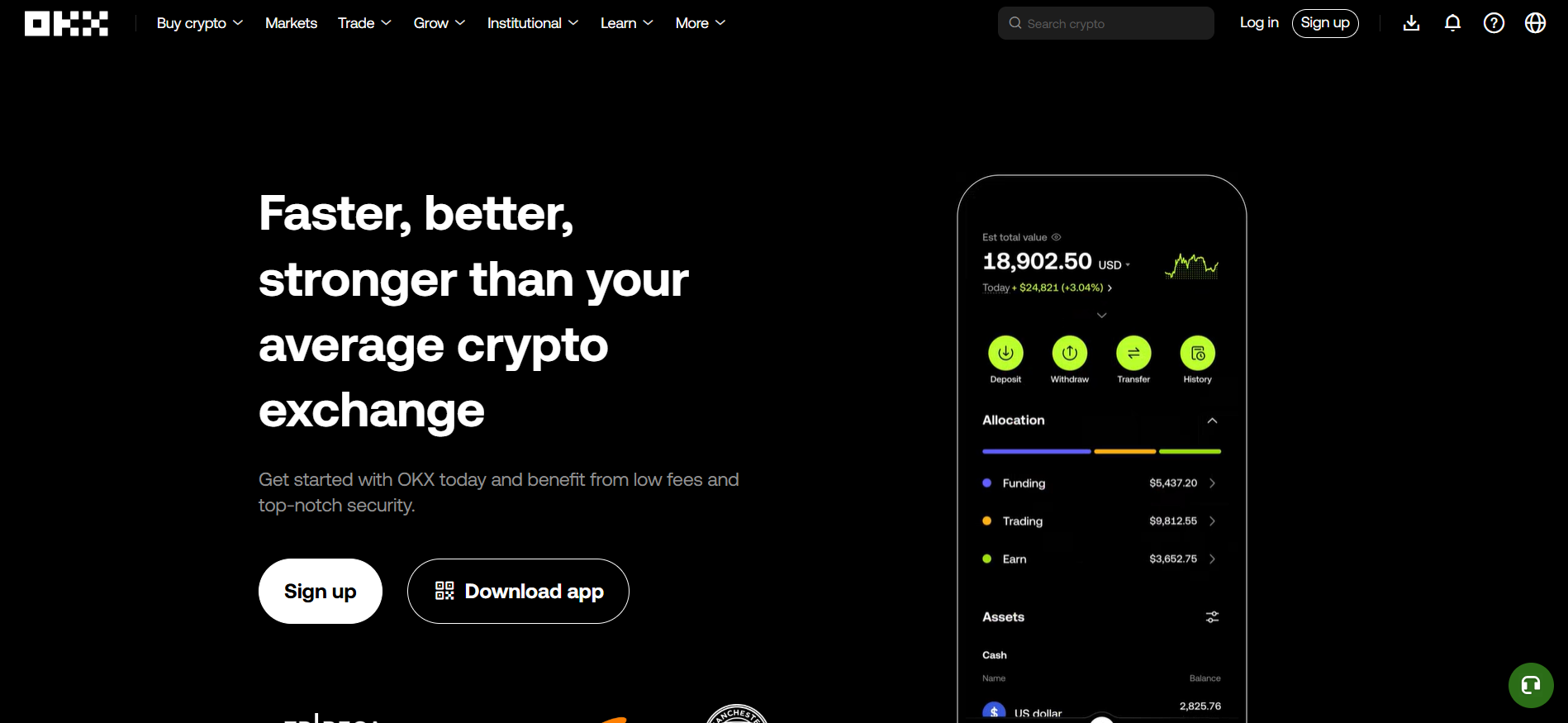
1. OKX: The Derivatives Specialist with Regulatory Breakthrough
Key Metrics: First global exchange with full MiCA authorization; 36 consecutive monthly Proof of Reserve reports; 50+ million users
Best For: Derivatives-focused traders seeking institutional-grade infrastructure with competitive fees and regulatory clarity
Unique Features: X Layer zkEVM L2 with OKB as native gas token; zk-STARK reserve verification rated highest quality by blockchain analysts
OKX has emerged as the optimal balance point in the 2026 crypto exchange comparison—combining derivatives depth with genuine regulatory progress. The January 2025 MiCA license through its Malta hub enables passporting across all 30 EEA states, a meaningful differentiator for traders requiring jurisdictional certainty without sacrificing product range.
The fee structure undercuts most competitors: 0.08% maker / 0.10% taker for spot (versus industry average 0.15%/0.19%), dropping to 0.02%/0.05% for futures. OKB holders receive additional 10-40% reductions. The August 2025 token burn fixing total supply at 21 million OKB (down from 300 million) and its designation as X Layer gas fundamentally altered tokenomics from discount utility to network asset.
Proof of reserves represents industry-leading transparency—BTC at 105%, ETH at 102%, USDT at 106%—verified monthly using zero-knowledge cryptography. The October 2020 governance incident (42-day withdrawal suspension during founder detention) remains a cautionary note, but the platform’s clean security record since and sophisticated Web3 wallet integration across 100+ blockchains cement its position as the premier choice for technical traders.
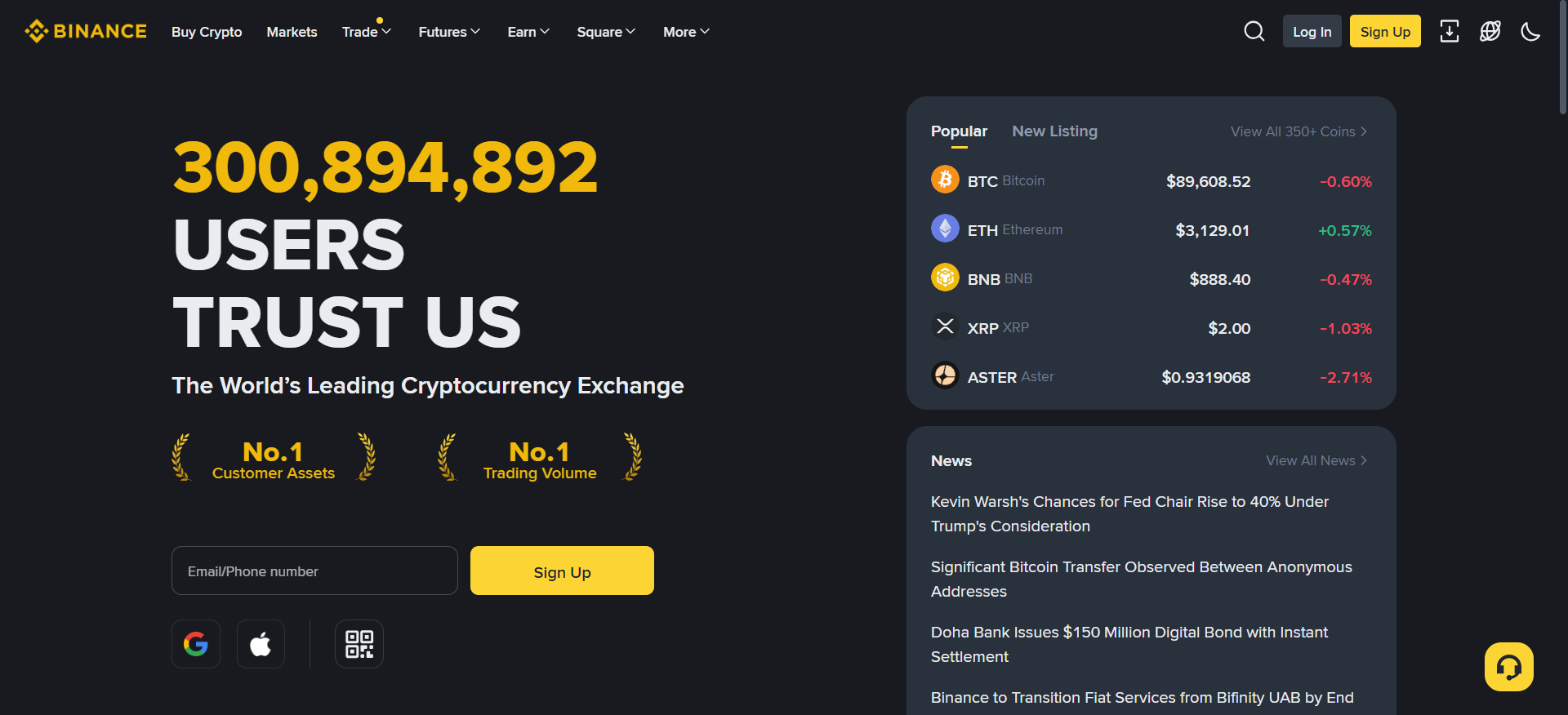
2. Binance: The Embattled Giant Maintains Dominance
Key Metrics: 40% global spot trading volume; $22.5 trillion annual volume; 300+ million users; 441 cryptocurrencies
Best For: High-volume traders prioritizing liquidity depth and comprehensive product range across spot, futures, and ecosystem products
Unique Features: BNB Chain ecosystem with opBNB L2; SAFU insurance fund exceeding $1 billion; Unified Trading Account for institutional cross-margining
Binance remains the undisputed volume leader, processing daily volumes exceeding NASDAQ. The platform’s transformation under co-CEOs Richard Teng and Yi He (appointed December 2025) reflects genuine regulatory maturation—the Abu Dhabi ADGM license establishing formal headquarters after years of stateless operations.
The fee structure maintains industry competitiveness: 0.10% maker/taker for spot with 25% BNB discount, and 0.02%/0.05% for futures. The BNB token ecosystem provides meaningful utility through quarterly burns—54+ million BNB ($51 billion) destroyed to date—while functioning as gas for the BNB Chain ecosystem processing millions of daily active users.
Reserve transparency shows BTC at 103.79% and ETH at 106.56%, though audits cover only 31 of 350+ assets. The $4.3 billion DOJ settlement and ongoing monitoring through 2026 represent continued regulatory overhang, while futures restrictions across the UK, Germany, Italy, Australia, and entire EEA limit derivative access for European traders. Despite these constraints, the sheer depth of liquidity—particularly during volatile market conditions—makes Binance essential infrastructure for professional trading operations seeking the best crypto exchange by volume.
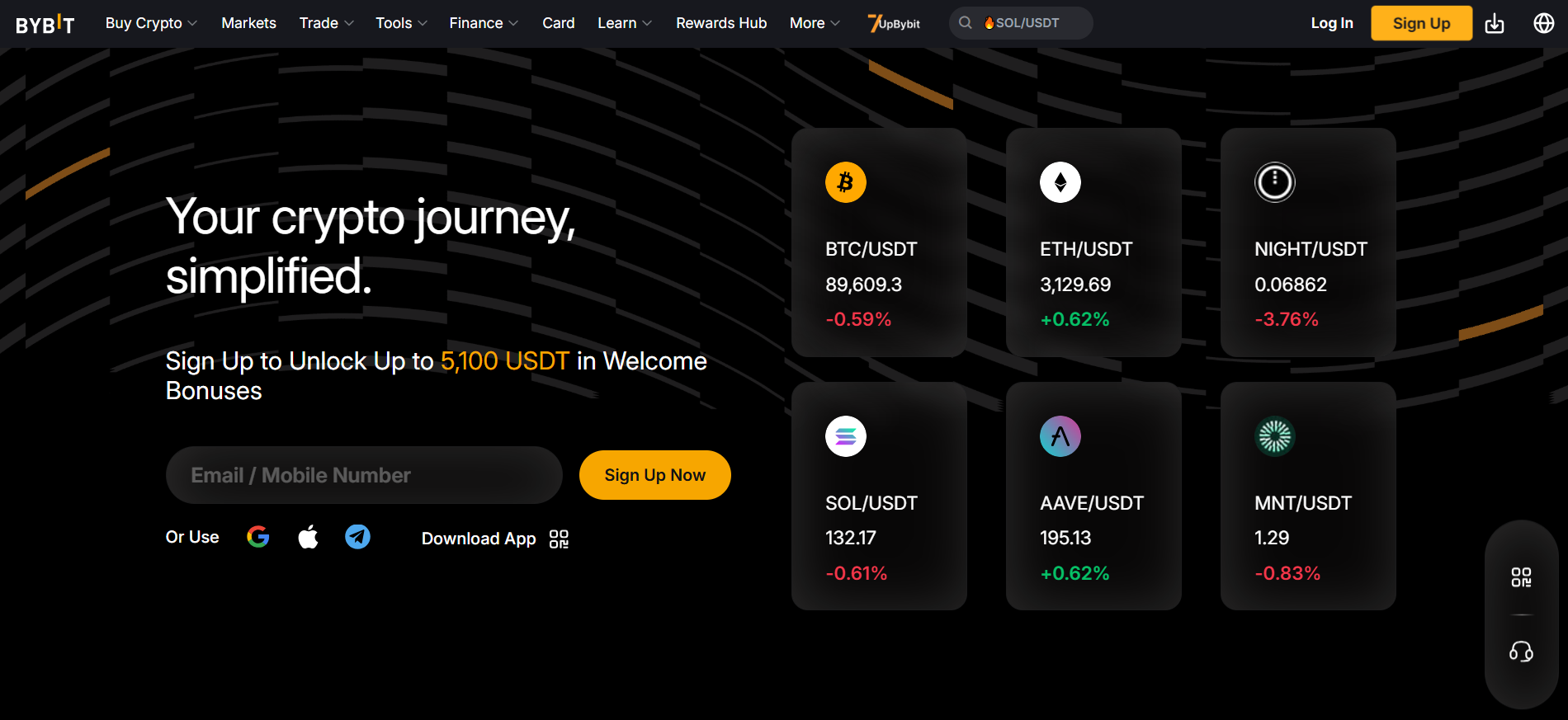
3. Bybit: Record Hack, Record Recovery
Key Metrics: $1.5 billion hack fully reimbursed; 99.99% of withdrawals processed within hours; 74+ million users; 300+ perpetual contracts
Best For: Derivatives specialists seeking deep perpetual markets, copy trading functionality, and proven operational resilience
Unique Features: TradeGPT AI assistant (5 million users); copy trading following up to 10 Master Traders; Bybit TradeFi for tokenized traditional assets
Bybit‘s February 2025 hack stands as the largest cryptocurrency theft ever—approximately 500,000 ETH stolen through a compromised SafeWallet developer machine manipulating smart contract logic. Yet the response demonstrated extraordinary operational resilience that paradoxically increased institutional confidence.
CEO Ben Zhou notified and responding within 30 minutes. All client assets remained 1:1 backed throughout. Emergency loans from Galaxy Digital, FalconX, Wintermute, and Bitget (40,000 ETH interest-free) secured 447,000 ETH within 72 hours. Full service restored in 12 hours with zero user losses. This “solvency test” established Bybit as operationally antifragile.
Fee competitiveness ranks among the best crypto trading platforms: 0.10% spot maker/taker, dropping to 0.02%/0.055% for perpetuals and 0.02%/0.03% for options. The May 2025 Austrian MiCA license enables EEA operations, while the October 2025 UAE SCA license made Bybit the first exchange with full federal crypto authorization in the Emirates. Regional restrictions remain significant (unavailable in US, UK, Japan, Singapore, Malaysia), but for permitted jurisdictions, Bybit offers unmatched derivatives infrastructure.
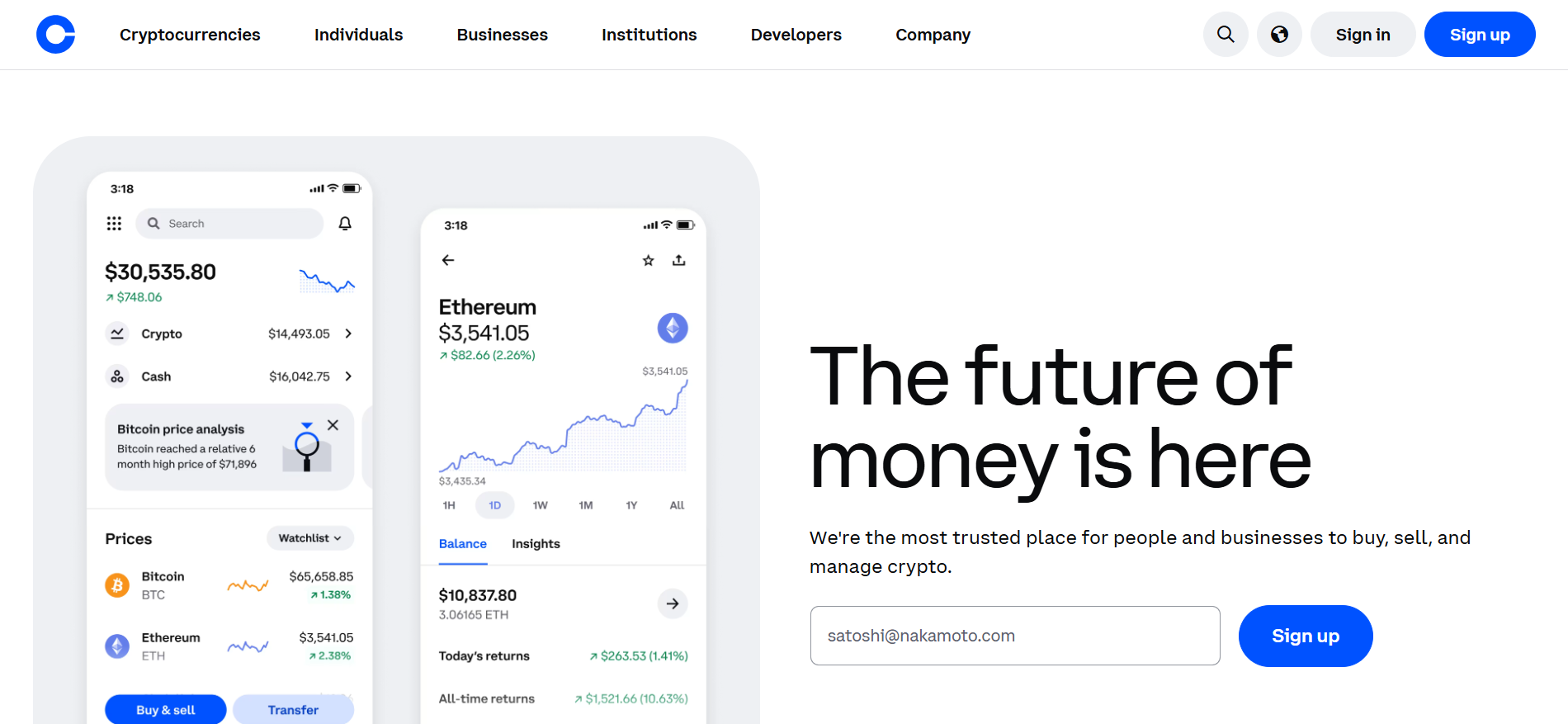
4. Coinbase: America’s Compliance Champion
Key Metrics: $220 billion assets under custody; $2.9 billion Deribit acquisition; S&P 500 constituent; 105+ million verified users
Best For: US-based traders requiring regulated infrastructure, institutional custody, and exposure to Base L2 ecosystem growth
Unique Features: Base Layer 2 processing 8.8 million daily transactions; 98% cold storage with $320 million hot wallet insurance; integrated ETF custody for BlackRock and Fidelity
Coinbase represents the “fortress of compliance” in the crypto trading platform landscape. The February 2025 SEC lawsuit dismissal with zero penalties marked a decisive regulatory victory, while the Deribit acquisition transformed Coinbase into the global leader in regulated crypto derivatives with access to $60 billion in open interest.
The fee structure reflects its compliance-heavy positioning—a meaningful premium versus offshore competitors. Simple trades incur 1.49% plus spread, while Coinbase Advanced offers 0.40%/0.60% at entry tier descending to 0%/0.05% at highest volume. This pricing targets traders who prioritize regulatory certainty over cost optimization.
The Base Layer 2 emerged as a strategic differentiator, processing transaction volumes exceeding combined competing L2s by late 2024. Revenue diversification sets Coinbase apart from pure trading venues—2024 revenues reached $6.2 billion with meaningful contribution from stablecoin revenue ($910 million), custody fees, and Base sequencer revenue. The May 2025 data leak affecting 60,000+ customer records and persistent support complaints represent operational weaknesses, but for US traders seeking the best crypto exchange with institutional-grade infrastructure, few alternatives exist.
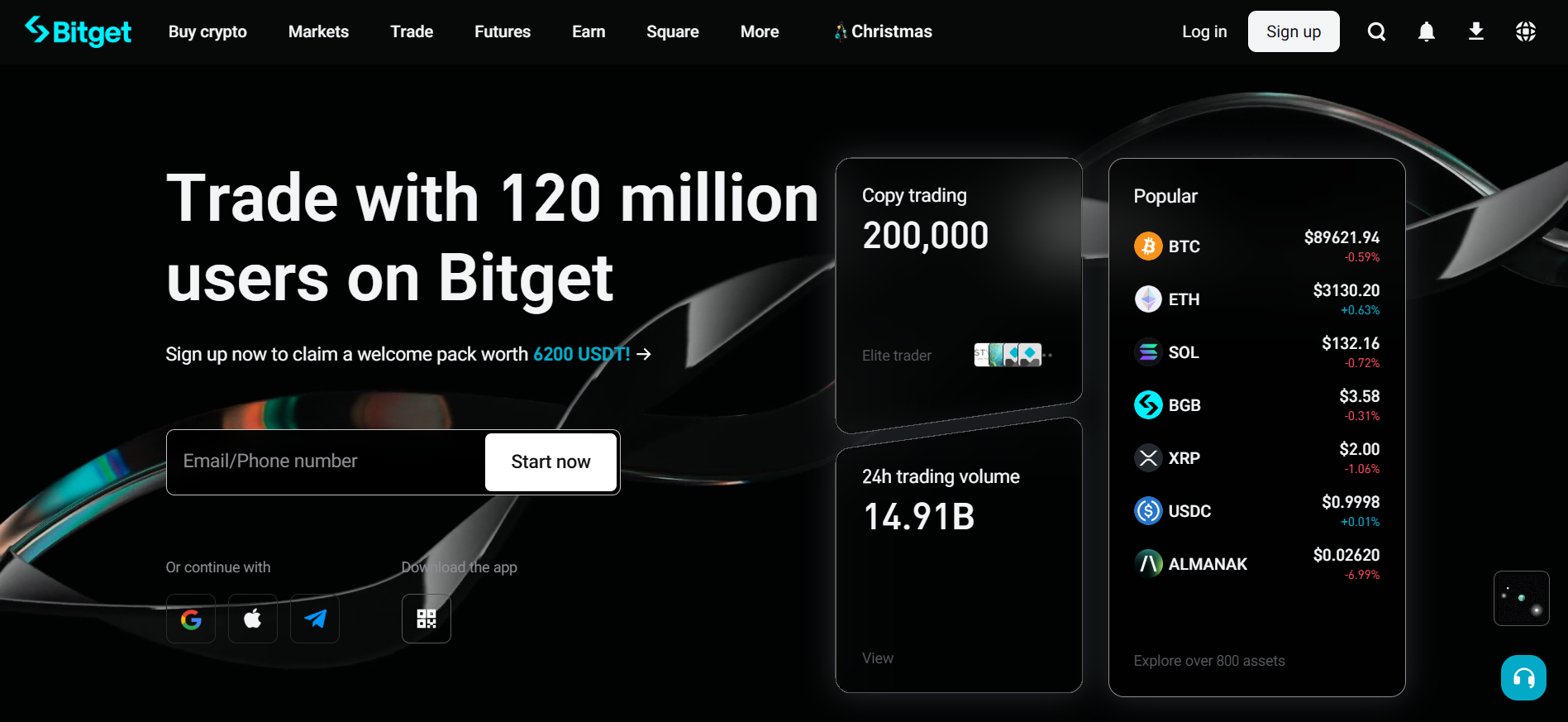
5. Bitget: The Copy Trading Pioneer with Clean Security
Key Metrics: Zero recorded security breaches; 500% user growth (20M to 120M+) in 18 months; 188% total reserve ratio; $779.7 million Protection Fund
Best For: Social traders seeking copy trading functionality, aggressive altcoin access, and strong security guarantees
Unique Features: 800,000+ copy trading followers with 165,000+ elite traders; Morph Layer-2 for consumer/payment applications; ISO 27001:2022 certification
Bitget‘s trajectory represents the most aggressive growth story in the 2024-2025 cycle. CEO Gracy Chen (MIT Sloan MBA, appointed May 2024) quadrupled the user base while maintaining the distinction no other major exchange can claim: zero recorded security breaches.
The protection framework is robust—$300 million Protection Fund (valued at $779.7 million by August 2025) provides explicit coverage for security incidents and extreme market conditions. Proof of reserves show exceptional overcollateralization at 188% total reserve ratio, with BTC at 365% coverage. ISO 27001:2022 certification validates information security management practices.
Fee structure matches industry leaders: 0.10% spot maker/taker with 20% BGB discount, 0.02%/0.06% futures. The December 2024 BGB token burn eliminated 800 million tokens—40% of total supply—establishing a quarterly 20% profit burn mechanism. The token achieved 100x returns from ICO price.
The Morph Layer-2 targets consumer-focused applications and stablecoin settlement, differentiating from DeFi-focused competitor L2s. Pre-market trading (45 tokens, $60M+ volume), PoolX stake-to-mine, and stock futures breaking $10 billion cumulative volume demonstrate product breadth making Bitget a compelling crypto trading platform for diversified strategies.
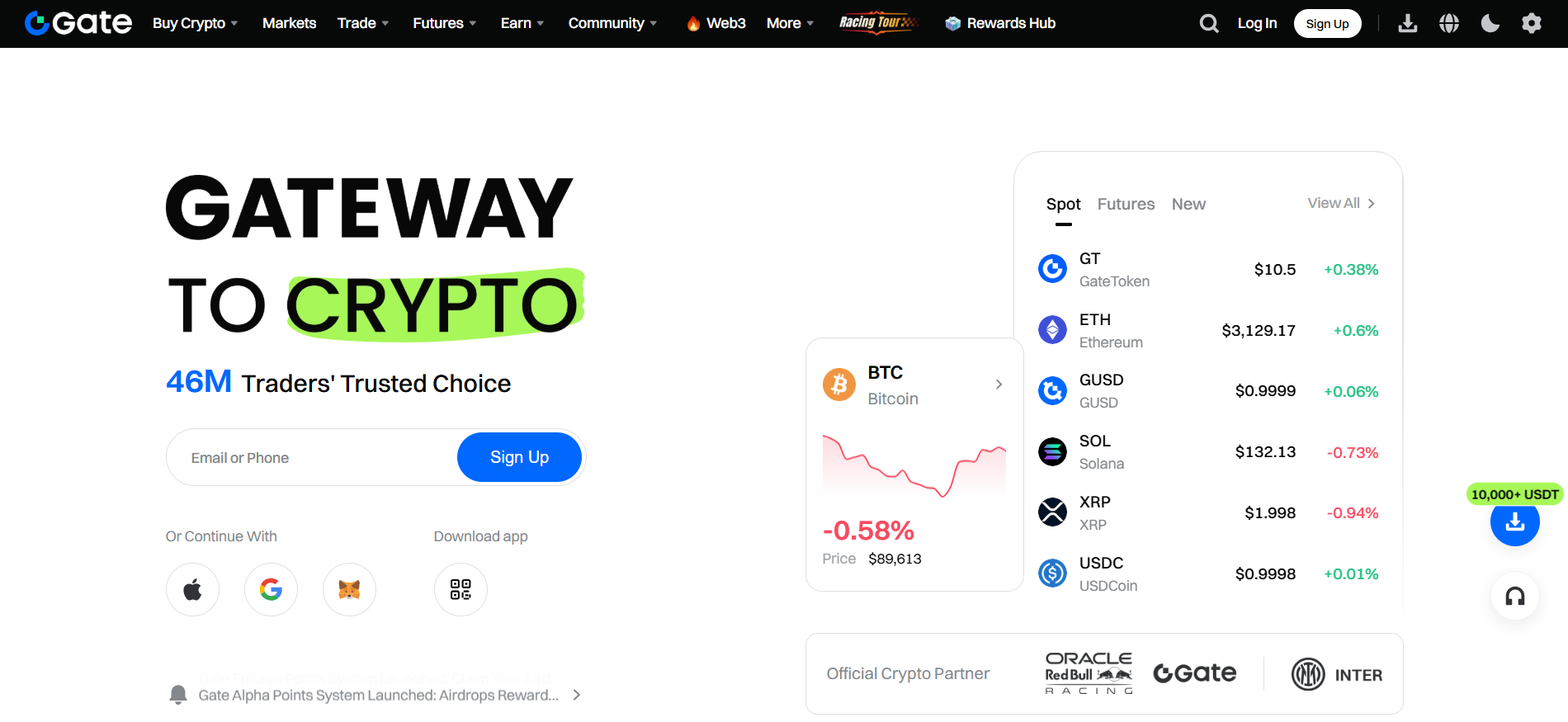
6. Gate.io: The Altcoin Haven
Key Metrics: 3,800+ listed tokens (industry maximum); 873 new listings in 2024 including 437 worldwide first-listings; $10.5 billion reserves at 126% ratio
Best For: Altcoin discovery traders seeking early access to trending projects and maximum token variety
Unique Features: Gate Layer (OP Stack-based L2); fastest listing speed in industry; GateChain Vault Accounts with time-locked theft recovery
Gate.io’s twelve-year history and unmatched token count establish it as the definitive “gem hunter” venue. If a token is trending on-chain, it’s likely listed on Gate within days—a critical advantage for traders seeking early positioning before broader exchange availability.
The May 2025 rebrand from “Gate.io” to “Gate” with Gate.com domain signals mainstream ambitions. Trading performance reached new heights: #3 globally for spot trading ($137.2 billion monthly), #2 for derivatives market share ($763.2 billion monthly).
Fee structure is competitive: 0.10% maker/taker spot (0.09% with GT holdings), 0.02%/0.05% futures. BTC withdrawal fees of 0.0001 BTC significantly undercut the 0.0008 industry average.
Security history requires careful consideration. The 2015 Bter.com hack lost 7,170 BTC with partial recovery. More concerning, blockchain analysts alleged Gate concealed a $230-234 million hack in April 2018—allegations the exchange dismissed. Current security credentials are strong: CoinGecko Trust Score 10/10, CER.live AA rating, Hacken 3-star certificate. For traders accepting historical uncertainty in exchange for unparalleled token access, Gate represents the best crypto exchange for altcoin exposure.

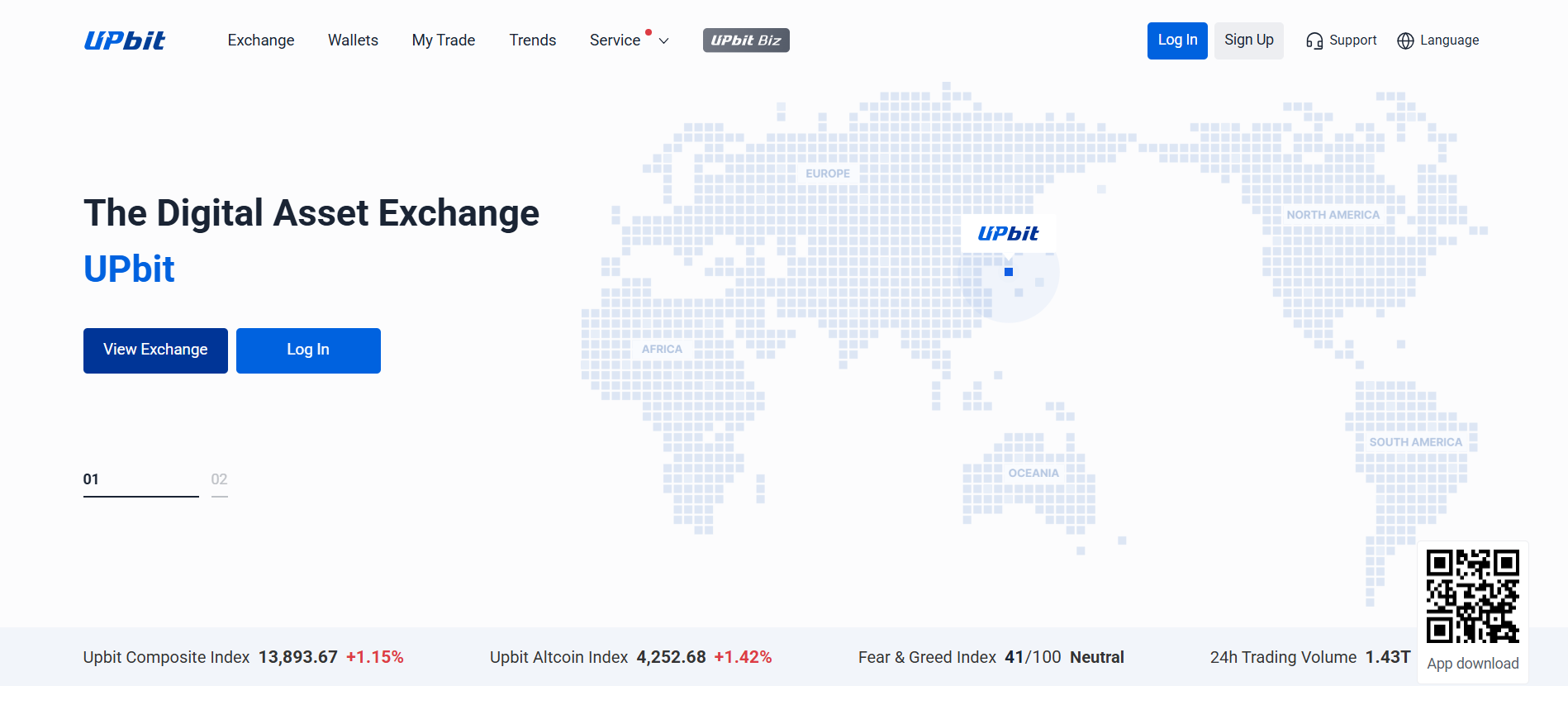
7. Upbit: Korean Dominance Without Derivatives
Key Metrics: 70-80% Korean domestic market share; $10.3 billion Naver Financial acquisition; KRW trading fees at 0.05%
Best For: Korean traders seeking maximum KRW liquidity and domestic regulatory compliance
Unique Features: Kakao integration for seamless Korean user experience; real-name account partnership with K-Bank; GIWA Chain Ethereum L2 launch
Upbit commands an extraordinary concentration of the South Korean crypto market—making it essential infrastructure for traders requiring KRW-denominated exposure. The November 2025 Naver Financial acquisition ($10.3 billion) fundamentally transforms its trajectory, with plans for $6.8 billion joint AI and blockchain investment, won-pegged stablecoin development, and integration with Naver Pay’s 30.68 million users.
Fee structure favors Korean traders: KRW market trading charges just 0.05% maker/taker—competitive with global exchanges. However, BTC/USDT market fees jump to 0.25%, making international trading pairs less attractive. Unlike competitors, Upbit offers no VIP or volume-based discounts.
The critical limitation for experienced traders: Upbit offers zero derivatives products—no futures, margin trading, leverage, perpetuals, or options. The platform exclusively supports spot trading with Market, Limit, and Stop-Limit orders. Traders seeking leveraged positions must use alternative platforms.
Security incidents in November 2019 ($48.5 million) and November 2025 ($36-38 million) were both fully reimbursed from company reserves, demonstrating financial capacity but raising hot wallet security questions. The late 2025 FIU KYC audit identifying 500,000+ violations and three-month registration suspension represent significant regulatory friction.
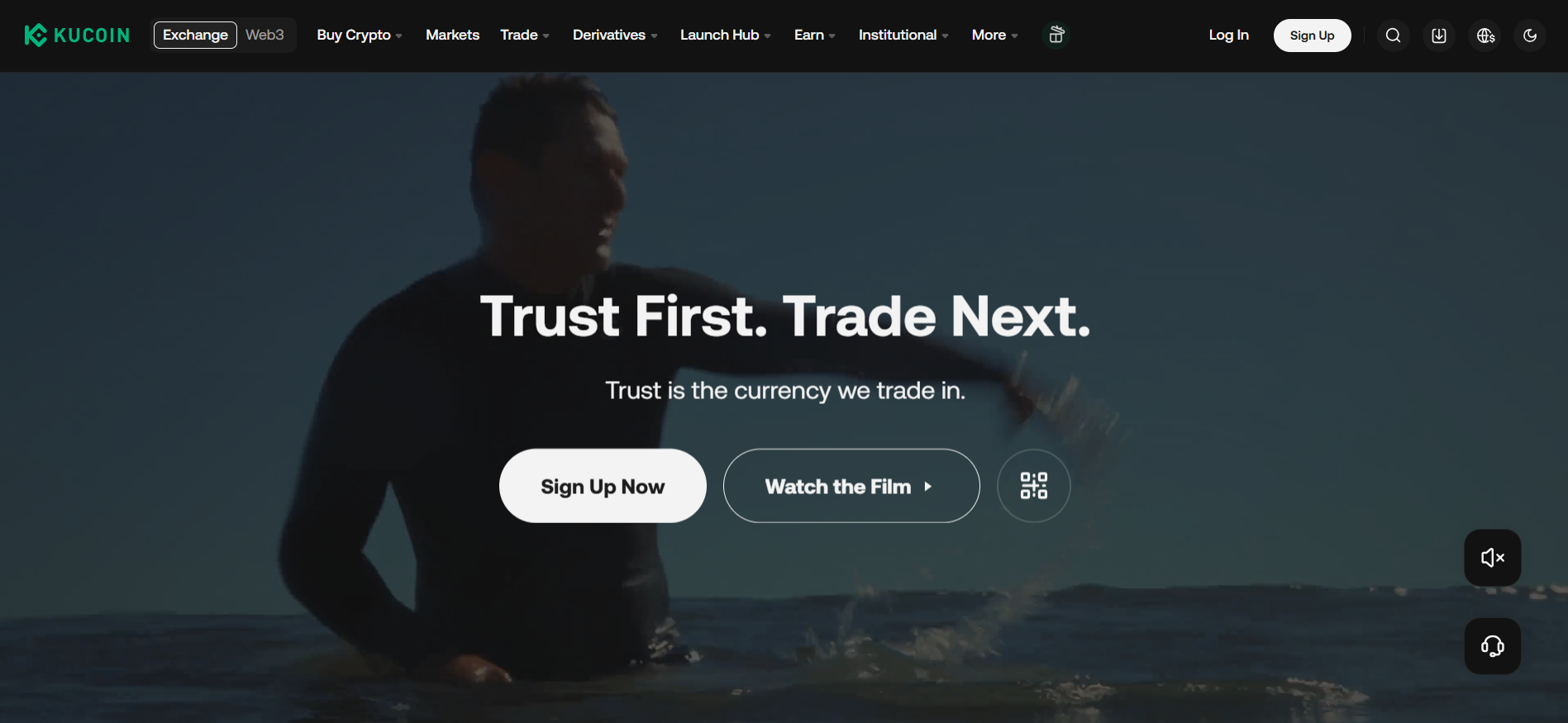
8. KuCoin: Rebuilding After Regulatory Reckoning
Key Metrics: $297 million DOJ settlement; 41+ million users; 1,000+ cryptocurrencies; 8.9 million+ trading bots created
Best For: Emerging market traders seeking comprehensive bot infrastructure and KCS dividend benefits
Unique Features: Industry-leading trading bot suite (DCA, Grid, Infinity Grid, Futures Grid, Smart Rebalance); KCS daily dividend distributions; GemPool early-access launchpad
KuCoin’s January 2025 DOJ guilty plea for AML violations—operating unlicensed since 2017, processing $9 billion in illicit transactions, serving 1.5 million US users without registration—resulted in $297 million total settlement and mandatory two-year US market exit. Founders Michael Gan and Eric Don stepped down; BC Wong now serves as CEO.
For non-US traders, the platform remains attractive. Fees of 0.10% spot maker/taker (0.08% with KCS, 20% discount) and 0.02%/0.06% futures are competitive. Maximum leverage reaches 100x (125x on select assets).
The September 2020 hack ($281-285 million) demonstrated both vulnerability and resilience: 84% recovered through on-chain tracking and law enforcement cooperation, with the insurance fund covering the remaining 16%. Users suffered zero losses. The $2 billion “Trust Project” launched post-DOJ settlement aims to upgrade security through improved encryption, zero-trust architecture, and more frequent PoR audits.
KCS tokenomics offer meaningful holder benefits: 20% fee discount, daily dividends from trading fees, and gas payments on KuCoin Community Chain. For traders in emerging markets where US regulatory actions carry less weight, KuCoin offers a compelling crypto trading platform with strong bot infrastructure.
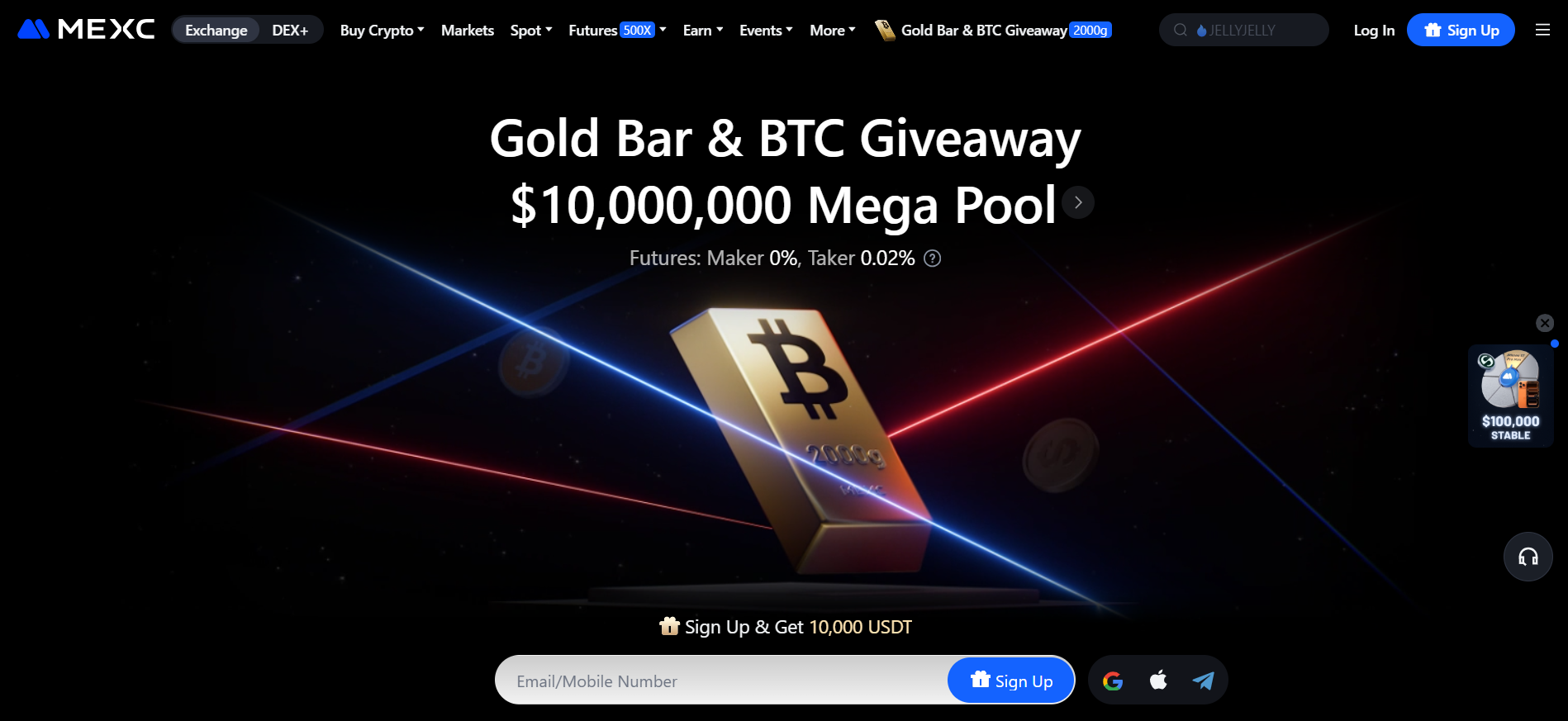
9. MEXC: Zero-Fee Trading with Regulatory Uncertainty
Key Metrics: 0% maker fees on spot and futures; up to 500x leverage; 3,000+ cryptocurrencies; 1.4 million TPS matching engine
Best For: Fee-sensitive traders and meme coin speculators accepting regulatory risk for maximum cost efficiency
Unique Features: Meme+ Zone dedicated memecoin infrastructure; Kickstarter voting for new listings with 70%+ APYs; minimal KYC for lower withdrawal limits
MEXC has achieved remarkable positioning through aggressive fee elimination: 0% maker fees on both spot and futures, with taker fees of just 0.05% (spot) and 0.02% (futures)—among the industry’s lowest. For volume-sensitive strategies, this structure provides meaningful cost advantage versus premium-priced alternatives.
The platform supports 3,000+ cryptocurrencies, targeting traders seeking early access to trending tokens. Trading volume reflects fee competitiveness: #2 globally for spot market share (8.6%). The matching engine processes 1.4 million transactions per second.
Reserve backing is solid: Hacken monthly audits confirm 100% user fund coverage with BTC at 129.85%. The $559 million insurance fund has disbursed $526+ million covering liquidation deficits.
Regulatory status remains the platform’s primary weakness. The Estonian MTR license was revoked in November 2023. Warnings from regulators in British Columbia, Austria, Germany, and Hong Kong indicate significant friction. The exchange is unavailable in the US, UK, Canada, China, Singapore, and Japan. The July 2025 “White Whale” controversy—a $3 million account frozen prompting rare public apology—exposed governance weaknesses. For traders comfortable with regulatory uncertainty, MEXC offers compelling economics.
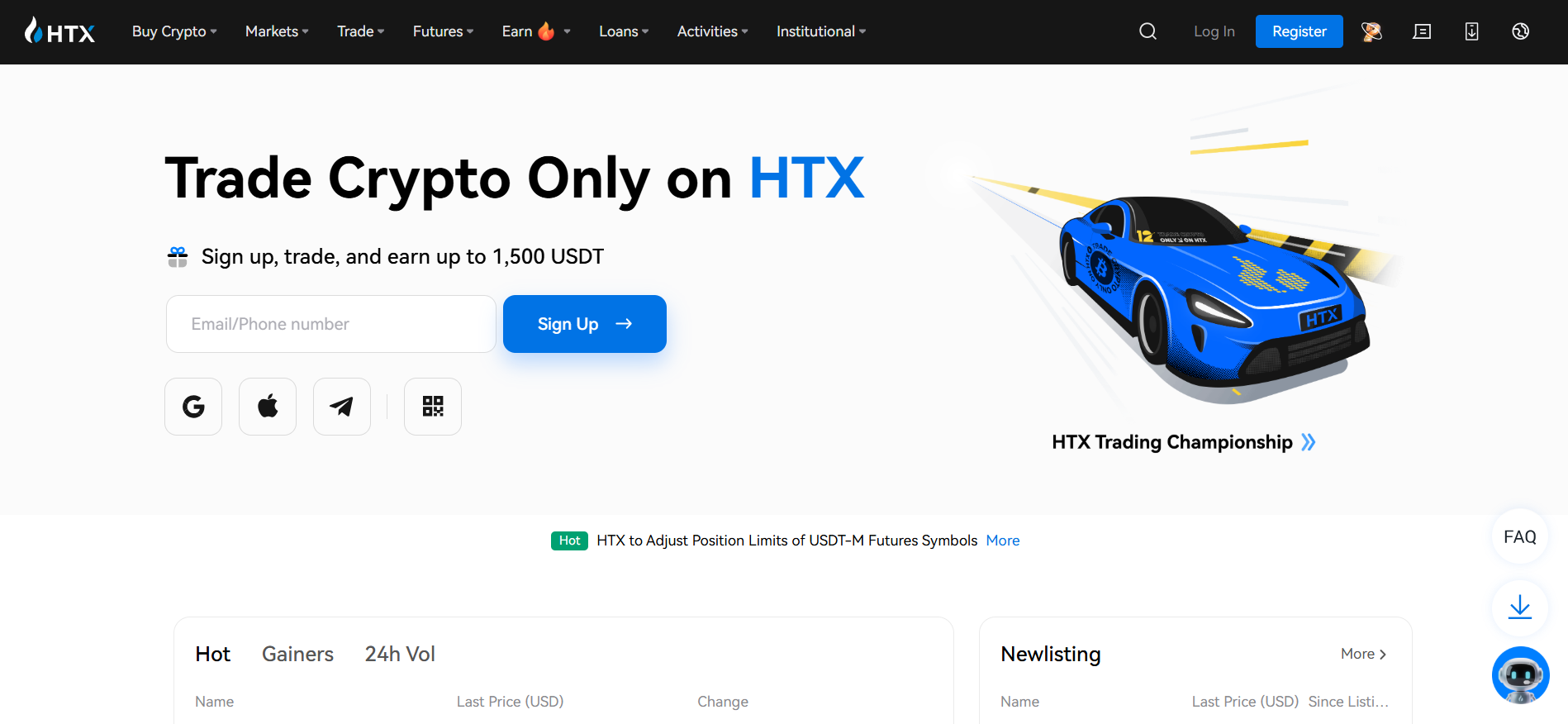
10. HTX: High Yield, High Risk
Key Metrics: $2.4 trillion 2024 trading volume; $215+ million stolen across ecosystem in November 2023; 49+ million users
Best For: TRON ecosystem participants and yield-seekers accepting governance risk for high APY opportunities
Unique Features: Deep TRON/TUSD integration; aggressive Earn products with above-market yields; 200x perpetual leverage
HTX represents crypto’s most dramatic ownership transformation. Justin Sun’s 2022 acquisition through About Capital Management fundamentally altered platform character—Sun effectively controls operations despite “Global Advisor” styling, making major announcements and directing strategy.
The November 2023 security cascade devastated the ecosystem: HTX hot wallet ($30 million), HECO Chain bridge ($86.6 million), and Poloniex ($100 million)—totaling $215+ million stolen in one month. Sun committed to full compensation, but the incidents triggered $258 million in net outflows and persistent trust deficits.
Fee structure is notably higher than competitors: 0.20%/0.20% base tier versus 0.10% industry standard. Prime tiers reduce fees substantially, but entry-level users pay double average rates.
Proof of reserves contain significant concerns. Investigation revealed that 75% of reported “USDT” reserves ($460 million) is actually stUSDT—a Sun-connected yield product, not liquid USDT. This raises serious questions about reserve liquidity. The HECO Chain shutdown (January 2025) acknowledges strategic failure in L1 competition.
HTX remains unavailable in the US, UK, China, Singapore, Japan, and 20+ jurisdictions. The platform suits traders comfortable with governance concentration who seek high leverage and TRON ecosystem integration.
Strategic Selection Guide: Finding Your Perfect Exchange Match
Selecting the best crypto exchange requires honest assessment of your trading requirements, jurisdictional constraints, and risk tolerance. Here’s a framework for experienced traders:
By Primary Trading Activity:
- Derivatives/Perpetuals: OKX or Bybit offer the deepest liquidity and most competitive fees. OKX edges ahead on regulatory clarity; Bybit on copy trading functionality.
- Spot-Only/Conservative: Coinbase provides maximum regulatory certainty at premium pricing. Upbit dominates for KRW-denominated trading.
- Altcoin Discovery: Gate.io’s 3,800+ tokens and first-listing velocity are unmatched. MEXC’s zero maker fees optimize for frequent small positions.
By Jurisdiction:
- United States: Coinbase remains the comprehensive option. OKX’s limited relaunch excludes major states.
- European Union: OKX’s MiCA license provides full passporting. Bybit’s Austrian authorization covers EEA.
- Asia-Pacific: Bitget and OKX offer broad regional access. Upbit dominates Korea exclusively.
- Emerging Markets: KuCoin and Bitget specifically target LATAM, MENA, and Southeast Asia.
By Risk Tolerance:
- Conservative: Coinbase, OKX—regulatory moats, institutional-grade infrastructure
- Moderate: Binance, Bybit, Bitget—proven operations with some regulatory friction
- Aggressive: MEXC, Gate.io—maximum feature access with regulatory uncertainty
By Cost Sensitivity:
- Fee-Optimized: MEXC’s 0% maker fees provide maximum efficiency
- Balanced: OKX, Binance, Bybit offer competitive rates with strong infrastructure
- Premium-Accepting: Coinbase charges for compliance certainty
Quick Comparison: Leading Platforms at a Glance
| Exchange | Spot Fees | Futures Fees | Max Leverage | Derivatives | Security Record | Regulatory Status |
|---|---|---|---|---|---|---|
| OKX | 0.08%/0.10% | 0.02%/0.05% | 100x | Full suite | Clean | MiCA licensed |
| Binance | 0.10%/0.10% | 0.02%/0.05% | 125x | Full suite | 2019 hack (covered) | ADGM HQ, DOJ monitoring |
| Bybit | 0.10%/0.10% | 0.02%/0.055% | 100x | Full suite | 2025 hack (covered) | MiCA (Austria), UAE |
| Coinbase | 0.40%/0.60% | Via Deribit | 20x | Expanding | Clean | US regulated, S&P 500 |
| Bitget | 0.10%/0.10% | 0.02%/0.06% | 125x | Full suite | Clean | Multi-jurisdiction |
| Gate.io | 0.10%/0.10% | 0.02%/0.05% | 125x | Full suite | Historical concerns | Limited licenses |
| Upbit | 0.05%/0.05%* | N/A | N/A | None | 2 incidents (covered) | Korea dominant |
| KuCoin | 0.10%/0.10% | 0.02%/0.06% | 100x | Full suite | 2020 hack (covered) | US banned 2 years |
| MEXC | 0.00%/0.05% | 0.00%/0.02% | 500x | Limited | Clean | License revoked |
| HTX | 0.20%/0.20% | 0.02%/0.05% | 200x | Full suite | Multiple incidents | Limited |
Final Thoughts
The 2026 crypto exchange landscape has bifurcated into distinct tiers—and experienced traders must choose strategically. Compliance-focused platforms (Coinbase, OKX) offer institutional-grade infrastructure and regulatory certainty at varying price points. Volume leaders (Binance, Bybit) provide unmatched liquidity depth while navigating ongoing regulatory friction. Aggressive offshore venues (MEXC, Gate.io) prioritize speed, access, and cost efficiency over compliance certainty.
The most significant structural shift is the transition to exchange-owned Layer-2 networks. Base, X Layer, Morph, and Gate Layer transform platforms from trading venues into ecosystem controllers—capturing value not just from fees but from the infrastructure of on-chain activity. Exchanges without L2 strategies risk commoditization as competitors build sticky on-chain ecosystems.
For derivatives-focused traders in non-restricted jurisdictions, OKX currently offers the optimal balance of competitive fees, regulatory progress, transparent reserves, and technological innovation. Bybit’s hack recovery demonstrated operational antifragility that matters in crisis scenarios. Coinbase’s Deribit integration positions it as the institutional derivatives gateway for regulated capital.
The traders who prosper in 2026 will match platform selection to their specific requirements—jurisdictional constraints, derivatives needs, fee sensitivity, and governance risk tolerance. The wild west era is ending. What remains is a maturing market where strategic platform selection directly impacts trading outcomes.
Frequently Asked Questions (FAQ)
OKX and Bybit lead as the best crypto exchanges for derivatives, offering perpetual contracts, options, and futures with competitive fees of 0.02% maker and deep liquidity for professional traders.
MEXC offers the lowest fees in the industry with 0% maker fees on both spot and futures markets, making it the most cost-effective crypto trading platform for high-frequency strategies.
Coinbase and Bitget rank as the safest crypto exchanges—Coinbase stores 98% of assets in cold storage with $320 million insurance, while Bitget maintains zero recorded security breaches and 188% reserve ratio.
Coinbase remains the best crypto exchange for US traders, offering full regulatory compliance, SEC-approved derivatives through Deribit acquisition, and FDIC-insured USD balances.
Evaluate trading fees, supported cryptocurrencies, derivatives offerings, security track record, and regulatory status in your jurisdiction—ICODA’s expert analysts recommend matching platform selection to your specific trading style and risk tolerance.
Gate.io lists over 3,800 cryptocurrencies with 437 worldwide first-listings in 2024 alone, making it the best crypto exchange for altcoin discovery and early access to trending tokens.
Share with


Rate the article