

How a Crypto Casino Secured a #1 Google Ranking Through 15 Organic Videos
Grey-zone crypto brands rarely rank in Google’s eyes. This SERM case shows how 15 scripted… Grey-zone crypto brands rarely rank in Google’s eyes. This SERM case shows how 15 scripted videos changed that.
Unique Video Scripts
Google Video Rank
Paid Promotion
Google Video Result
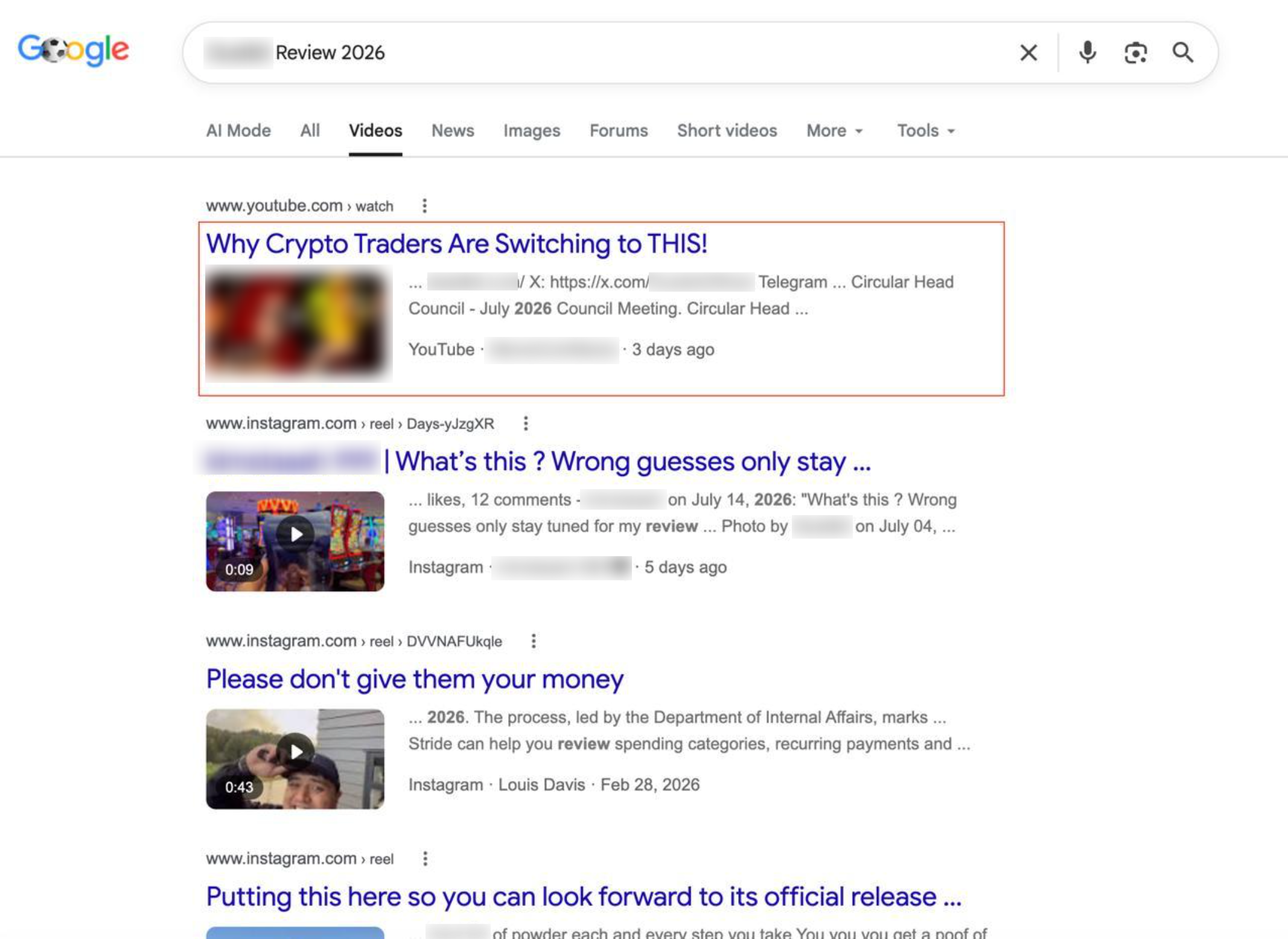
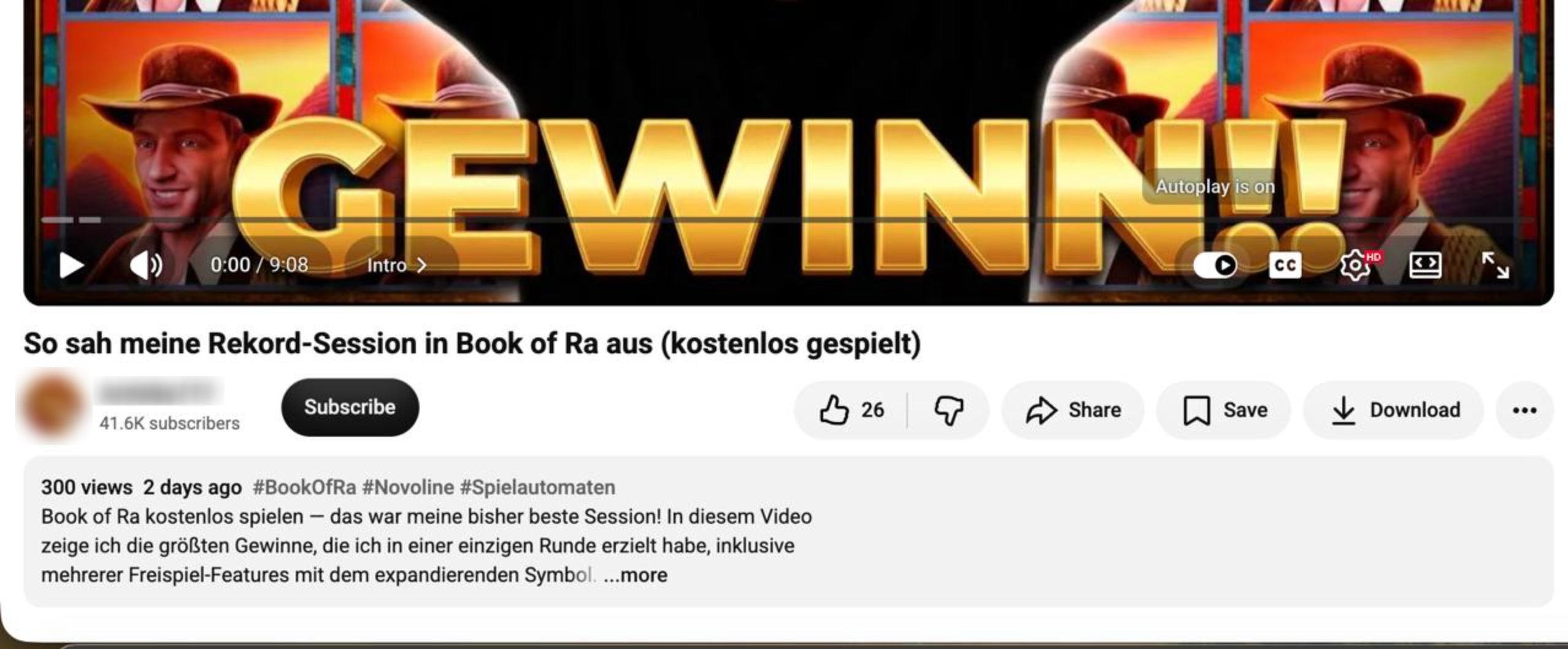
Grey-zone crypto casino brands can’t buy their way into search trust. In four weeks, we scripted, keyworded, and structured 15 unique SERM videos across two brand markets — landing a #1 Google Video ranking and organic co-visibility with Trustpilot and Casino.Guru, without a single paid placement.
An instant withdrawal crypto casino operator running multiple brands across two markets needed organic search presence badly: branded review queries were dominated by third-party aggregators, and the operator had no owned video content shaping how its brands appeared in Google. ICODA designed and produced a 15-video SERM pool — full keyword research, scripts, and production briefs — engineered so no two videos shared a content structure, and so every video was built to be indexed, not just watched.
Campaign Highlights 🎯
- #1 position in Google’s Video tab for a branded review query
- 15 fully unique video scripts + production briefs, zero repeated content structure
- 2 brand markets covered in a single coordinated rollout (DE + international)
- 0 paid media spend, 0 platform strikes or Content-ID blocks
- 4 weeks from strategy kickoff to full publication rollout
The Challenge ❌
Ranking organically for an instant withdrawal crypto casino brand in Google Search and Google Video isn’t a matter of publishing more content — it’s a matter of publishing content that survives the niche’s built-in friction:
Project Goals
Rank branded review and product queries in Google Search and Google’s Video tab using owned video content instead of relying on third-party review sites
Design a distinct content architecture for each of the 15 videos so that no two share a narrative skeleton, avoiding thin-content signals across the pool
Use spoken-keyword-first scripting and transcript-level SEO so Google indexes the video’s speech, not just its title and description
Apply the same anti-duplication, keyword-first framework to a German-language slots brand and an English-language international crypto casino brand simultaneously
Strategy & Execution
1. Keyword-First Script Architecture
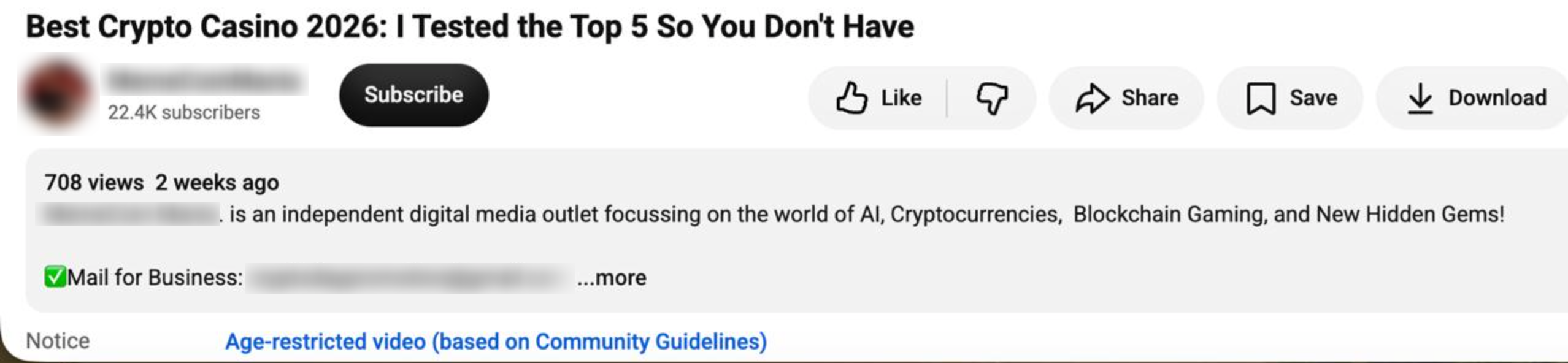
Every script in the 15-video pool was built around a single validated keyword spoken in full within the first 10–15 seconds — a deliberate SEO decision, since Google transcribes and indexes YouTube speech, which is what earns placement in the Video tab, not just standard text metadata. For each video, keyword research identified search volume, ranking difficulty, and — critically — where the target phrase carried omonymy risk (a slot title that also reads as an unrelated everyday phrase). Wherever that risk existed, the script paired the keyword with a disambiguating word (“Spielautomat,” “slot”) in the same breath, so both Google and the viewer immediately understood the correct search intent.
✔️ Primary keyword spoken in full within the opening 15 seconds
✔️ Disambiguating context word placed adjacent to the keyword on-screen and in speech
✔️ Manual (not auto-generated) subtitles for full transcript indexability
✔️ Content chapters (key moments) written with descriptive, keyword-relevant titles rather than generic labels like “Part 2”
2. Anti-Duplication Content Engineering
This is the structural core of the campaign, and its own main idea:
❗Every video in a SERM pool competes with every other video in the same pool for Google’s attention — not just with outside competitors. If two videos use the same suspense mechanic (a countdown, a flashback, a hidden final number), Google and viewers both read the second one as a repeat, which weakens topical authority instead of building it.
To solve this, each of the 15 video briefs documented explicitly what structural devices the other 14 videos already used — countdown formats, split-screen comparisons, myth-vs-reality openers, hypothesis-and-reveal formats — and required the new script to avoid all of them. One video in the pool, for example, replaced the typical “hidden final number” suspense device with a live checklist mechanic: four on-screen conditions ticked off in real time as they occurred in the gameplay session, so curiosity was built around an incomplete list rather than a withheld number. That single structural swap became a template the team reused (never verbatim) to keep all 15 videos topically distinct while keeping every video anchored to the same underlying SEO logic.
3. Compliance-First Production Safeguards
Every brief carried the same non-negotiable production guardrails, applied before a single frame was shot:
| Risk | Safeguard applied |
|---|---|
| Content-ID claims (slot audio + voiceover) | Upload unlisted first, wait for claim review, only then set to public |
| Misleading-content flags | Scripts describe what happened in this session (a fact), never what the viewer should do to replicate it (an instruction) |
| Age-inappropriate reach | Manual “not for kids” audience setting — never left to YouTube’s auto-detection |
| Regulatory disclaimers (DE market) | On-screen “demo mode, no real money” plaque repeated before every major on-screen moment, plus 18+/responsible-gambling text in every description |
| Premature promotion | No referral link at launch — brand mentioned by name only; referral link added to the pinned comment 2–3 days later, only once view and strike metrics cleared |
4. Multi-Brand, Multi-Market Rollout
The same keyword-first, anti-duplication framework was applied in parallel to a German-language slots brand and an English-language international crypto casino brand — two audiences, two intents, one production system. Publication was deliberately staggered rather than released as a batch: all 15 videos going live on the same day across every channel would have read as an obvious coordinated push, both to platform moderation systems and to viewers. Spreading the rollout across the full four-week window kept the publication pattern looking organic.
Results
Instant Withdrawal Crypto Casino Search Visibility
The table below reflects the campaign’s core measurement framework: Google indexing and organic view accumulation. No paid traffic, GA4 attribution, or Ahrefs domain-level tracking was part of this engagement’s scope — visibility itself was the KPI.
| KPI | Result |
|---|---|
| Google Video tab ranking (branded review query) | #1 position |
| Organic SERP co-ranking | Placed alongside Trustpilot, Casino.Guru, and CryptoSlate on the same results page |
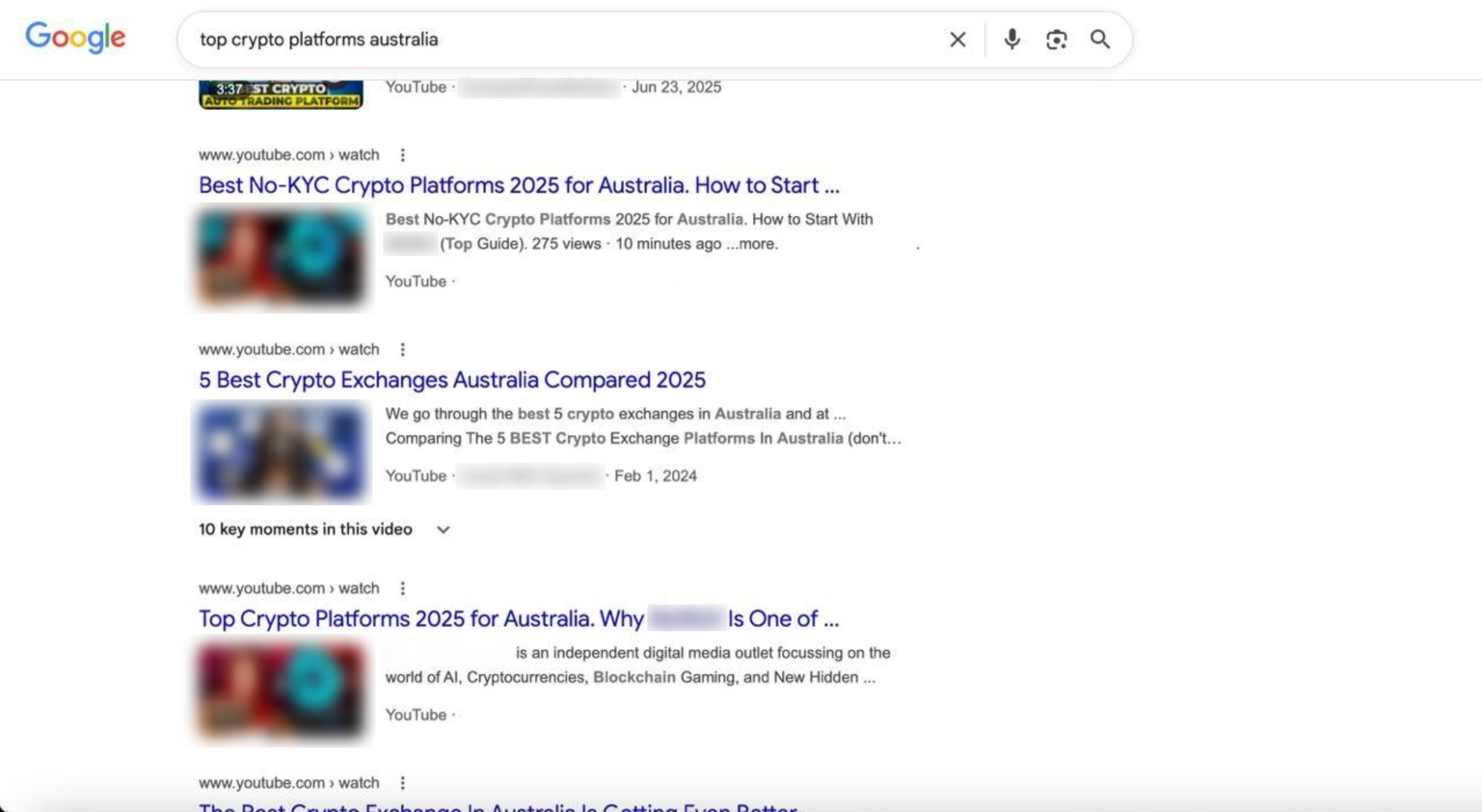
| Commercial query visibility | Ranked in Google video results for a competitive “top crypto platforms” query in the international market |
| Video pool delivered | 15 fully scripted, uniquely structured videos with individual production briefs |
| Organic YouTube views (sample videos) | Up to 700+ views per video within days to weeks of publication, zero paid promotion |
| Content-ID / strike incidents | 0 — full pool cleared unlisted review before going public |
| Campaign timeline | 4 weeks total (2 weeks strategy and scripting, 2 weeks phased publication) |
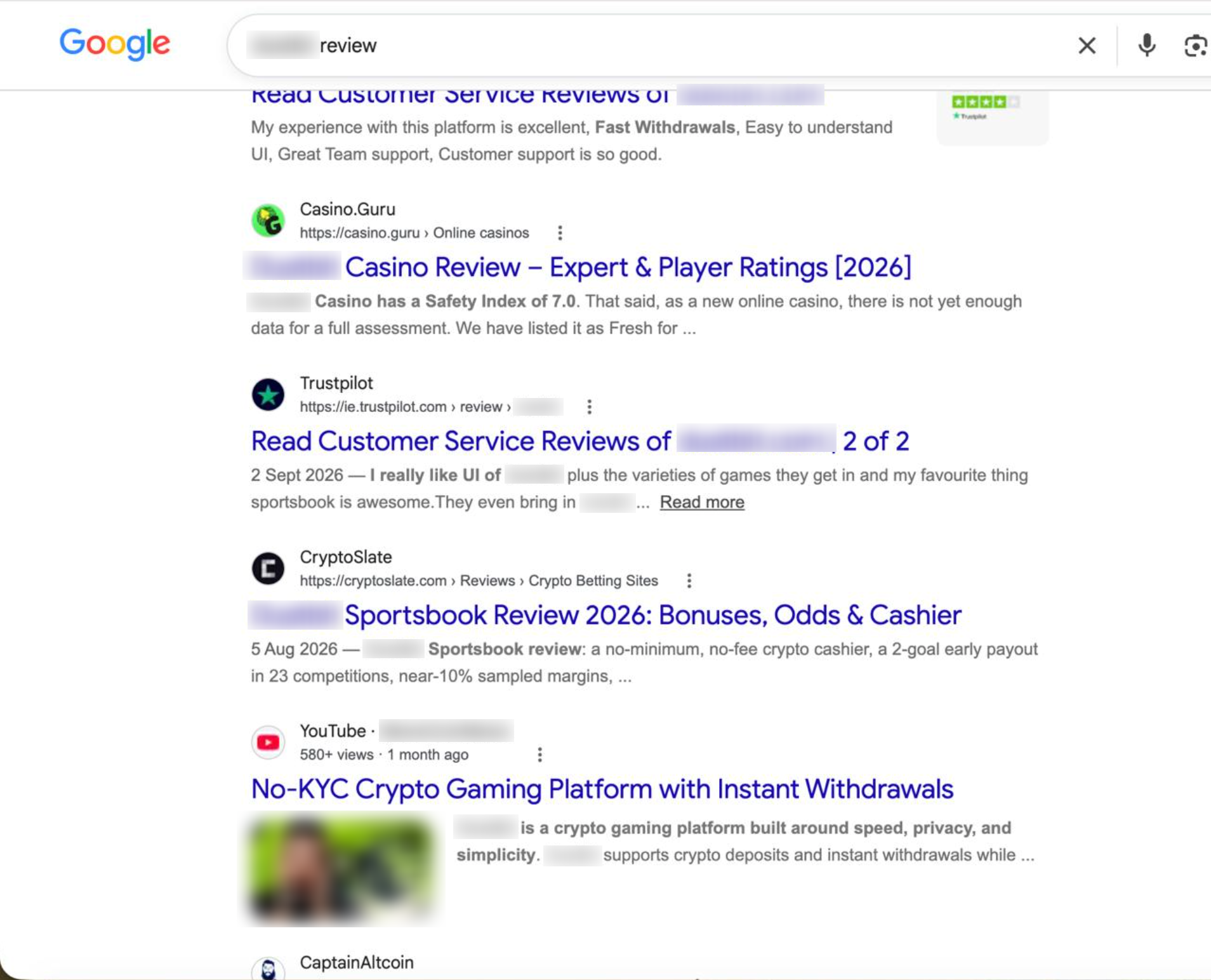
A contextual note on the Video-tab result: ranking #1 in Google’s dedicated Video tab for a branded review query is a distinct win from ranking a web page — it means Google’s transcript indexing trusted the spoken content of the video enough to surface it above (or alongside) established review authorities that have spent years building domain authority through text content alone.
Platform Breakdown
| Platform | What was measured | Outcome |
|---|---|---|
| Google Search / Video tab | Organic ranking position for branded and commercial queries | #1 Video-tab placement; co-ranking with Trustpilot and Casino.Guru on branded queries |
| YouTube | Organic view accumulation, strike/Content-ID status | Hundreds of organic views per video with zero moderation incidents across the full 15-video pool |
What Was Built & Achieved
ICODA delivered a complete 15-video SERM system — keyword research, scripts, and production briefs — across two brand markets simultaneously, with zero repeated content structures and zero paid media. The result: a #1 Google Video tab ranking for a branded review query, organic co-visibility with Trustpilot, Casino.Guru, and CryptoSlate, and a zero-incident publication record across the full video pool.
Paid ads stop the moment the budget does. With 15 uniquely structured videos now indexed, the operator has a reusable content system — not a one-off placement — ready for future brand launches in the same niche.
Frequently Asked Questions (FAQ)
That’s the exact structure this case was built for — two brands, two markets and one coordinated system. The keyword-first, anti-duplication framework scales across brands without diluting compliance in either market.
The videos keep working. Organic rankings don’t stop when the budget does — and with 15 uniquely structured videos indexed, the operator has a reusable content system for future brand launches, not a one-off placement.
Yes — and this case proves it. The same keyword-first, anti-duplication framework ran simultaneously in German and English, with separate keyword research for each market. The system adapts to language; the architecture stays the same.
Google surfaces content that answers search intent — including branded review and comparison queries in regulated niches. As long as the content is factual, accurately titled, and doesn’t violate platform policies, it competes on the same ranking signals as any other vertical. The compliance safeguards in this system are specifically engineered to stay on the right side of that line.
That’s a SERM use case this system is well-suited for. Owned video content ranked in Google’s Video tab displaces third-party results — including negative ones — by filling the search result page with content your brand controls.
Testimonials








Yevhen Nehuliayev
LinkedIn Profile

Valerii Brizhatiuk
LinkedIn Profile

Sergei Beliaev
LinkedIn Profile

Laura Geng
LinkedIn Profile

Bahram Ahmedzade
LinkedIn Profile

Aaron Tsai
LinkedIn Profile

Irene C.
LinkedIn Profile

Shenshen Hu
LinkedIn Profile

Hannah Kang
LinkedIn Profile

James O'Connor
LinkedIn Profile

Dmitriy Dervoed
LinkedIn Profile

Vid David Mihelic
LinkedIn Profile
Jia Yung
LinkedIn Profile

Charlie Bussat
LinkedIn Profile

Terry Na
LinkedIn Profile

Arabdha Sudhir
LinkedIn Profile

Henning Rokling
LinkedIn Profile
Feel free to contact us
We are the team of experts that will support your business at all stages