




Las dos empresas que vendían lo mismo
El año pasado se lanzaron dos protocolos DeFi con pocas semanas de diferencia. Características similares. Tokenómica similar. Público objetivo casi idéntico.
Seis meses después, uno había captado 340.000 $ en TVL mensuales de inversores de Web2 que nunca antes habían tocado el cripto. ¿Y la otra? Seguía luchando por la tracción, viendo cómo sus competidores se adelantaban a pesar de tener una tecnología objetivamente mejor.
La diferencia no era su producto. No era su gasto en publicidad. Ni siquiera sus clasificaciones en Google: ambos estaban cómodamente en la página uno para sus palabras clave objetivo.
La diferencia era la siguiente: cuando los usuarios potenciales preguntaban a ChatGPT "¿Cuáles son las mejores plataformas DeFi para principiantes?", en la respuesta aparecía un protocolo. El otro no existía.
Esto no es una hipótesis. En ICODA, hemos seguido este patrón exacto en docenas de clientes de criptomonedas y tecnología financiera durante 2024 y 2025. Y esto es lo alarmante: el protocolo invisible no tenía ni idea de que estaban perdiendo. Sus análisis mostraban un tráfico saludable. Sus clasificaciones parecían sólidas. Su SEO tradicional funcionaba exactamente como estaba diseñado.
Pero bajo la superficie, la visibilidad basada en la intención estaba cambiando, y ellos no formaban parte de la conversación. Simplemente no podían ver a los clientes que nunca llegaban, los que obtenían su respuesta de una IA y nunca necesitaban hacer clic.
Tienes que saberlo: la mayoría de las empresas B2B se encuentran en la misma situación en este momento.
¿Y las buenas noticias? Hemos convertido esos conocimientos tan arduamente adquiridos en un marco de trabajo de eficacia probada para 2026. No es teoría. Se basa en datos reales de proyectos reales que están atravesando exactamente esta transición.
El problema que no puedes ver en tu panel de control
La optimización de la búsqueda de IA no consiste en perseguir una nueva tendencia. Se trata de comprender un cambio fundamental en la forma en que tus compradores encuentran realmente soluciones, y por qué tus métricas actuales podrían estar ocultando un creciente punto ciego.
| 📊 Métrico | 🖥️ Lo que muestra tu panel de control | 🔎 Lo que ocurre en realidad |
|---|---|---|
| Fuentes de tráfico | Google, Directo, Social, Referencia | El tráfico de búsqueda de IA a menudo está mal atribuido o es invisible |
| Tasa de rebote | Parece normal | No se cuentan los usuarios que nunca llegaron |
| Vía de conversión | Seguimiento del viaje multitáctil | La IA comprime el viaje en una conversación |
| Oportunidades perdidas | Aparece como "0″ | Los compradores formaron listas de preseleccionados sin visitar tu sitio web |
| Análisis de la competencia | Tu clasificación frente a la suya | No hay visibilidad sobre a quién recomienda la IA |
Esto es lo que está ocurriendo realmente: el 77% de los estadounidenses utilizan ahora ChatGPT como motor de búsqueda, según un estudio de Adobe Express. Y lo que es más sorprendente, el 24% recurre a él antes que a Google. Cuando G2 encuestó a más de 1.100 responsables de la toma de decisiones B2B en 2025, descubrió que el 29% empieza ahora la búsqueda de proveedores a través de los LLM con más frecuencia que la búsqueda tradicional.
No son navegantes ocasionales. Son compradores con autoridad presupuestaria que toman decisiones de seis cifras.
¿Cuál es el problema? Tus analíticas no pueden verlos.
Cuando alguien pregunta a Perplexity "¿Cuál es la mejor solución empresarial de cadena de bloques para la cadena de suministro?" y obtiene una respuesta que no menciona tu marca, eso no es un rebote. No es una impresión que has perdido. Es un cliente potencial que nunca entró en tu embudo.
Lo llamamos el problema del "embudo oscuro". Los modelos de atribución tradicionales asumen un recorrido descubrible: alguien busca, hace clic, aterriza en tu sitio, quizá se convierta más tarde. Pero la búsqueda con IA comprime todo ese recorrido en una sola conversación. El usuario obtiene su respuesta, forma su lista de preseleccionados y avanza, a veces sin visitar un solo sitio web.
Esta compresión se está acelerando. El Informe sobre la Experiencia del Comprador de 6sense 2025 descubrió que los ciclos de compra B2B se redujeron de 11,3 a 10,1 meses en sólo un año, seis semanas menos. Los compradores toman decisiones más rápidamente porque la IA se encarga del trabajo preliminar que antes requería múltiples visitas y solicitudes de demostración.
The metrics lie because they only measure what they can see.
Consider what happened when we audited AI visibility for a Web3 payments client. They ranked in Google’s top five for 23 of their target keywords. Solid domain authority. Growing organic traffic month over month.
But when we tested their brand across ChatGPT, Perplexity, and Gemini using 50 relevant queries, they appeared in exactly three responses. Their main competitor—ranking lower on Google for most of those same keywords—showed up in 31.
The Google-invisible competitor was winning the customers that mattered most: the ones who converted without ever clicking a search result.
This isn’t a edge case. Research from Semrush confirms that pages cited by ChatGPT often rank in traditional organic positions 21 or lower—suggesting that the factors driving AI citations differ meaningfully from those driving Google rankings. You can be winning one game while losing another entirely.
Why This Hits Different in Crypto and B2B Tech
If you’re marketing a crypto project, DeFi protocol, or B2B SaaS product, the AI search shift isn’t just relevant to you — it’s existential. Your industry faces unique pressures that make AI visibility disproportionately valuable.
Your buyers are already there.
Gen Z and Millennial decision-makers now represent 71% of B2B buyers, up from 64% in 2022. According to TrustRadius research, Gen Z buyers use AI extensively at nearly double the rate of the overall average—15% versus 8%. Enterprise buyers purchasing products over $100K show even higher AI adoption.
These aren’t future customers. They’re your current market. And according to Luxid’s analysis, up to 90% of B2B buyers now use tools like ChatGPT to research vendors before engaging sales.
Advertising restrictions make organic discovery essential.
Crypto and fintech companies face advertising limitations that traditional SaaS doesn’t. Google, Meta, and most major platforms restrict or prohibit cryptocurrency advertising. When your paid channels are limited, organic discovery becomes your primary growth lever.
AI search represents a paid-restriction-free channel where your brand can appear as a recommendation—not an ad—based purely on authority and relevance. When ChatGPT tells a user "Uniswap is the most popular decentralized exchange," that carries weight no display ad could match.
The "become the example" opportunity is still open.
Right now, AI models are forming their default associations. When users ask about DEXs, Uniswap gets mentioned. When they ask about crypto wallets, MetaMask appears. These aren’t random selections—they’re the result of consistent, authoritative content that trained the models to recognize these brands as category leaders.
A Q2 2025 analysis revealed a major visibility gap for TON DeFi: ChatGPT excluded TON platforms in 87% of DeFi-related responses, while Gemini’s SGE mentioned TON projects only once across 50 relevant queries. The issue wasn’t product quality—it was a failure to adapt to AI-first discoverability standards that Ethereum and Solana projects had already embraced.
This matters because AI models develop citation patterns that reinforce over time. The brands establishing themselves as default recommendations now will be exponentially harder to displace later. Early movers don’t just win first-mover advantage—they build compounding authority that creates durable competitive moats.
The purchase cycle has compressed.
Google’s 2025 survey of 2,063 B2B buyers found that nearly three-quarters now complete their purchasing journey in 12 weeks or less. The 6sense Buyer Experience Report shows average cycle length dropped from 11.3 months in 2024 to 10.1 months in 2025.
Buyers are moving faster because AI accelerates research. They arrive at vendor conversations already informed, often with a preferred choice in mind. 6sense found that the vendor ranked first at the end of the selection phase wins about 80% of the time—and that selection typically happens before sellers are even contacted.
If you’re not in the AI-generated answer, you’re not on the shortlist. And if you’re not on the shortlist, your odds of winning drop precipitously.
What Actually Works
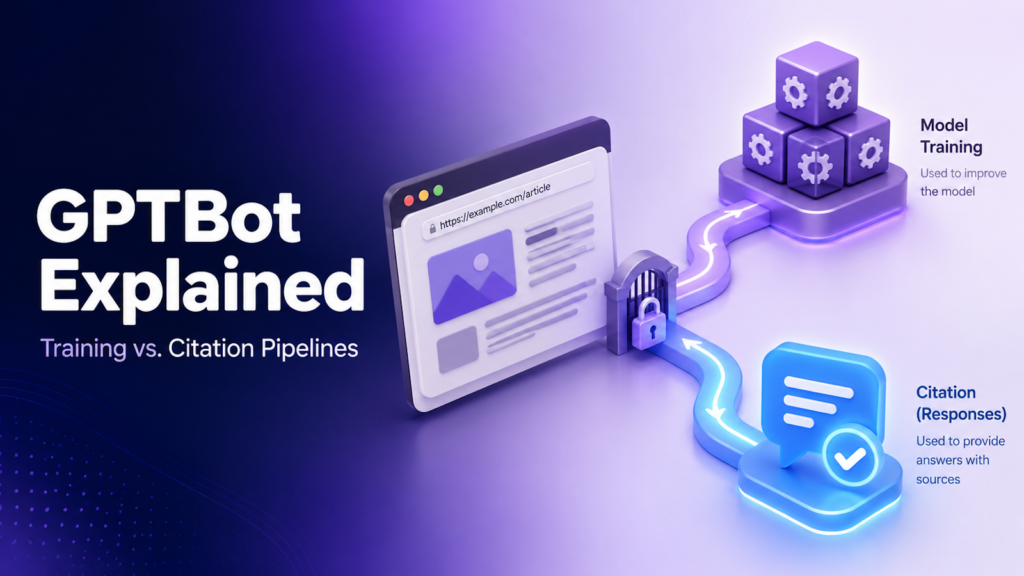
AI search optimization requires a fundamentally different approach than traditional SEO. At ICODA, we’ve developed a framework based on what we’ve seen working across dozens of crypto and B2B tech clients. Here’s the practical breakdown:
Step 1️⃣: Audit Where You Actually Appear (Not Where You Rank)
Traditional rank tracking tells you where you show up on Google. It tells you nothing about AI visibility.
Start by systematically testing your brand across major AI platforms—ChatGPT, Perplexity, Gemini, and Claude—using the queries your buyers actually ask. Not your target keywords. The conversational questions someone would type into a chat interface.
Instead of "enterprise blockchain platform," test "What’s the best blockchain solution for a mid-size logistics company?" Instead of "DeFi yield farming," test "How can I earn passive income on my crypto without too much risk?"
Document which queries surface your brand, which surface competitors, and which return generic responses without naming anyone. This baseline reveals your actual competitive position in AI search—which often looks nothing like your Google rankings.
Step 2️⃣: Restructure Content for AI Consumption
LLMs don’t skim headlines looking for click appeal. They parse content looking for clear, authoritative answers they can extract and cite.
Lead with direct answers. Every section’s first sentence should directly answer what that section promises. AI systems extract these for responses. If your opening buries the answer under context and caveats, you’re optimizing for human patience, not machine extraction.
Use explicit Q&A formats. FAQ sections, "how-to" structures, and direct question-answer pairs signal to AI systems exactly where to find quotable responses. When we restructured a client’s DeFi education content from narrative articles to Q&A format, their Perplexity citation frequency increased by over 200% within six weeks.
Provide entity clarity. AI systems need to understand exactly what you are, what you do, and why you’re authoritative. Generic descriptions like "innovative blockchain solution" give models nothing to work with. Specific descriptions like "a Layer 2 scaling solution processing 4,000 TPS for Ethereum-based DeFi applications" give them citable facts.
Step 3️⃣: Build Authority Signals AI Systems Trust
Backlinks still matter for traditional SEO. But AI systems evaluate authority differently—they’re looking for consistent mentions across trusted sources, not just link equity.
Earn media coverage that mentions your brand by name. When reputable publications discuss your category and include you in the conversation, AI models learn to associate your brand with that category. A mention in CoinDesk matters. A mention in a general "top 10″ listicle on a crypto news site matters. Even forum discussions where users recommend you by name contribute to the signal.
Prioritize third-party validation. Research from arXiv on generative engine optimization found that AI search exhibits systematic bias toward earned media—third-party authoritative sources—over brand-owned content. Your own blog claiming you’re the best matters far less than industry analysts, reviewers, and users saying so.
Maintain consistent brand naming. If you’re called "Protocol X" in some places, "ProtocolX" in others, and "The X Protocol" elsewhere, AI models may treat these as separate entities. Consistency helps models build a coherent picture of your authority.
Step 4️⃣: Optimize for Platform Differences
ChatGPT, Perplexity, Gemini, and Claude don’t operate identically. A strategy that works for one may underperform on another.
| Plataforma | Primary Strength | Optimization Focus |
|---|---|---|
| ChatGPT | Largest user base, conversational queries | Comprehensive educational content, clear entity definitions |
| Perplejidad | Citation transparency, research-focused users | Fact-rich content, statistics, quotable statements |
| Géminis | Google integration, shopping/comparison queries | Product specifications, comparison-ready formatting |
| Claude | Technical accuracy, nuanced responses | Detailed technical documentation, expert-level content |
Perplexity explicitly shows its sources, making citation-ready content essential. ChatGPT rewards content that answers follow-up questions comprehensively. Gemini integrates with Google’s knowledge graph, making structured data and schema markup more impactful.
A Before/After Example:
One of our Web3 wallet clients was invisible across all AI platforms despite ranking well on Google. Their content was technically accurate but written in marketing-speak: "revolutionary self-custody solution transforming the future of digital asset management."
We restructured their core pages to lead with specific, quotable claims: "A non-custodial wallet supporting 12 EVM chains with built-in cross-chain bridging and hardware wallet integration."
Within eight weeks, they appeared in ChatGPT responses for 7 of their 10 target query categories—up from zero. No change in Google rankings required. Same product, different content architecture.
Real Numbers — What Optimized Brands Are Seeing
The business case for AI search optimization isn’t theoretical. Here’s what the data shows:
Conversion rates that change the math entirely.
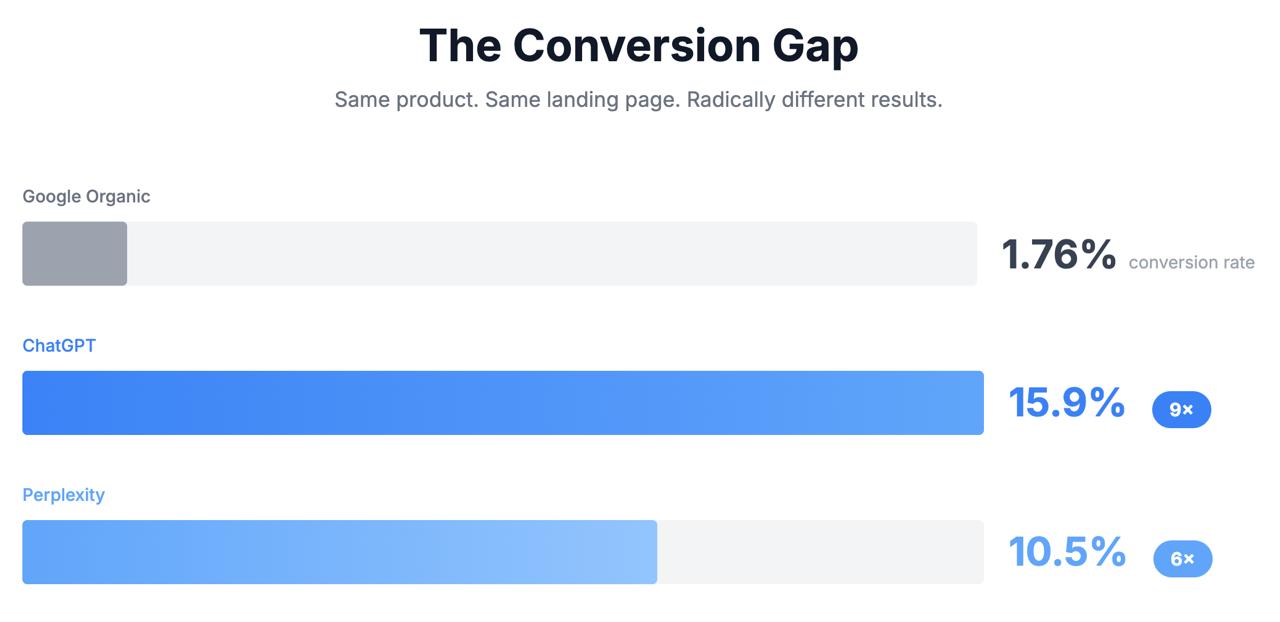
Seer Interactive tracked AI traffic across client sites and found ChatGPT converting at 15.9% compared to Google Organic at 1.76%. That’s not a marginal improvement—it’s a 9x difference. Their analysis revealed why: by the time users click through from an AI response, they’ve already completed their comparison phase within the conversation itself.
Semrush’s research found AI search visitors are 4.4x as valuable as traditional organic visitors based on conversion rate. Writesonic documented that their ChatGPT traffic converted 2.08x better than Google Organic despite dramatically lower volume. Superprompt’s analysis of 12 million website visits across 350+ businesses found AI traffic converting at 14.2% compared to Google’s 2.8%—a 5x difference.
These numbers align with what we’ve observed across crypto and fintech clients. AI traffic is fundamentally different—users arrive having already compared options, understood the value proposition, and made a preliminary decision. They’re not browsing. They’re buying. The AI essentially pre-qualifies them before they ever reach your site.
Volume is growing faster than most realize.
AI traffic grew from 0.02% of global internet traffic in 2024 to 0.15% in 2025—a 7x increase, according to SE Ranking’s analysis of nearly 64,000 websites. ChatGPT alone dominates with nearly 78% of AI referral traffic, followed by Perplexity at 15%.
Perplexity processed 780 million queries in May 2025, up from 230 million in mid-2024—more than tripling in under a year. ChatGPT reached 400 million weekly users by February 2025 and reportedly doubled that by March.
The Window
Here’s what most brands miss about timing: AI models aren’t updated continuously. They’re trained in cycles. Content that establishes authority now gets incorporated into model knowledge that persists for months or years.
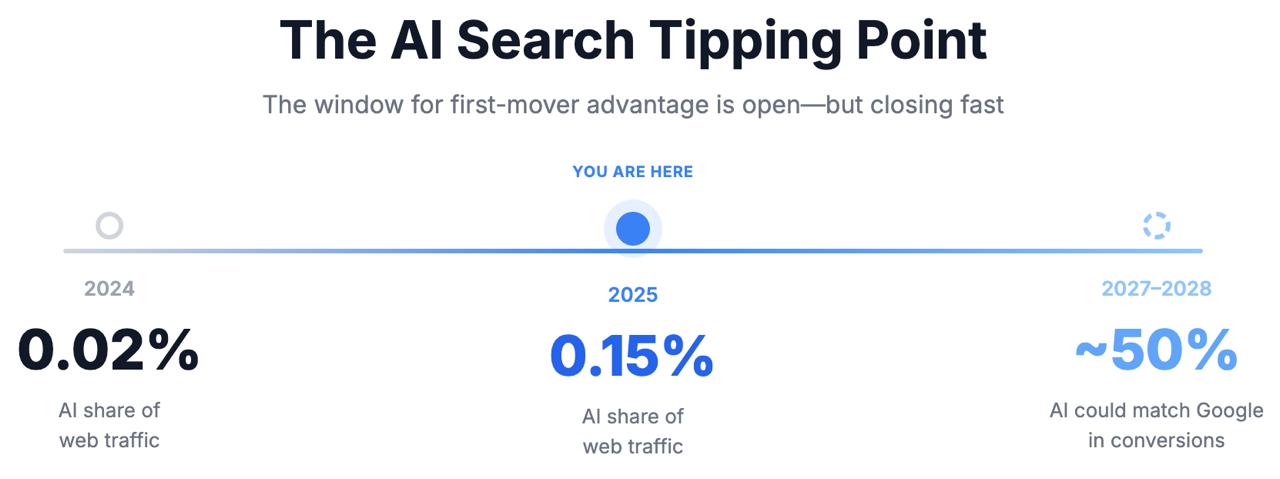
The brands being cited today trained the models on their authority yesterday. The brands wanting to be cited tomorrow need to be building that authority now.
First-mover advantages in AI citation are real and durable. Once ChatGPT learns to recommend Uniswap as the default DEX example, displacing that association requires not just matching their authority—but exceeding it enough to override established patterns.
The competitive gap is widening every month. According to 10Fold’s research, only 11% of B2B companies claim to have the majority of their content ready for AI discovery. That means 89% are still playing catch-up while early movers compound their advantage.
The question isn’t whether AI search matters for your business. The data makes that unambiguous. The question is whether you’ll be visible when your buyers ask their next question—or invisible while competitors capture demand you never knew existed.
Your buyers are already searching in AI. The only question is whether they’re finding you.
Preguntas más frecuentes (FAQ)
AI search optimization for B2B is the practice of structuring your content and brand presence to appear in AI-generated responses when buyers research vendors using ChatGPT, Perplexity, and Google AI Overviews. Unlike traditional SEO that targets rankings, AI search optimization focuses on earning citations and recommendations during the B2B buyer journey.
Traditional SEO optimizes for click-through from search results pages, while AI for SEO optimizes for being cited as a trusted source in AI-generated answers. AI systems prioritize authoritative, clearly structured content that directly answers user questions — not keyword density or backlink volume alone.
AI search traffic converts 4-9× better because users arrive pre-qualified — they’ve already compared options and formed preferences within the AI conversation. By the time they click through to your site, they’re ready to buy, not browse.
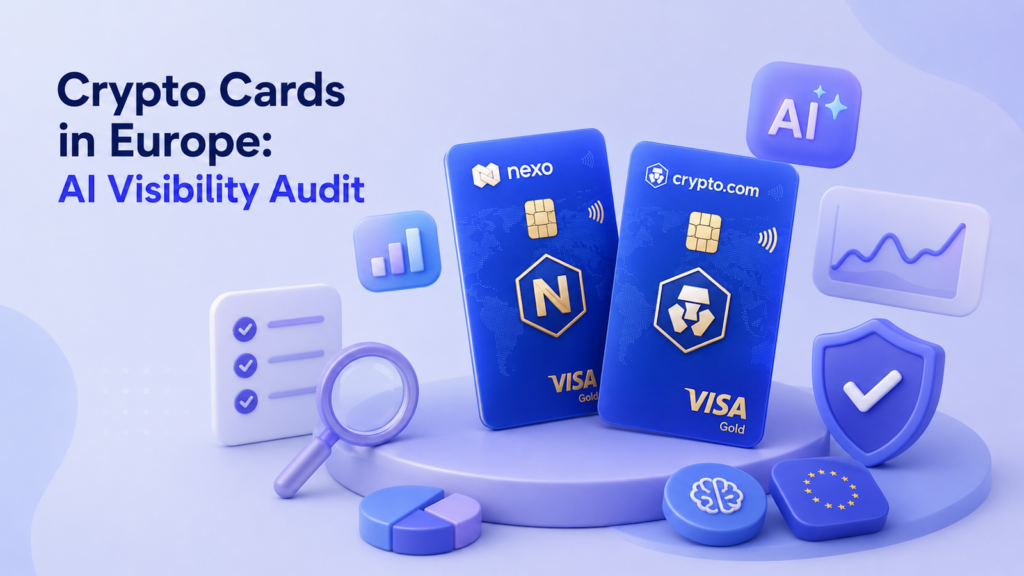
Test your brand visibility by asking ChatGPT, Perplexity, and Gemini the questions your B2B buyers actually ask during vendor research—then note whether you’re mentioned, recommended, or absent. Agencies like ICODA offer AI visibility audits that systematically track citation frequency across all major AI platforms and identify gaps versus competitors.
Generative engine optimization (GEO) is the strategic process of optimizing content for citation in AI-powered search engines. GEO focuses on entity clarity, answer-first content structure, and building authority signals that large language models trust when generating recommendations.
Most brands see measurable improvements in AI citation frequency within 8-12 weeks, with compounding effects over 3-6 months. Results depend on content restructuring, authority building, and how quickly AI platforms incorporate new training data into their models.
Compartir


Valora el artículo